
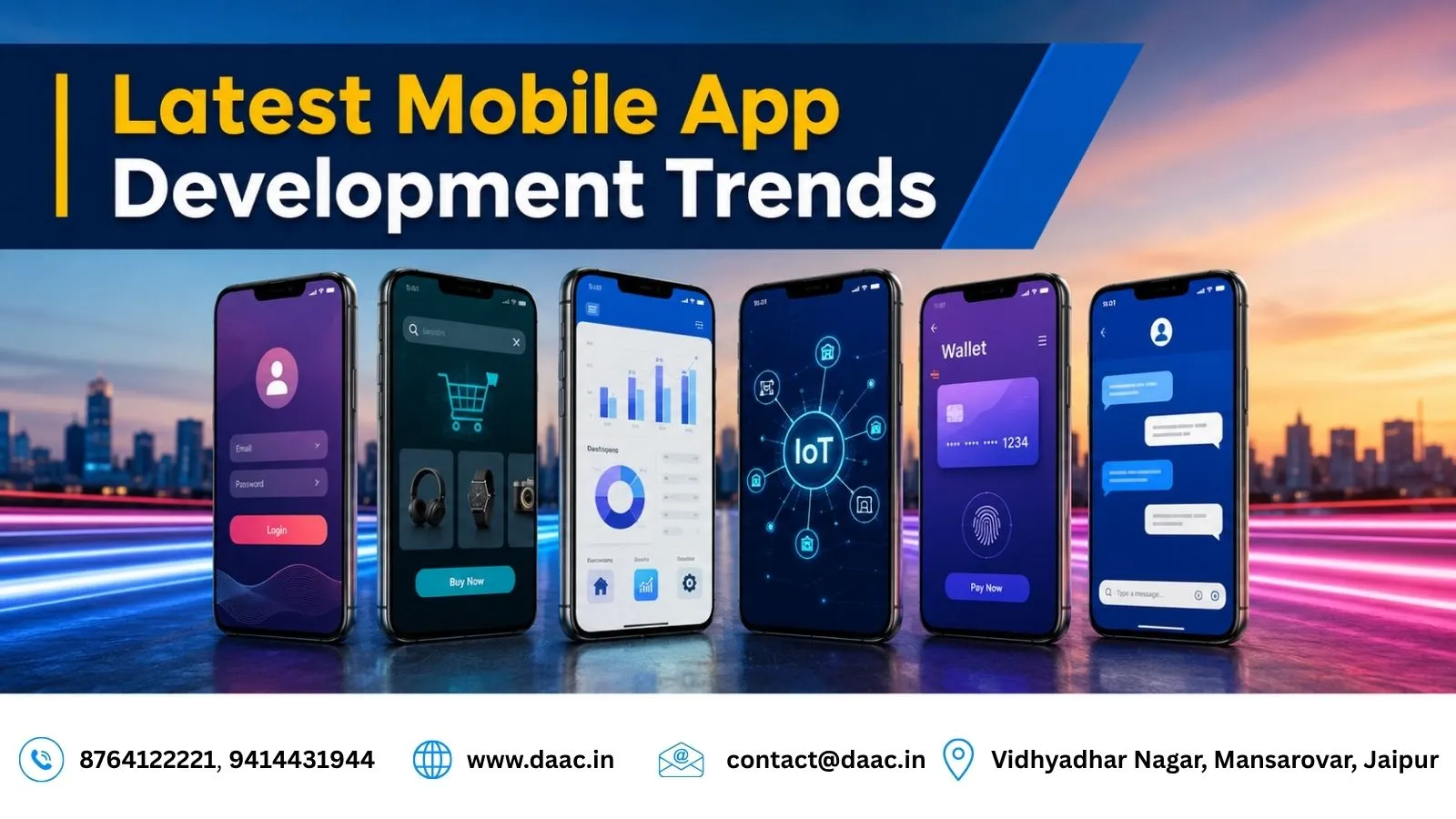
The mobile app industry continues to evolve at an incredible pace. With smartphones becoming more powerful and user expectations increasing, developers and businesses must embrace emerging technologies to stay competitive. Mobile applications are no longer limited to communication and entertainment. Today, they power banking, healthcare, education, e-commerce, transportation, and countless other industries.
As we move through 2026, technologies such as Artificial Intelligence (AI), 5G connectivity, cross-platform frameworks, and advanced security solutions are transforming how applications are built and used. Companies are investing heavily in innovative mobile experiences that provide faster performance, personalization, and enhanced user engagement.
For students and aspiring developers, understanding these changes is essential for building a successful career. Learning the latest technologies not only improves technical skills but also increases employability in a rapidly growing industry. This guide explores the most important mobile app development trends shaping the future of the industry and explains why they matter.
What Are Mobile App Development Trends?
Mobile app development trends refer to the latest technologies, frameworks, methodologies, and best practices used to create modern mobile applications. These trends influence how developers build applications, improve performance, enhance security, and deliver better user experiences.
Keeping up with industry trends helps developers:
- Build faster and more efficient applications
- Improve user satisfaction
- Increase career opportunities
- Stay competitive in the technology industry
- Create innovative digital solutions
As businesses continue investing in mobile-first strategies, developers who understand modern trends gain a significant advantage in the job market.
AI-Powered Mobile Applications Are Becoming the New Standard
Artificial Intelligence is one of the most influential technologies in mobile app development today. Modern applications use AI to understand user behavior, automate tasks, and deliver highly personalized experiences.
Many popular applications already use AI extensively. Streaming platforms recommend content based on viewing history, e-commerce applications suggest products according to user preferences, and virtual assistants answer questions instantly. These features improve user engagement while making applications more useful.
Some common AI-powered mobile app features include:
- Smart chatbots
- Voice assistants
- Predictive recommendations
- Personalized content feeds
- Image recognition
- Automated customer support
For example, apps like Netflix and Amazon continuously analyze user behavior to provide relevant recommendations. This level of personalization has become a major expectation among modern users.
Organizations across industries are actively hiring developers who understand AI integration. Students interested in future-focused technologies often combine mobile development with AI learning to expand their career opportunities.
5G Technology Is Transforming Mobile Experiences
The expansion of 5G networks is creating new possibilities for mobile applications. Compared to previous generations, 5G offers significantly higher speeds, lower latency, and improved network reliability.
These improvements allow developers to build more advanced applications without worrying about performance limitations.
Benefits of 5G-enabled applications include:
- Faster app loading times
- Smooth video streaming
- Real-time cloud gaming
- Improved video conferencing
- Better augmented reality experiences
- Faster data transfers
For businesses, 5G creates opportunities to offer richer digital experiences that were previously difficult to deliver. Industries such as healthcare, gaming, education, and logistics are already leveraging 5G-powered applications to improve services and customer experiences.
As global 5G adoption continues to increase, developers who understand how to optimize applications for high-speed networks will remain in high demand.
Augmented Reality Is Expanding Beyond Gaming
Augmented Reality (AR) has evolved far beyond entertainment and gaming applications. Today, businesses across multiple sectors use AR technology to create interactive and immersive experiences for users.
AR overlays digital information onto the real world through smartphone cameras and mobile devices. This allows users to interact with virtual objects within their physical environment.
Popular AR applications include:
- Virtual furniture placement
- Real estate property visualization
- Virtual product try-ons
- Educational simulations
- Navigation assistance
- Interactive retail experiences
Retail brands now allow customers to virtually try glasses, clothing, or furniture before making a purchase. Real estate companies use AR to provide virtual property tours, helping potential buyers make informed decisions.
The demand for AR developers is expected to grow significantly as businesses continue investing in immersive technologies.
Cross-Platform Development Continues to Dominate
Developing separate applications for Android and iOS can be expensive and time-consuming. Cross-platform development solves this challenge by allowing developers to build applications for multiple platforms using a single codebase.
This approach helps organizations reduce development costs while accelerating project delivery.
Popular cross-platform technologies include:
- React Native
- Flutter
- Ionic
- Xamarin
React Native remains one of the most widely adopted frameworks because of its strong performance and large developer community. Flutter continues gaining popularity due to its excellent UI capabilities and growing ecosystem.
Students looking to enter this field often begin with the React Native Course in Jaipur, which helps them understand how to build modern applications for both Android and iOS platforms efficiently.
Cross-platform development has become a preferred choice for startups and enterprises seeking faster development cycles without sacrificing user experience.
Mobile App Security Is More Important Than Ever
As mobile applications handle sensitive personal and financial information, security has become a top priority for businesses and developers.
Cyber threats continue to evolve, making robust security measures essential for protecting user data and maintaining trust.
Modern mobile security features include:
- Biometric authentication
- Multi-factor authentication
- End-to-end encryption
- Secure APIs
- Data protection protocols
- Fraud detection systems
Financial applications, healthcare platforms, and e-commerce businesses especially require advanced security solutions to protect confidential information.
Users are becoming increasingly aware of privacy concerns, making security a critical factor in application success. Developers who understand secure coding practices are highly valued by employers.
Cloud-Based Mobile Applications Are Growing Rapidly
Cloud technology is changing how mobile applications store and process data. Instead of relying entirely on device storage, cloud-based applications access resources from remote servers.
This approach offers several advantages:
- Reduced device storage requirements
- Better scalability
- Improved performance
- Automatic updates
- Enhanced collaboration
- Greater accessibility
Applications such as Google Drive, Dropbox, and Microsoft OneDrive demonstrate how cloud integration can improve user convenience.
Businesses increasingly prefer cloud-enabled mobile solutions because they offer flexibility and support long-term growth.
Internet of Things (IoT) Integration Is Expanding
The Internet of Things continues to influence mobile application development by connecting smartphones with smart devices and sensors.
IoT-powered applications are commonly used in:
- Smart homes
- Healthcare monitoring
- Industrial automation
- Vehicle tracking
- Smart agriculture
- Wearable technology
Mobile apps act as control centers for connected devices, allowing users to monitor and manage systems remotely.
As smart devices become more common, mobile developers with IoT knowledge will find growing opportunities across various industries.
How Students Can Prepare for Future Mobile Development Careers
Keeping up with trends is important, but practical skills remain the foundation of a successful career. Students should focus on learning core concepts before exploring advanced technologies.
A recommended learning path includes:
- Learn programming fundamentals
- Understand Android or iOS basics
- Master a cross-platform framework
- Build real-world projects
- Learn app deployment processes
- Explore AI and cloud integration
- Stay updated with industry developments
Students who want comprehensive training often explore the Mobile App Development Course in Jaipur to gain practical exposure to modern frameworks and development tools used by the industry.
Building a strong portfolio with live projects significantly improves job prospects and freelance opportunities.
Career Opportunities in Mobile App Development
The growing demand for mobile applications has created numerous career opportunities for skilled professionals.
Popular roles include:
- Mobile App Developer
- Android Developer
- iOS Developer
- React Native Developer
- Flutter Developer
- Mobile UI/UX Designer
- Application Tester
- Freelance Mobile Developer
Companies across startups, IT services, healthcare, finance, education, and e-commerce continue hiring developers who can create modern and user-friendly mobile applications.
Conclusion
Mobile app development in 2026 is being driven by innovation, user expectations, and emerging technologies. Artificial Intelligence, 5G connectivity, Augmented Reality, cloud integration, and enhanced security are reshaping how applications are built and experienced.
For aspiring developers, staying updated with these trends is no longer optional. Businesses increasingly seek professionals who understand modern technologies and can build scalable, secure, and engaging applications.
By learning industry-relevant skills, working on practical projects, and embracing continuous learning, students can position themselves for long-term success in one of the fastest-growing technology sectors in the world.
FAQs
1. What are the latest mobile app development trends in 2026?
The biggest trends include AI-powered applications, 5G integration, augmented reality, cross-platform development, cloud computing, and advanced mobile security.
2. Is mobile app development a good career in 2026?
Yes. Mobile app development remains one of the most in-demand technology careers with opportunities across multiple industries and global markets.
3. Which framework is best for mobile app development?
React Native and Flutter are among the most popular frameworks because they support cross-platform development and offer strong performance.
4. Do beginners need to learn AI for mobile development?
Not initially. Beginners should first learn programming fundamentals and mobile development basics before exploring AI integration.
5. How long does it take to become a mobile app developer?
With consistent learning and practical project experience, most students can become job-ready within six to twelve months.