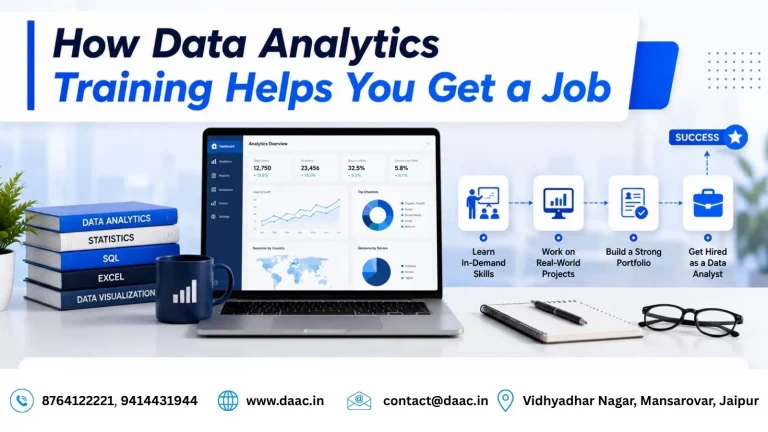

The demand for data professionals continues to rise as organizations increasingly rely on data-driven decision-making. From startups and e-commerce businesses to healthcare companies and financial institutions, organizations are collecting massive amounts of data every day. However, data alone has little value unless professionals can analyze it, identify patterns, and convert it into actionable insights.
One of the biggest shifts in hiring trends is that employers are now focusing more on practical skills than academic qualifications. Companies want candidates who can solve business problems, create dashboards, automate reports, and generate meaningful insights. As a result, mastering the right data analytics skills has become the fastest route to securing a high-paying job in the analytics industry.
If you are planning a career in data analytics, understanding which skills employers value most in 2026 can help you stay ahead of the competition and build a successful future.
Why Data Analytics Skills Matter More Than Degrees
Traditional hiring practices emphasized educational qualifications, but modern employers are increasingly evaluating practical abilities. Organizations prefer candidates who can work with real datasets, identify trends, and provide business recommendations.
Several factors have contributed to this shift:
- Growing demand for data-driven decision-making
- Rapid adoption of AI and automation
- Increased use of business intelligence tools
- Shortage of skilled analytics professionals
- Focus on measurable business outcomes
Companies are willing to pay premium salaries to professionals who can demonstrate practical expertise and deliver business value through analytics.
Excel: The Foundation of Data Analytics
Despite the rise of advanced analytics tools, Excel remains one of the most important skills for data professionals. Many organizations still use Excel for reporting, data cleaning, budgeting, and business analysis.
Key Excel skills include:
- Pivot Tables
- VLOOKUP and XLOOKUP
- Conditional Formatting
- Data Validation
- Dashboard Creation
- Data Cleaning Techniques
Excel provides an excellent foundation for understanding how data is organized and analyzed before moving to more advanced technologies.
Real-world business teams often use Excel for quick analysis and reporting, making it an essential skill for beginners entering the analytics field.
SQL: The Most In-Demand Technical Skill
SQL (Structured Query Language) is considered the backbone of modern analytics because it allows professionals to retrieve and manipulate data stored in databases.
Most companies store business information inside relational databases, making SQL a mandatory skill for analysts.
Important SQL concepts include:
- SELECT Statements
- Filtering Data
- Joins
- Subqueries
- Aggregation Functions
- Database Management
Whether you work in finance, healthcare, retail, or technology, SQL knowledge significantly improves your employability and earning potential.
Many recruiters consider SQL proficiency a minimum requirement for entry-level data analyst positions.
Power BI and Tableau for Data Visualization
Organizations want data presented in a way that is easy to understand. This is where visualization tools such as Power BI and Tableau become valuable.
These platforms help analysts transform complex datasets into interactive dashboards and reports that support business decisions.
Popular skills include:
- Dashboard Development
- Data Modeling
- DAX Functions
- KPI Tracking
- Interactive Reports
- Data Storytelling
Companies increasingly rely on visual analytics because executives often prefer dashboards over lengthy spreadsheets.
Professionals who can create meaningful visualizations are often rewarded with faster career growth and better salary packages.
Python: The Future of Analytics Automation
Python has become one of the most widely used programming languages in data analytics. It enables professionals to automate repetitive tasks, process large datasets, and perform advanced analysis efficiently.
Key Python applications include:
- Data Cleaning
- Data Analysis
- Automation
- Predictive Analytics
- Machine Learning
- Report Generation
Popular Python libraries include:
- Pandas
- NumPy
- Matplotlib
- Scikit-Learn
Python helps analysts work faster and handle complex business problems that cannot be solved using spreadsheets alone.
Students looking to build technical expertise often complement analytics training with a Core Python Course in Jaipur to strengthen their programming foundation and improve career opportunities in analytics and AI-driven industries.
Data Cleaning and Data Preparation
One of the most overlooked aspects of analytics is data cleaning. Industry experts often say that analysts spend a significant portion of their time preparing data before actual analysis begins.
Common data cleaning activities include:
- Removing duplicates
- Handling missing values
- Correcting inconsistencies
- Standardizing formats
- Validating datasets
Poor-quality data can lead to incorrect business decisions, making data preparation a critical skill for every analyst.
Organizations highly value professionals who can efficiently prepare accurate datasets for reporting and decision-making.
Business Intelligence and Domain Knowledge
Technical skills alone are not enough. Successful analysts understand how businesses operate and how data impacts decision-making.
Domain knowledge helps professionals:
- Identify business problems
- Understand customer behavior
- Measure performance metrics
- Improve operational efficiency
- Support strategic planning
For example, a healthcare analyst must understand patient metrics, while a retail analyst should understand sales performance indicators.
Combining technical expertise with business understanding creates professionals who can deliver meaningful insights rather than simply generating reports.
Statistics and Analytical Thinking
Statistics forms the foundation of data analytics because it helps professionals interpret patterns and trends accurately.
Essential statistical concepts include:
- Mean
- Median
- Mode
- Correlation
- Probability
- Trend Analysis
Analytical thinking enables professionals to ask the right questions and identify meaningful insights hidden within data.
Employers often prioritize candidates who can solve business problems logically and communicate findings effectively.
Communication and Data Storytelling
A common misconception is that data analysts only work with numbers. In reality, communication skills are equally important.
Analysts must present findings to stakeholders who may not have technical backgrounds.
Effective communication includes:
- Presenting dashboards
- Explaining trends
- Creating business reports
- Delivering recommendations
- Simplifying complex information
Strong communication skills help professionals influence business decisions and increase their value within organizations.
Understanding AI and Automation Tools
Artificial intelligence is transforming the analytics industry. Modern organizations use AI-powered solutions to process large volumes of information and generate predictive insights.
Important AI-related concepts include:
- Predictive Analytics
- AI-Assisted Reporting
- Machine Learning Basics
- Automation Workflows
- Generative AI Applications
Professionals who understand both analytics and AI gain a competitive advantage in the job market.
As organizations continue adopting intelligent systems, AI knowledge is becoming an important addition to every analyst’s skill set.
Building Real Projects and Portfolios
Recruiters increasingly prefer candidates who can demonstrate practical experience rather than simply listing skills on a resume.
A strong portfolio should include:
- Interactive Dashboards
- SQL Projects
- Excel Reports
- Python Analysis Projects
- Business Case Studies
Practical work proves that candidates can apply concepts in real-world situations.
Many aspiring professionals strengthen their expertise through a Data Analytics Course in Jaipur, where they gain hands-on experience working with industry tools, datasets, and live projects that prepare them for professional roles.
Employers often consider project experience as a major factor during hiring decisions.
Data Analytics Career Opportunities in 2026
The analytics industry offers opportunities across various sectors.
Popular job roles include:
- Data Analyst
- Business Analyst
- Power BI Developer
- Reporting Analyst
- Data Visualization Specialist
- Analytics Consultant
- Business Intelligence Analyst
As businesses continue investing in digital transformation, demand for skilled analytics professionals is expected to remain strong for years to come.
Professionals who combine technical expertise, business understanding, and communication skills are likely to secure the highest-paying positions.
Conclusion
Data analytics continues to be one of the most rewarding career paths in 2026. Organizations are increasingly prioritizing skills over degrees, creating opportunities for individuals who can demonstrate practical expertise and solve business challenges effectively.
Mastering Excel, SQL, Power BI, Python, data cleaning, statistics, business intelligence, and AI-powered analytics can significantly improve your career prospects. These skills not only increase employability but also help professionals secure high-paying roles across multiple industries.
The future belongs to individuals who continuously learn, adapt to new technologies, and develop practical experience through real-world projects. By focusing on the right skills today, you can build a successful and future-ready career in data analytics.
FAQs
1. Do I need a technical background to become a Data Analyst?
No. Many successful data analysts come from non-technical backgrounds and learn the required skills through structured training and practical projects.
2. Which skill should I learn first for data analytics?
Excel is usually the best starting point because it helps build a strong foundation in data organization and analysis.
3. Is SQL more important than Python for beginners?
Yes. SQL is often required in most entry-level analyst roles because it is essential for retrieving and managing data.
4. Can Power BI alone help me get a job?
Power BI is valuable, but combining it with SQL, Excel, and analytical thinking significantly improves job opportunities.
5. How important are projects in data analytics hiring?
Projects are extremely important because they demonstrate practical skills and help recruiters evaluate your ability to solve real business problems.