
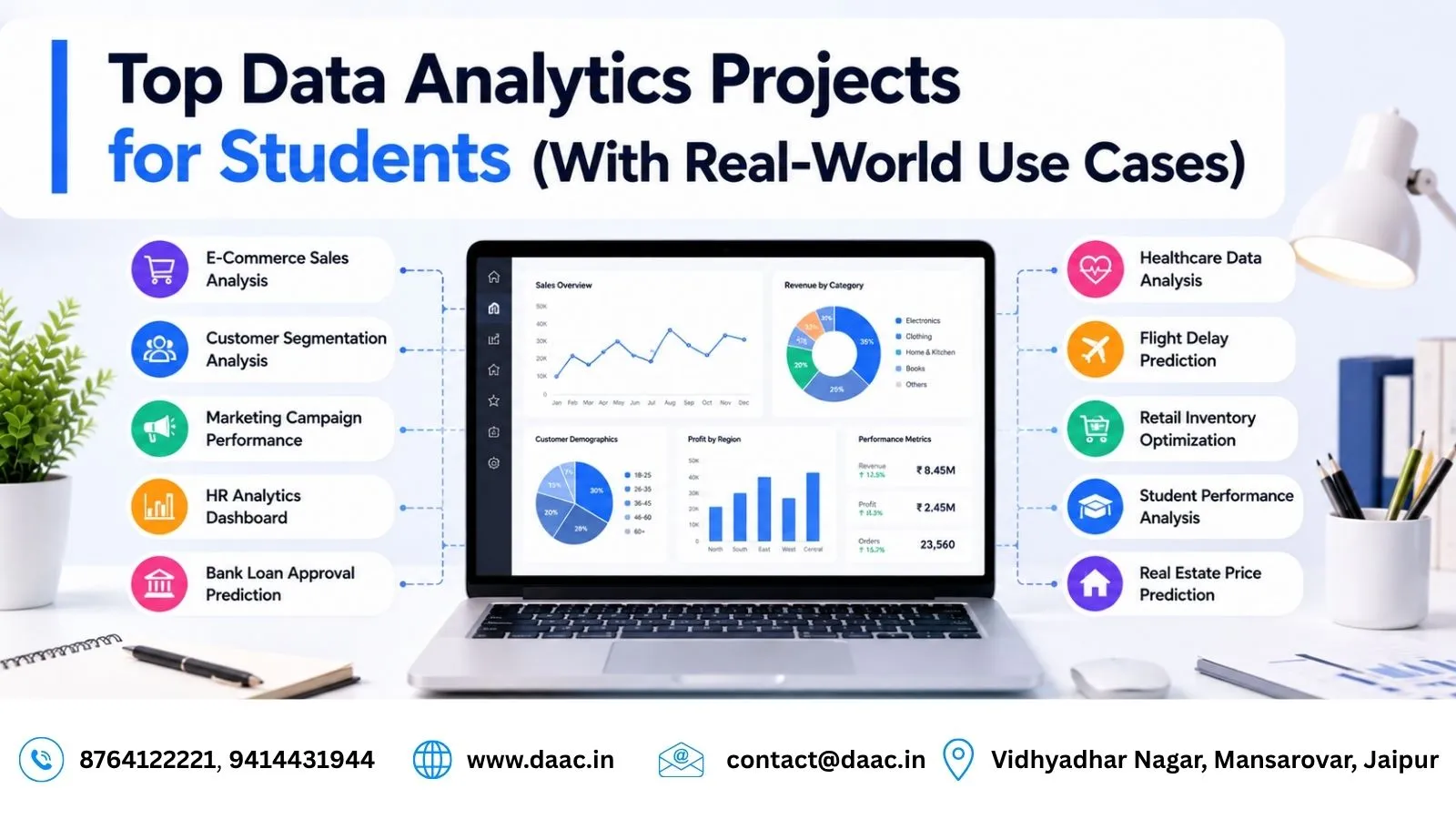
The data analytics industry is evolving rapidly, and employers are now focusing more on practical skills than certificates alone. While certifications demonstrate theoretical knowledge, companies prefer candidates who can solve real business problems using data. This shift has made Data Analytics Projects one of the most important factors in building a successful career in analytics.
Students who work on real-world projects gain hands-on experience with business datasets, reporting tools, and visualization platforms. These projects showcase problem-solving abilities and analytical thinking that recruiters actively seek. Whether you are aiming for an internship, entry-level role, or career transition, practical project experience can significantly improve your chances of getting hired in the competitive analytics industry.
Why Projects Are Important for Data Analytics Students
Learning analytics through projects provides practical exposure that classroom theory alone cannot offer. Projects help students understand how businesses use data to make informed decisions and improve performance.
Some key benefits include:
- Learning industry-standard analytics tools.
- Solving real business challenges.
- Building confidence with practical datasets.
- Creating a strong portfolio for interviews.
- Improving data visualization and reporting skills.
- Understanding business intelligence workflows.
These experiences play a vital role in developing job-ready skills and preparing students for long-term growth in a Data Analytics Career.
1. Sales Performance Analysis
Sales analysis remains one of the most valuable Data Analysis Project Ideas for beginners. This project focuses on understanding sales trends, revenue growth, product performance, and regional sales variations. Businesses use sales analytics to identify profitable products and optimize their marketing and sales strategies.
Students can analyze monthly sales data, compare regional performance, and create interactive dashboards using Power BI or Tableau. This project demonstrates an understanding of business metrics and helps learners gain practical experience in data visualization and reporting techniques commonly used in organizations.
Real-World Use Case
Retail companies use sales analytics to identify top-performing products, forecast future demand, and improve inventory planning. These insights help organizations maximize revenue and reduce operational inefficiencies.
2. Customer Behavior Analysis
Understanding customer behavior is essential for businesses seeking long-term growth. This project focuses on analyzing customer demographics, purchasing habits, spending patterns, and engagement trends. It is one of the most practical Student Data Analytics Projects because it directly supports marketing and customer retention strategies.
By working on customer datasets, students learn how to segment audiences and identify purchasing patterns. These insights help organizations create personalized campaigns and improve customer experiences. Customer analytics projects also strengthen skills in data cleaning, visualization, and predictive analysis.
Real-World Use Case
Marketing teams use customer behavior analysis to develop personalized promotions, improve customer retention, and increase conversion rates through targeted marketing campaigns.
3. HR Attrition Analysis
Employee retention has become a major concern for organizations. HR attrition analysis focuses on understanding why employees leave companies and identifying patterns that contribute to workforce turnover. This project combines business understanding with analytical techniques to solve real organizational challenges.
Students can analyze employee demographics, salary trends, departmental turnover rates, and job satisfaction metrics. The project helps develop critical thinking skills while introducing learners to human resource analytics and workforce planning concepts.
Real-World Use Case
HR departments use attrition analysis to improve employee retention strategies, optimize compensation structures, and create healthier workplace environments that reduce turnover rates.
4. Financial Data Analysis
Financial analytics projects help students understand budgeting, profit analysis, expense tracking, and business performance evaluation. This project is especially beneficial for learners interested in finance, accounting, and corporate strategy roles.
Working with financial datasets allows students to identify spending patterns, monitor profit margins, and create performance dashboards. These projects strengthen analytical reasoning and help students understand how businesses evaluate financial health and make investment decisions.
Real-World Use Case
Finance teams use financial analysis to monitor company performance, identify cost-saving opportunities, and improve strategic financial planning for sustainable growth.
5. Website Traffic Analysis
Digital businesses rely heavily on website analytics to measure performance and user engagement. Website traffic analysis involves evaluating visitor behavior, traffic sources, bounce rates, session duration, and conversion metrics.
This project introduces students to web analytics platforms and digital marketing data. It helps learners understand how user behavior impacts business outcomes and supports data-driven website optimization strategies. It is among the most practical Data Analytics Portfolio Projects because of its relevance across multiple industries.
Real-World Use Case
Organizations use website analytics to improve user experience, increase conversions, optimize marketing campaigns, and enhance overall website performance.
6. Inventory and Stock Management Analysis
Inventory management is critical for manufacturing, retail, and e-commerce businesses. This project focuses on analyzing stock levels, supplier performance, demand forecasts, and inventory turnover rates.
Students gain experience working with operational datasets while learning how data can improve supply chain efficiency. The project develops forecasting and reporting skills that are highly valuable in business operations and logistics management.
Real-World Use Case
Companies use inventory analytics to reduce stock shortages, avoid overstock situations, improve warehouse management, and enhance supply chain performance.
7. Healthcare Data Analysis
Healthcare analytics is one of the fastest-growing sectors in the analytics industry. This project focuses on patient trends, treatment outcomes, healthcare costs, and hospital resource utilization. Students learn how data supports better decision-making in healthcare environments.
Healthcare datasets provide opportunities to explore large-scale data analysis and identify meaningful patterns that impact patient care. These projects help learners develop practical analytical skills while contributing to socially meaningful outcomes.
Real-World Use Case
Hospitals and healthcare providers use analytics to improve patient care, optimize resource allocation, reduce operational costs, and enhance treatment effectiveness.
8. Social Media Analytics
Digital networks generate enormous amounts of data every day. Social media analytics projects focus on engagement metrics, audience growth, campaign performance, and content effectiveness. These projects are ideal for students interested in marketing analytics and digital strategy.
Analyzing social media data helps students understand audience behavior and evaluate campaign performance. The project also introduces visualization techniques that make analytical findings easier for businesses to interpret and act upon.
Real-World Use Case
Marketing teams use social media analytics to improve content strategies, measure campaign success, identify trends, and increase brand engagement across digital channels.
For students interested in combining analytics with marketing expertise, exploring a Digital Marketing Course in Jaipur can provide additional industry-relevant skills and practical exposure.
How DAAC Helps Students Build Practical Projects
Students often struggle to find relevant datasets and project guidance. Structured training helps bridge this gap by providing practical learning opportunities and industry-focused project development.
DAAC supports learners through:
- Access to real business datasets.
- Guided project development.
- Industry-oriented assignments.
- Dashboard creation training.
- Portfolio development assistance.
- Interview preparation support.
Students looking to build advanced analytics skills can also explore a Data Analytics Course in Jaipur to gain hands-on experience with industry-standard tools and technologies.
How to Present Data Analytics Projects in Interviews
Creating projects is important, but presenting them effectively is equally valuable. Recruiters want to understand your approach, tools, and impact.
When discussing projects:
- Explain the business problem clearly.
- Describe the dataset and objectives.
- Highlight tools used such as Excel, SQL, Python, or Power BI.
- Share insights and recommendations.
- Demonstrate measurable outcomes.
- Explain challenges and solutions.
A structured presentation helps employers evaluate both technical and communication skills during interviews.
Conclusion
Working on Data Analytics Projects is one of the most effective ways for students to develop practical skills and build a strong professional portfolio. Real-world projects help learners understand business challenges, improve analytical thinking, and gain hands-on experience with industry tools.
Whether you choose sales analysis, customer analytics, healthcare data, or social media projects, each experience contributes to your career growth. Consistent project work not only improves technical expertise but also increases confidence during interviews and job applications. In 2026, employers value demonstrable skills, and practical projects remain one of the strongest ways to showcase your capabilities in the analytics industry.
FAQs
1. Which data analytics projects are best for beginners?
Sales analysis, customer behavior analysis, website traffic analytics, and HR attrition projects are excellent starting points because they cover fundamental business analytics concepts and practical applications.
2. How many projects should a student include in a data analytics portfolio?
Students should ideally complete four to six strong projects that demonstrate different skills such as data cleaning, visualization, reporting, and business analysis.
3. What tools are commonly used in data analytics projects?
Popular tools include Excel, SQL, Power BI, Tableau, Python, and Google Analytics. Learning these tools improves job readiness and portfolio quality.
4. Do data analytics projects help during job interviews?
Yes. Recruiters often discuss project work during interviews because it demonstrates practical experience, problem-solving ability, and technical expertise.
5. Can students build analytics projects without industry experience?
Absolutely. Students can use publicly available datasets, academic projects, and guided training programs to build strong portfolios before gaining professional experience.