
Graduation is a major milestone, but it often brings an important question: what comes next? Many students consider postgraduate degrees, while others look for skill-based programs that can help them enter the workforce quickly. In 2026, one option that continues to gain attention is the Data Analytics Course After Graduation. Businesses across industries are using data to make decisions, creating a growing demand for skilled professionals who can analyze and interpret information effectively.
Unlike many traditional career paths, data analytics focuses on practical skills that employers actively seek. From startups to multinational companies, organizations rely on data-driven strategies to improve performance and increase profits. This trend has made data analytics one of the most attractive career choices for fresh graduates looking for strong job opportunities and long-term growth.
Why Graduates Are Choosing Data Analytics in 2026
The employment market has evolved significantly over the past few years. Companies now prioritize practical expertise and problem-solving abilities alongside academic qualifications. As a result, graduates are increasingly choosing a Data Analytics Course to gain industry-relevant skills and improve their employability.
Several factors contribute to its popularity. Data analytics offers quicker entry into the job market, provides opportunities across multiple industries, and delivers strong salary potential. Businesses in healthcare, finance, retail, education, and technology all require data professionals. This versatility makes data analytics an appealing choice for graduates who want flexibility and career stability in a rapidly changing job landscape.
Who Should Choose a Data Analytics Course After Graduation?
One of the biggest advantages of data analytics is that it welcomes learners from diverse educational backgrounds. Students from technical fields such as BCA, BSc, and BTech can easily transition into analytics roles. At the same time, graduates from commerce, management, and arts streams can also build successful careers in this field with proper training.
The course is suitable for:
- BCA graduates
- BSc graduates
- BTech students
- BCom graduates
- BBA students
- MBA aspirants
- Working professionals seeking career growth
A common misconception is that advanced programming knowledge is mandatory. In reality, most beginner-level analytics programs start with fundamentals and gradually build technical skills, making the learning process accessible to everyone.
What You Learn in a Data Analytics Course
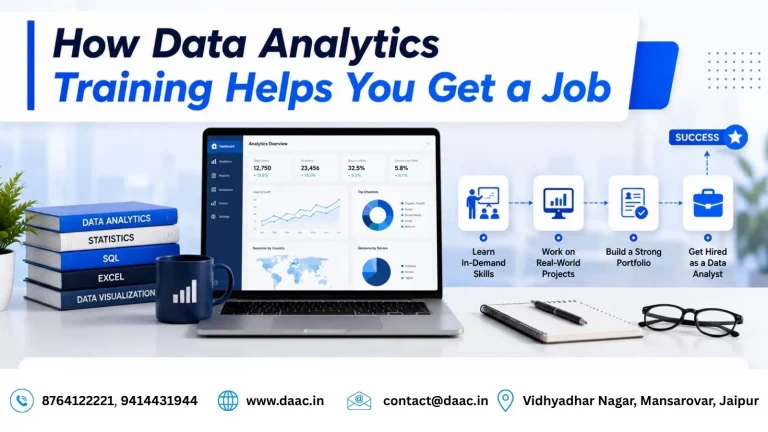
A professional analytics program focuses on practical tools and techniques used in real business environments. Students gain hands-on experience with technologies that help organizations collect, manage, and analyze data efficiently. These skills make learners job-ready and improve their confidence when handling business information.
Key topics generally include:
- Microsoft Excel for data analysis
- SQL for database management
- Power BI for reporting and dashboards
- Tableau visualization tools
- Python fundamentals
- Data cleaning techniques
- Business reporting
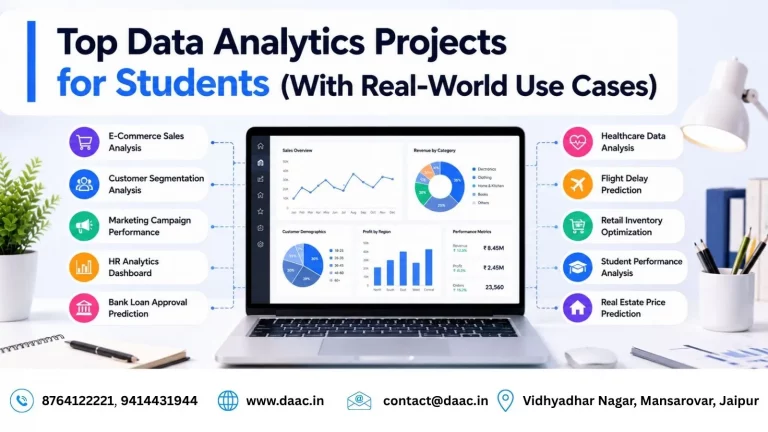
- Real-world projects and case studies
Many students looking for a Data Analytics Course in Jaipur prefer programs that include live projects because practical exposure helps bridge the gap between learning and industry requirements.
Career Opportunities After Completing Data Analytics Training
The demand for analytics professionals continues to grow because organizations depend heavily on data-driven decision-making. After completing a professional analytics program, graduates can apply for a variety of entry-level and mid-level positions. These roles exist across almost every major industry and offer clear career progression paths.
Popular job roles include:
- Data Analyst
- Business Analyst
- MIS Executive
- Reporting Analyst
- Operations Analyst
- Market Research Analyst
- Junior Data Scientist
These positions allow professionals to develop analytical thinking and business intelligence skills. As experience grows, opportunities expand into leadership and specialized analytics roles, making this a rewarding long-term career choice.
Data Analytics Salary After Graduation in 2026
Salary is one of the major reasons graduates explore analytics as a career option. Compared to many traditional entry-level jobs, analytics roles often provide competitive compensation packages. The exact salary depends on factors such as location, skill level, certifications, and practical project experience.
Average salary expectations in India include:
- Freshers: ₹4–₹6 LPA
- 2–3 Years Experience: ₹7–₹10 LPA
- Senior Professionals: ₹12 LPA and above
The most important factor influencing earnings is practical expertise. Employers value candidates who can solve business problems using data rather than relying solely on academic qualifications. This makes continuous learning essential for career advancement.
Data Analytics vs Traditional Post-Graduation Courses
Many students compare analytics training with conventional postgraduate degrees before making a decision. While both options have value, analytics programs often provide faster access to employment and industry-relevant skills.
| Aspect | Data Analytics | Traditional PG |
|---|---|---|
| Duration | Short-Term | 2 Years |
| Job Focus | High | Moderate |
| Industry Skills | Practical | Theory-Based |
| Cost | Lower | Higher |
| Job Entry | Faster | Slower |
| Career Demand | Growing | Varies |
For students seeking immediate employability and skill development, analytics often provides a stronger return on investment. However, the best choice depends on individual career goals and interests.
Why Data Analytics Is a Future-Proof Career
Data has become one of the most valuable assets for modern organizations. Every digital interaction generates information that businesses can use to improve customer experiences, optimize operations, and increase profitability. This constant growth in data ensures ongoing demand for skilled analysts.
Several factors make analytics future-proof:
- Rapid growth of business data
- Expansion of artificial intelligence technologies
- Increased demand for business intelligence
- Data-driven decision-making across industries
- Growing digital transformation initiatives
Because data supports nearly every business function, professionals with analytical expertise are expected to remain valuable for many years. This long-term demand makes analytics an attractive option for graduates seeking career security.
How DAAC Helps Graduates Build a Data Analytics Career
Choosing the right training institute plays a significant role in career success. A strong learning environment helps students develop practical skills, confidence, and industry exposure. DAAC focuses on hands-on learning to ensure students understand real-world applications rather than memorizing theoretical concepts.
Key benefits include:
- Beginner-friendly curriculum
- Industry-focused projects
- Practical assignments
- Career guidance support
- Placement-oriented training
- Experienced mentors
Students interested in expanding their technical skills can also explore related programs such as Data Analytics Course in Jaipur, which provides structured learning and industry-focused training opportunities.
Common Questions Students Ask
Is Data Analytics difficult to learn?
No. Most beginner-friendly courses start with basic concepts and gradually introduce advanced topics. With regular practice and proper guidance, students from any background can learn analytics effectively.
Is coding compulsory?
Advanced programming is not mandatory for entry-level analytics roles. Basic Python knowledge is usually sufficient for most beginner-level positions.
Can non-technical students learn Data Analytics?
Yes. Commerce, arts, and management graduates can successfully transition into analytics careers with structured training and practical project experience.
Building Additional Skills for Better Opportunities
While analytics itself offers strong career prospects, combining it with complementary skills can create even more opportunities. Knowledge of business intelligence, reporting tools, and digital technologies increases professional value. Students often explore related programs such as Web Development and Digital Marketing to broaden their expertise.
For learners interested in technology-focused careers, a Web Development Course in Jaipur can complement analytical skills and provide additional career flexibility. Combining technical and analytical abilities often leads to stronger job prospects in the modern digital economy.
Final Verdict: Is It Worth It?
The answer is yes. A Data Analytics Course After Graduation is one of the most practical and rewarding career choices in 2026. It provides industry-relevant skills, strong job demand, attractive salary potential, and opportunities across multiple sectors. Unlike many traditional career paths, analytics focuses on real-world applications that employers actively value.
Graduates who invest in quality training, practical projects, and continuous learning can build successful careers in this field. With businesses increasingly relying on data for strategic decisions, analytics remains a future-focused profession with significant growth potential.
FAQs
1. Is a Data Analytics Course After Graduation a good career option in 2026?
Yes, it offers strong job demand, competitive salaries, and opportunities across multiple industries, making it an excellent career choice for graduates.
2. Can commerce and arts students pursue data analytics?
Absolutely. Students from commerce, arts, management, and technical backgrounds can learn analytics successfully with proper training.
3. What is the average salary of a Data Analyst fresher in India?
Freshers typically earn between ₹4 lakh and ₹6 lakh per annum, depending on skills, location, and practical experience.
4. How long does it take to complete a Data Analytics course?
Most professional training programs can be completed within 3 to 6 months, depending on the curriculum and learning schedule.
5. Which tools are commonly taught in Data Analytics courses?
Popular tools include Excel, SQL, Power BI, Tableau, and Python, along with practical projects and business case studies.