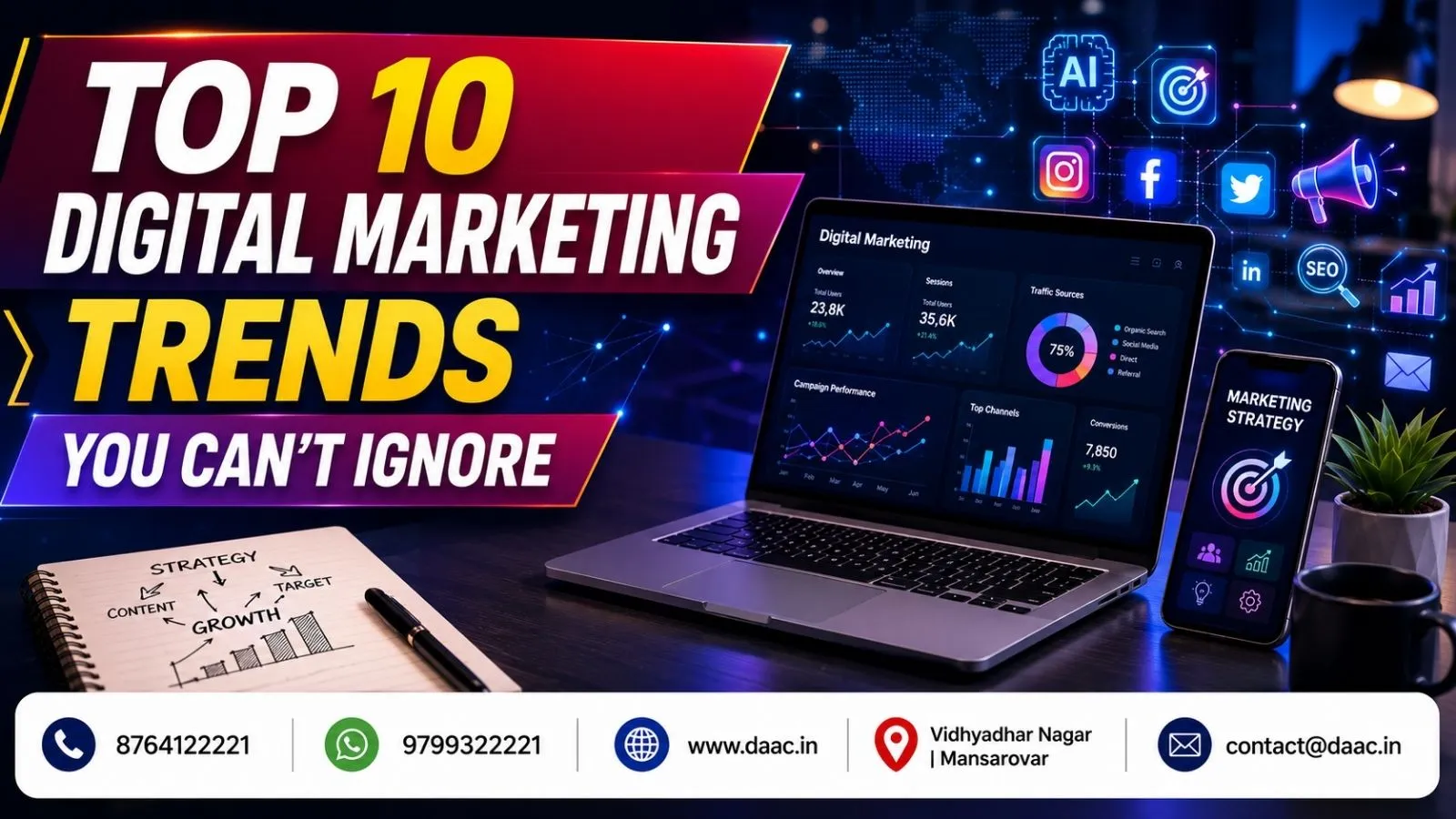
Digital marketing is evolving faster than ever. Strategies that delivered excellent results a few years ago are no longer enough to compete in today’s highly digital and AI-driven marketplace. Consumer behavior has changed dramatically, search engines have become smarter, and brands are investing heavily in personalized experiences to capture attention.
In 2026, businesses are focusing on automation, customer experience, artificial intelligence, short-form video content, and data-driven decision-making. Companies that adapt quickly to these changes are seeing stronger engagement, higher conversion rates, and better return on investment.
Whether you are a business owner, marketing professional, student, or entrepreneur, understanding the latest digital marketing trends is essential for staying competitive. This guide explores the most important trends shaping the future of online marketing and how businesses can use them effectively.
Why Digital Marketing Continues to Grow
The digital economy continues to expand as consumers spend more time online for shopping, learning, entertainment, and communication. Businesses are increasing their marketing budgets because digital channels provide measurable results and better audience targeting than traditional advertising.
Several factors are driving this growth:
- Increased smartphone usage
- Expansion of e-commerce
- AI-powered marketing tools
- Growth of social media platforms
- Rising demand for personalized experiences
- Advanced analytics and automation
As competition increases, businesses must stay updated with emerging technologies and consumer expectations.
1. Artificial Intelligence Will Power Most Marketing Campaigns
Artificial intelligence is no longer a future trend; it has become a core part of modern marketing strategies. Businesses use AI to analyze customer behavior, automate repetitive tasks, personalize content, and optimize advertising campaigns.
Popular AI applications include:
- Chatbots for customer support
- AI-generated content
- Predictive analytics
- Automated email marketing
- Personalized product recommendations
Companies such as Amazon and Netflix use AI extensively to recommend products and content based on user preferences. This level of personalization significantly improves engagement and customer satisfaction.
2. Hyper-Personalization Will Replace Generic Marketing
Consumers expect brands to understand their preferences and provide relevant experiences. Generic marketing messages are becoming less effective as users prefer customized interactions.
Modern personalization includes:
- Personalized email campaigns
- Dynamic website content
- Product recommendations
- Location-based marketing
- Behavioral targeting
Brands that use customer data responsibly can deliver more relevant experiences and build stronger relationships with their audiences.
3. Short-Form Video Content Will Continue to Dominate
Platforms such as Instagram Reels, YouTube Shorts, and TikTok have transformed how people consume content online. Short videos capture attention quickly and generate higher engagement compared to many traditional content formats.
Successful brands use short-form videos to:
- Demonstrate products
- Share customer testimonials
- Explain complex concepts
- Showcase behind-the-scenes content
- Build brand awareness
The ability to deliver valuable information in less than a minute has become a critical marketing skill.
4. Voice Search Optimization Is Becoming Essential
The growing popularity of voice assistants has changed how users search for information online. Instead of typing short keywords, people now ask complete questions using natural language.
Examples include:
- “What is the best digital marketing course near me?”
- “How can I improve my website ranking?”
- “Which SEO strategies work in 2026?”
Businesses need to optimize content for conversational searches and question-based queries to remain visible in search results.
5. Social Commerce Will Expand Rapidly
Social media platforms are no longer just engagement channels. They have become complete shopping ecosystems where users can discover, evaluate, and purchase products without leaving the platform.
Key social commerce platforms include:
- Instagram Shops
- Facebook Marketplace
- TikTok Shop
- Pinterest Shopping
Consumers increasingly prefer seamless shopping experiences, making social commerce a major growth opportunity for businesses.
6. SEO Will Focus More on Search Intent
Modern SEO is no longer about inserting keywords repeatedly throughout content. Search engines now prioritize user intent, content quality, and overall user experience.
Businesses that want long-term organic visibility should focus on:
- Comprehensive content
- User-focused writing
- Fast website speed
- Mobile optimization
- High-quality backlinks
- Structured data
Students interested in building professional SEO skills often start with a Digital Marketing Course in Jaipur to understand search engine algorithms, keyword research, and content optimization techniques used by modern businesses.
SEO continues to be one of the highest ROI digital marketing channels available.
7. First-Party Data Will Become More Valuable
Privacy regulations and changes in browser tracking policies are reducing the effectiveness of third-party cookies. As a result, companies are investing more heavily in collecting first-party data directly from customers.
Examples include:
- Email subscriptions
- Customer accounts
- Surveys and feedback forms
- Loyalty programs
- Website interactions
Brands that build trust and collect consent-based data will gain a significant competitive advantage in the coming years.
8. Influencer Marketing Will Shift Toward Authenticity
Consumers are becoming more selective about the content they trust. Instead of focusing solely on celebrity influencers, brands are increasingly collaborating with micro and nano influencers.
These creators often have:
- Higher engagement rates
- More loyal communities
- Greater audience trust
- Better niche targeting
For example, a local fitness influencer with 20,000 followers may generate better results for a health brand than a celebrity with millions of followers but lower audience engagement.
9. Omnichannel Marketing Will Improve Customer Experience
Consumers interact with brands across multiple channels before making a purchase decision. They may discover a product on social media, visit the website, read reviews, and then purchase through a mobile app.
Omnichannel marketing ensures a consistent experience across:
- Websites
- Social media
- Email campaigns
- Mobile applications
- Customer support channels
Businesses that integrate their marketing efforts effectively can improve customer satisfaction and increase conversions.
10. Marketing Automation Will Drive Efficiency
Automation allows marketers to handle repetitive tasks while focusing on strategy and creativity. Modern automation tools can manage customer journeys from lead generation to conversion.
Popular automation activities include:
- Email workflows
- Lead nurturing campaigns
- Social media scheduling
- CRM integration
- Customer segmentation
Professionals who understand both automation and analytics are becoming increasingly valuable in the digital marketing industry.
Many marketers now combine automation expertise with website development knowledge through programs such as the WordPress Course in Jaipur, helping them manage complete digital campaigns more effectively.
Skills Required to Succeed in Digital Marketing in 2026
As digital marketing becomes more technology-driven, professionals need a combination of technical and creative skills.
Important skills include:
- SEO
- Content Marketing
- Google Ads
- Social Media Marketing
- Data Analytics
- AI Tools
- Email Marketing
- Marketing Automation
- Video Marketing
- Conversion Optimization
Continuous learning is essential because digital platforms and algorithms evolve constantly.
How Businesses Can Adapt to These Trends
Organizations that want to stay ahead should focus on innovation while maintaining customer trust.
Recommended actions include:
- Invest in AI-powered tools
- Prioritize customer experience
- Build first-party data strategies
- Create video content consistently
- Optimize for mobile and voice search
- Implement marketing automation
- Monitor analytics regularly
Businesses that embrace change early often gain a significant advantage over competitors.
Conclusion
Digital marketing in 2026 is being shaped by artificial intelligence, personalization, video-first content, automation, privacy-focused strategies, and omnichannel experiences. Consumer expectations continue to rise, and brands must adapt quickly to remain relevant.
The most successful marketers will be those who combine creativity with technology, use data responsibly, and focus on delivering genuine value to customers. By understanding and implementing these trends, businesses can improve engagement, strengthen customer relationships, and achieve sustainable growth in an increasingly competitive digital landscape.
FAQs
1. What is the biggest digital marketing trend in 2026?
Artificial intelligence and personalization are currently the most influential trends because they help businesses deliver highly relevant customer experiences.
2. Is SEO still important in 2026?
Yes. SEO remains one of the most effective long-term marketing strategies for generating organic traffic and improving online visibility.
3. Why is short-form video marketing so popular?
Short videos capture attention quickly, increase engagement, and perform exceptionally well on platforms such as Instagram, TikTok, and YouTube Shorts.
4. What role does AI play in digital marketing?
AI helps automate tasks, analyze customer behavior, personalize content, optimize campaigns, and improve overall marketing performance.
5. Which skill should beginners learn first in digital marketing?
SEO is often the best starting point because it builds a strong understanding of search engines, content creation, and audience behavior.