A Full Stack Developer is a professional who can work on both the front-end and back-end of web applications. The front-end is what users see and interact with, while the back-end is responsible for server logic, database management, and application performance. Together, both layers form a complete web solution.
With the growing demand for web applications, choosing the Best Full Stack Developer Course has become an important decision for students and professionals who want to build a strong career in software development. However, with so many options available online and offline, selecting the right course can be confusing. This guide will help you understand how to choose the most suitable program for your learning and career goals.
Why Full Stack Development is a Smart Career Choice
Before selecting a course, it is important to understand whether Full Stack Development is the right career for you. The demand for developers who understand both client-side and server-side technologies is increasing rapidly across industries.
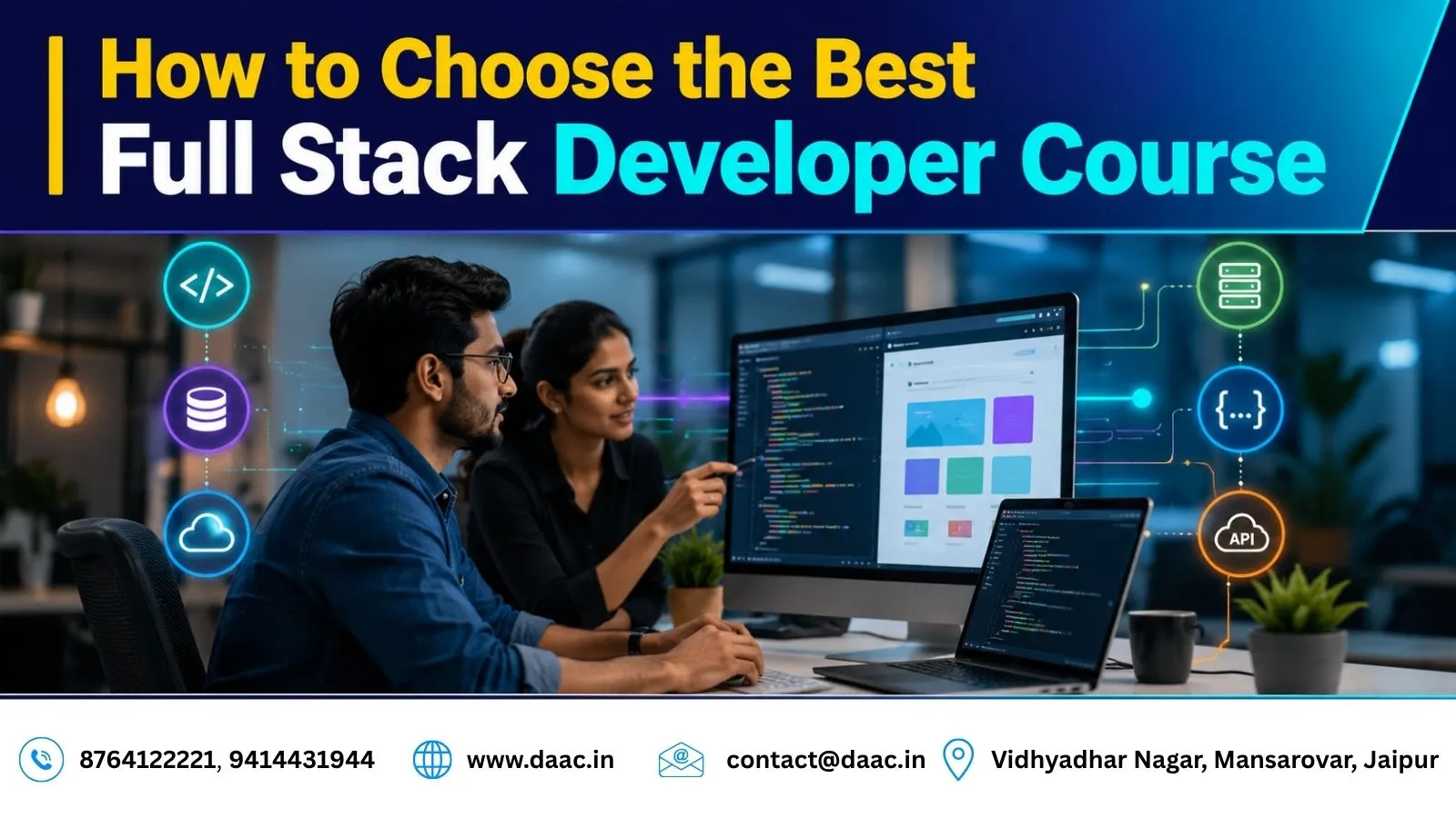
A Full Stack Developer typically works with technologies like HTML, CSS, JavaScript, React, Node.js, databases, APIs, and cloud services. Companies prefer hiring full stack professionals because they can handle multiple responsibilities, making development faster and more efficient.
This career offers strong job opportunities, attractive salary packages, and long-term growth. Students who enroll in a structured Full Stack Development Course often find better placement opportunities compared to those with limited technical skills.
Key Skills Required Before Joining a Full Stack Course
Not everyone is immediately ready to start full stack training. There are certain basic skills that can help you succeed in this field:
- Basic understanding of computers
- Logical thinking and problem-solving ability
- Interest in programming and web technologies
- Willingness to learn continuously
- Basic understanding of HTML or coding concepts (optional but helpful)
If you already have these foundational skills, you will find it easier to understand advanced topics during your training program. Even beginners can start, but consistent practice is necessary to succeed in web development training.
Features of the Best Full Stack Developer Course
Choosing the right program requires understanding what a high-quality course should offer. A well-structured course should provide both theoretical knowledge and practical experience.
1. Complete Front-End and Back-End Training
The Best Full Stack Developer Course must cover both front-end and back-end technologies in depth. This includes HTML, CSS, JavaScript, React for front-end and Node.js, Express, and databases like MongoDB or MySQL for back-end development.
2. Industry-Oriented Curriculum
A good course should follow current industry standards. Technologies used in real companies should be part of the syllabus so students are job-ready after completion.
3. Project-Based Learning
Practical experience is more important than theory. Students should work on real-world projects such as e-commerce websites, portfolio platforms, and web applications. This builds confidence and strengthens your portfolio.
4. Placement Assistance
A strong IT Training Institute should offer placement support, resume building, and interview preparation to help students secure jobs after course completion.
5. Mentorship and Support
Guidance from experienced trainers helps students understand complex topics easily. Doubt-solving sessions and continuous feedback improve learning outcomes.
Types of Full Stack Developer Courses
There are mainly two types of learning options available in the market:
Online Courses
Online courses allow students to learn from anywhere at their own pace. They are usually more affordable and flexible. Platforms like Udemy, Coursera, and edX offer many Programming Course options for full stack development.
However, online courses may lack personal interaction and structured guidance, which can make learning difficult for beginners.
Offline Courses
Offline courses are conducted in physical classrooms where students learn directly from instructors. These courses offer better interaction, hands-on training, and structured learning environments.
Many students prefer enrolling in an IT Training Institute for offline training because it provides discipline, mentorship, and better practical exposure.
How to Choose the Best Full Stack Developer Course
Selecting the right course requires careful evaluation of several important factors.
1. Understand Your Learning Style
Some students prefer self-paced online learning, while others perform better in classroom environments. Choose a format that matches your learning behavior.
2. Check Course Curriculum
Always review the syllabus before enrolling. The course should include both front-end and back-end technologies along with real-world projects.
3. Evaluate Trainer Experience
Experienced trainers can simplify complex topics and provide industry insights. Check the background of instructors before making a decision.
4. Compare Fees and Value
Do not choose a course based only on price. Focus on the value it provides, including training quality, projects, and placement support.
5. Read Student Reviews
Feedback from previous students helps you understand the quality of the institute and training environment.
Popular Full Stack Developer Learning Options
There are several platforms and institutes offering full stack training programs:
- The Odin Project (Free learning platform)
- Udemy Full Stack Courses
- Coursera Web Development Programs
- edX Professional Courses
- Local IT Training Institutes offering practical training
Among offline institutes, many learners prefer structured classroom programs where they receive direct mentorship and project-based learning support.
Importance of Practical Projects in Full Stack Development
Practical experience is one of the most important parts of learning development. Without projects, theoretical knowledge is incomplete.
Some common projects included in training programs are:
- E-commerce websites
- Blogging platforms
- Portfolio websites
- Task management applications
- Social media clones
These projects help students build a strong portfolio, which is essential for job applications.
Career Opportunities After Full Stack Training
After completing a Best Full Stack Developer Course, students can apply for multiple job roles such as:
- Full Stack Developer
- Front-End Developer
- Back-End Developer
- Web Application Developer
- Software Engineer
The demand for full stack professionals is growing rapidly in startups, IT companies, and digital agencies. With experience, developers can also work as freelancers or start their own projects.
Common Mistakes to Avoid While Choosing a Course
Many students make mistakes when selecting a training program. Avoid the following:
- Choosing only based on low fees
- Ignoring practical training
- Not checking course curriculum
- Selecting outdated technologies
- Skipping placement support details
Making the right choice early saves time and helps build a strong career foundation.
Conclusion
Choosing the Best Full Stack Developer Course is an important step toward building a successful career in web development. A good course should offer practical training, updated curriculum, expert guidance, and placement support.
Whether you choose online or offline learning, focus on building real projects and improving your coding skills consistently. With the right training and dedication, you can become a successful Full Stack Developer and explore high-growth opportunities in the IT industry.
FAQs
1. What is the best Full Stack Developer course for beginners?
A beginner-friendly course includes HTML, CSS, JavaScript, React, Node.js, and database fundamentals with project-based learning.
2. Can I become a Full Stack Developer without coding experience?
Yes, beginners can start, but consistent practice and structured training are required to build strong skills.
3. Which is better: online or offline Full Stack courses?
Online courses offer flexibility, while offline courses provide better guidance and hands-on training. Choose based on your learning style.
4. How long does it take to complete a Full Stack Developer course?
Most courses take 6 to 12 months depending on the curriculum and learning pace.
5. Is Full Stack Development a good career in 2026?
Yes, Full Stack Development has strong demand due to increasing web application development across industries.