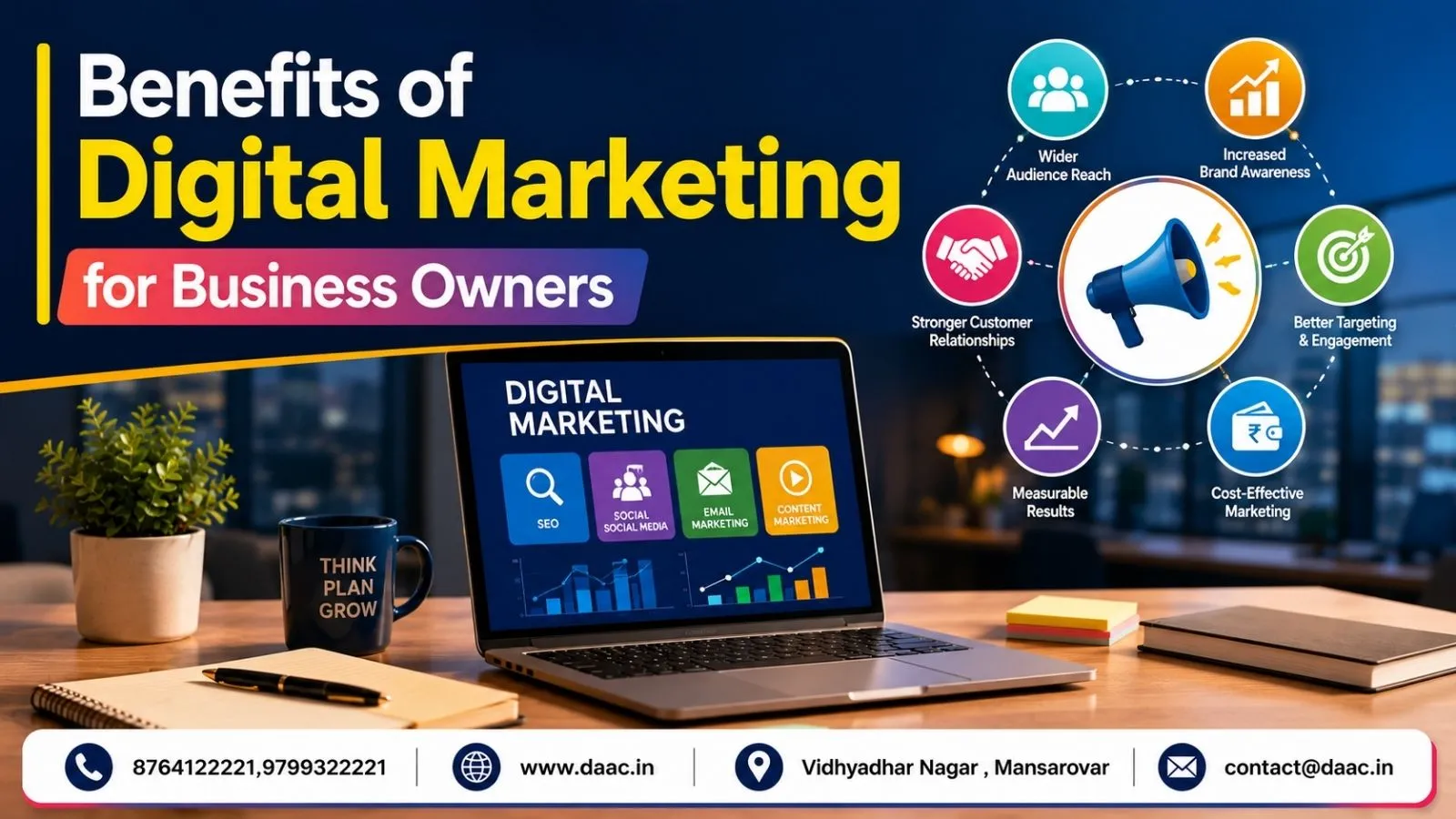
In 2026, having a strong online presence is essential for businesses of every size. From startups and local shops to established companies, organizations are increasingly using digital channels to attract customers, build brand awareness, and increase revenue. Understanding the Benefits of Digital Marketing for Business Owners helps companies make informed marketing decisions and remain competitive in a rapidly changing marketplace.
Unlike traditional methods such as newspaper advertisements, pamphlets, and billboards, digital marketing enables businesses to reach specific audiences, measure campaign performance, and adjust their strategies using real-time data. Through search engine optimization (SEO), social media marketing, email campaigns, paid advertising, and content marketing, business owners can connect with potential customers at different stages of the buying journey.
Let’s explore the major advantages of digital marketing and how businesses can use them to achieve sustainable growth.
1. Wider Customer Reach Across Locations
One of the most significant Benefits of Digital Marketing for Business Owners is the ability to reach customers beyond their immediate geographical area. Traditional advertising often depends on physical locations, while digital platforms allow businesses to connect with audiences across cities, states, and countries.
Reach local and global audiences
Businesses can use search engines, social media platforms, websites, and online marketplaces to make their products and services accessible to a wider audience. For example, a Jaipur-based clothing store can attract local shoppers through local SEO while also reaching customers in other cities through its website.
Connect with relevant customers
Digital channels allow businesses to reach audiences based on location, interests, search behavior, and other available targeting signals. This helps marketers focus their efforts on people who are more likely to be interested in their offerings.
For better results, businesses should combine local SEO, useful website content, and relevant social media activity rather than relying on a single promotional channel.
2. Cost-Effective Marketing Strategy
Traditional advertising methods, including television commercials, print advertisements, and large outdoor displays, can require substantial budgets. Digital marketing provides flexible options for businesses with different financial resources.
Set budgets according to business needs
Business owners can start with a modest budget, test different campaigns, and increase spending when the results justify the investment. Paid search and social media advertising platforms also provide options to control spending and refine audience targeting.
Improve marketing efficiency
Digital marketing can help businesses use their budgets more effectively by focusing on relevant audiences and tracking performance. However, results depend on factors such as competition, campaign quality, audience demand, and the overall customer experience.
For example, a small business can publish helpful blog posts, optimize its website for search engines, and maintain an active social media presence without paying for every customer interaction.
The key is to select channels that match the business’s objectives instead of spending money on every available platform.
3. Better Customer Targeting and Personalization
Effective marketing is not just about reaching more people. It is about reaching the right people with messages that match their needs. Digital marketing helps businesses create more relevant campaigns for different customer groups.
Understand customer interests and behavior
Website analytics, customer feedback, search queries, and campaign reports can help businesses understand what their audiences are looking for. These insights support better decisions about messaging, products, and promotional offers.
Deliver more relevant experiences
Businesses can personalize email messages, product recommendations, and landing-page content based on appropriate customer information and preferences.
For example, an online store may send product recommendations based on a customer’s previous purchases or expressed interests. Personalization should remain transparent, respect privacy, and follow applicable data-protection requirements.
By focusing on customer needs, businesses can improve engagement and create more meaningful interactions throughout the buying journey.
4. Measurable Results and Performance Tracking
Another major advantage of digital marketing is the ability to evaluate campaign performance using measurable data. Instead of relying only on estimates, business owners can assess how customers interact with their websites, advertisements, and content.
Track important marketing metrics
Depending on the campaign, businesses can monitor:
-
Website visits and traffic sources
-
Search impressions, clicks, and keyword performance
-
Social media reach, engagement, and audience growth
-
Advertising costs and cost per lead
-
Form submissions, enquiries, purchases, and conversions
-
Customer acquisition costs and return on marketing investment
Use data to improve decisions
Analytics tools help identify which channels and campaigns contribute to business goals. For example, if a landing page receives traffic but generates few enquiries, the business can review its content, page speed, forms, and calls to action.
Measuring performance regularly makes it easier to identify problems, test improvements, and allocate resources more effectively. This turns an Online Marketing Strategy into a process of continuous improvement rather than guesswork.
5. Increased Brand Awareness and Online Visibility
Customers often research a business online before contacting it or making a purchase. A consistent digital presence helps a brand become easier to discover and recognize.
Improve visibility through search engines
Search engine optimization helps businesses improve the accessibility, relevance, and quality of their website content. By answering genuine customer questions and targeting relevant search intent, businesses can attract visitors who are actively looking for their products or services.
Local businesses can also maintain accurate business information, publish useful updates, and encourage genuine customer reviews on relevant platforms.
Build recognition through consistent content
Social media posts, educational articles, videos, newsletters, and customer stories give businesses opportunities to communicate their values and expertise.
Consistency is important, but publishing content frequently is not enough on its own. Content should provide value, reflect the brand’s identity, and address real customer concerns.
Over time, these efforts can improve brand recognition, strengthen credibility, and help potential customers feel more confident about choosing the business.
6. Higher Conversion Rates and Sales Growth
Generating website traffic is only one part of digital marketing. Businesses must also help visitors take meaningful actions, such as making a purchase, requesting a quotation, booking an appointment, or submitting an enquiry.
Create a smoother customer journey
Clear product information, relevant landing pages, transparent pricing, simple enquiry forms, and mobile-friendly design can make it easier for customers to take the next step.
Businesses should ensure that their advertisements and landing pages communicate consistent information. Misleading claims or unclear offers can reduce trust and discourage conversions.
Follow up with interested customers
Email campaigns, consent-based remarketing, and helpful follow-up messages can reconnect businesses with people who have shown interest but have not completed a purchase.
For example, a service provider may send a useful guide to someone who has requested information, followed by an invitation to discuss their requirements.
Conversion improvements should be measured against meaningful outcomes, such as qualified leads, completed purchases, and customer retention, rather than clicks alone.
7. Strong Customer Engagement and Relationship Building
Long-term business success depends on more than acquiring new customers. Businesses also need to maintain relationships, respond to concerns, and deliver a positive customer experience.
Communicate through digital channels
Social media, email, website contact forms, and online chat provide convenient ways for customers to ask questions and share feedback.
Responding promptly and professionally can help businesses resolve issues and demonstrate that customer concerns matter.
Encourage loyalty and repeat purchases
Businesses can share product updates, useful tips, personalized offers, and relevant educational content with customers who have agreed to receive communications.
Customer feedback can also reveal recurring problems and opportunities to improve products or services.
A strong relationship-building strategy focuses on helpful communication rather than constant promotion. When customers feel heard and supported, they may be more likely to return and recommend the business to others.
8. Competitive Advantage in the Market
Businesses operate in competitive markets where customers can compare several providers before making a decision. A well-planned digital presence can help a business communicate its strengths and differentiate itself from competitors.
Identify market opportunities
Business owners can study publicly available competitor websites, content, search visibility, social media activity, and customer reviews to understand how other brands position themselves.
This research can reveal unanswered customer questions, service gaps, and opportunities to provide more useful information.
Build a distinctive brand position
Rather than copying competitors, businesses should focus on their own strengths. These may include specialized services, customer support, product quality, local expertise, convenient delivery, or a clear value proposition.
For example, a local training institute could publish practical career guidance and course-related learning resources to help prospective students make informed decisions.
Combining competitor research with customer insights enables businesses to develop more relevant Digital Marketing Strategies for Business Growth.
9. Better Control Over Marketing Strategies
Digital marketing gives business owners greater flexibility in planning, testing, and managing promotional activities. Campaigns can be adjusted as customer behavior, business priorities, and market conditions change.
Test different approaches
Businesses can experiment with headlines, creative formats, audience segments, landing pages, and calls to action. Comparing results helps identify which approaches are most effective for a specific objective.
For example, a business could test two versions of an advertisement to determine which one generates more qualified enquiries.
Adjust campaigns using performance data
If a campaign is not producing the expected results, business owners can review the audience, offer, content, budget, or conversion process and make appropriate changes.
However, effective digital marketing still requires planning, skills, and ongoing monitoring. Some businesses may benefit from working with experienced professionals or using specialized tools to manage more complex campaigns.
The ability to make informed adjustments helps businesses remain flexible without losing sight of their long-term objectives.
10. Long-Term Business Growth and Sustainability
A sustainable marketing strategy balances short-term results with long-term brand development. Digital channels can support both, provided businesses choose suitable methods and maintain consistent quality.
Build lasting value through organic marketing
SEO, educational content, and a useful website can continue attracting relevant visitors after the initial work is completed. These methods generally require ongoing maintenance and may take time to produce results, but they can contribute to a more stable source of traffic and enquiries.
Paid advertising, meanwhile, can help businesses reach relevant audiences more quickly while campaigns are active. Combining paid and organic methods can support different stages of business growth.
Strengthen long-term customer value
Businesses can use customer feedback, email communication, useful content, and reliable service to encourage repeat purchases and referrals.
A sustainable strategy should also account for changing search behavior, new technologies, privacy expectations, and evolving customer preferences.
The most effective approach is to review performance regularly and invest in activities that support the business’s wider goals.
Additional Digital Marketing Benefits for Business Owners
Beyond the ten major advantages, digital marketing can provide several other benefits:
-
Improved customer insights: Understand common questions, interests, and purchasing behavior.
-
Greater flexibility: Adapt campaigns to changing business needs and market conditions.
-
Stronger brand credibility: Share useful information and demonstrate expertise consistently.
-
Support for small businesses: Compete for relevant audiences without always needing a large advertising budget.
-
More opportunities for customer feedback: Collect reviews and identify areas for improvement.
-
Better coordination across channels: Connect search, social media, email, website content, and paid campaigns around shared business objectives.
These Digital Marketing Benefits are most valuable when businesses use them as part of a coordinated strategy rather than treating each marketing channel as a separate activity.
Conclusion
Understanding the Benefits of Digital Marketing for Business Owners is essential for businesses that want to remain visible, competitive, and customer-focused in 2026. Digital marketing can help expand customer reach, manage promotional budgets, improve targeting, measure results, strengthen customer relationships, and support long-term growth.
However, success depends on choosing the right channels, creating useful content, monitoring meaningful metrics, and continuously improving the customer experience. Businesses should set clear objectives and select strategies that align with their audience, resources, and growth plans.
For aspiring marketers and business owners who want to develop practical digital marketing skills, DAAC offers career-focused learning opportunities. Exploring the Digital Marketing Course in Jaipur can help learners understand essential digital channels and build a foundation for applying digital marketing concepts in real business situations.