
Artificial Intelligence is rapidly transforming industries worldwide, and students who want to build a future in this field must follow a structured learning plan. A clear Generative AI Career Roadmap helps learners understand what to study, how to practice, and how to prepare for real job opportunities in the AI industry by 2026.
Why a Generative AI Career Roadmap is Important
A proper roadmap is essential because the AI field is vast and continuously evolving. Without structured learning, students often feel confused about where to start and what skills to focus on. A well-planned AI Career Path 2026 helps learners move step by step from basics to advanced concepts while building real-world experience.
This structured approach also ensures that students develop job-ready Generative AI Skills, which are highly demanded in the current technology market.
Step-by-Step Generative AI Career Roadmap for Students
Step 1: Learn AI Fundamentals and Python
The first step in the Generative AI Career Roadmap is understanding basic concepts of Artificial Intelligence and learning Python programming. Python is widely used in AI development due to its simplicity and powerful libraries.
Students should focus on:
- Python basics
- Data types and functions
- Introduction to AI concepts
- Problem-solving skills
This foundation is essential for every Artificial Intelligence Career Guide.
Step 2: Explore Generative AI Tools
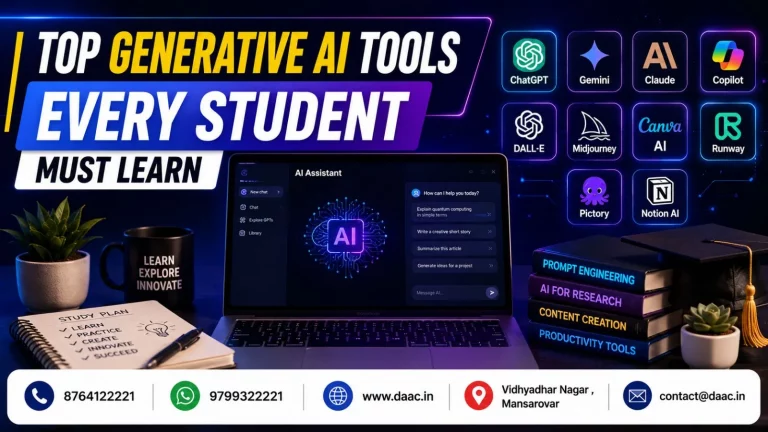
The next step is exploring modern Generative AI tools like ChatGPT, image generation platforms, and automation tools. These tools help students understand how AI works in real-world applications.
Hands-on practice with these tools is an important part of a structured Generative AI Skills development process.
Step 3: Learn Core AI Skills
To succeed in the AI industry, students must build strong technical skills such as:
- Prompt engineering
- Machine learning basics
- Data handling and processing
- Model understanding
These skills are highly valuable in the evolving AI Jobs 2026 market.
Step 4: Build Mini Projects
Practical learning is very important in AI careers. Students should start building small projects such as:
- Chatbots
- AI content generators
- Image classification tools
- Automation scripts
These projects strengthen understanding and improve confidence in real-world development.
Step 5: Advanced Learning and Certification
At this stage, students should join a structured Generative AI taining program or certification course. Advanced learning includes:
- Large Language Models (LLMs)
- API integration
- AI automation tools
- Real-world AI applications
Certification improves job opportunities and validates technical knowledge.
Step 6: Internship and Practical Experience
Internships are an important part of the AI Career Path 2026. They help students gain real industry exposure and understand how professional AI projects are developed and managed.
Working on live projects improves problem-solving ability and teamwork skills.
Step 7: Build a Strong Portfolio
A professional portfolio is essential for job applications. It should include:
- GitHub projects
- Case studies
- AI demos
- Real-world applications
A strong portfolio helps students stand out in the competitive Generative AI Skills job market.
Step 8: Apply for AI Jobs or Freelancing
After building skills and experience, students can apply for:
- AI Internships
- Prompt Engineering roles
- Junior AI Developer positions
- Freelance AI projects
These opportunities are part of growing AI Jobs 2026 trends.
Step 9: Continuous Learning
Artificial Intelligence is constantly evolving. Students must stay updated with:
- New AI tools
- Research papers
- Industry trends
- Online communities
Continuous learning is a key part of any Artificial Intelligence Career Guide.
Step 10: Specialize in Advanced AI Domains
After gaining experience, students can specialize in areas like:
- Text generation AI
- Image and video AI
- AI automation systems
- Data-driven AI solutions
Specialization helps in building long-term career growth.
How Institutes Support the Generative AI Career Roadmap
Structured Learning Programs
Institutes offering a Generative AI Career Roadmap provide structured courses that guide students step-by-step from basics to advanced AI concepts.
Hands-On Training
Practical training with real datasets and tools helps students understand real-world AI applications and improves their Generative AI Skills.
Mentorship and Guidance
Expert mentors guide students in building projects, solving problems, and preparing for the AI Career Path 2026.
Placement Preparation
Training programs also help students prepare for interviews and improve their chances of getting selected for AI Jobs 2026.
Conclusion
A structured Generative AI Career Roadmap is essential for students who want to build a successful future in Artificial Intelligence. By learning Python, practicing AI tools, building projects, and gaining real-world experience, students can confidently enter the AI industry in 2026. Continuous learning and skill development are the keys to long-term success in this fast-growing field.
FAQs
1. What is a Generative AI Career Roadmap?
It is a step-by-step learning plan that helps students build skills and prepare for AI careers in 2026.
2. What skills are required for AI careers?
Python, prompt engineering, machine learning basics, and data handling are essential skills.
3. How can students start a career in AI?
Students should start with Python, learn AI fundamentals, build projects, and gain certification.
4. Are internships important for AI careers?
Yes, internships provide real-world experience and improve job readiness.
5. What are the job roles in AI in 2026?
Common roles include AI Intern, Prompt Engineer, AI Developer, and AI Automation Specialist.