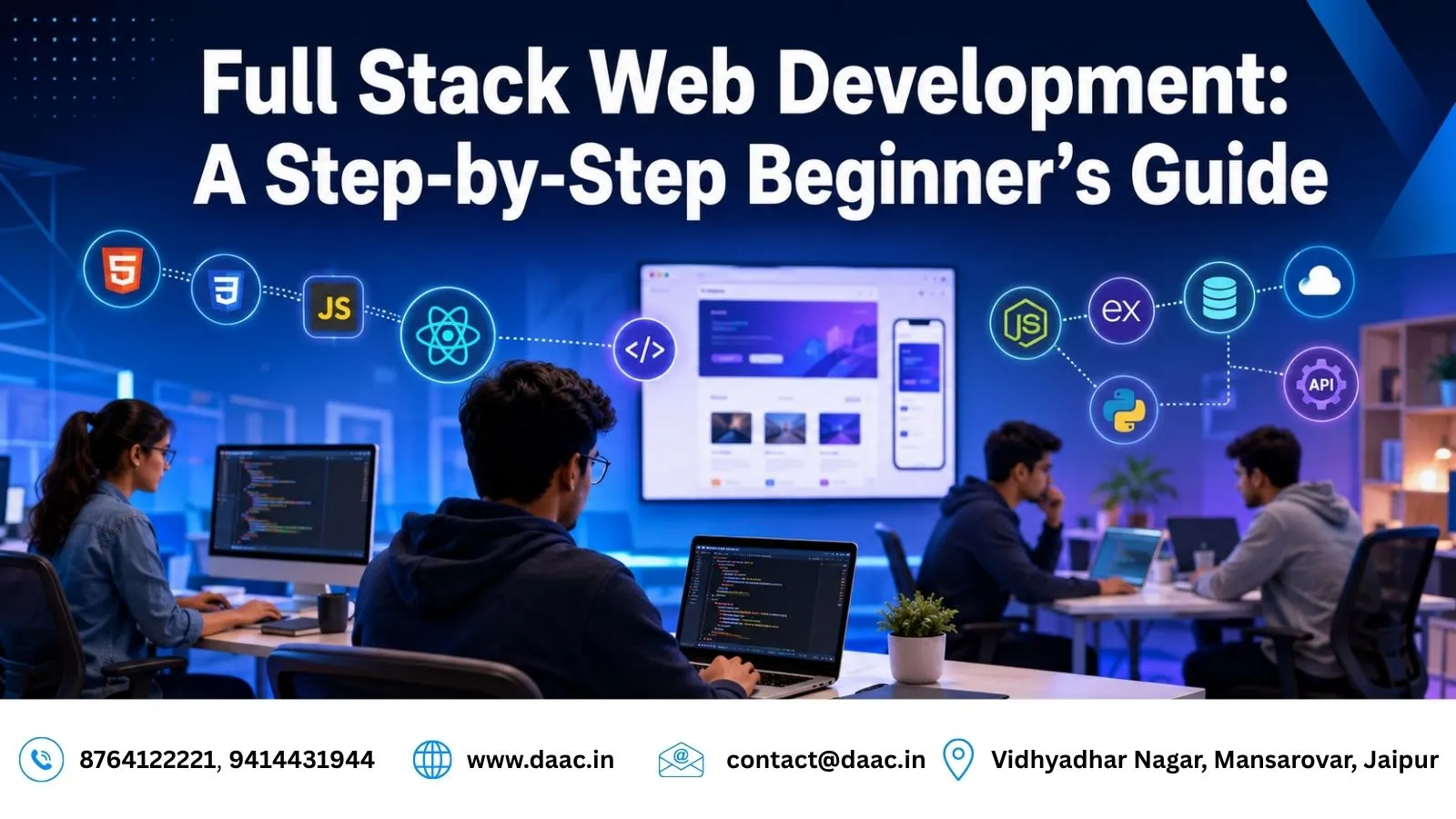
Full Stack Web Development is a complete approach to building modern web applications where a developer works on both the frontend and backend of a system. The frontend is the part users interact with, while the backend manages server logic, databases, and application functionality. A professional who learns through a structured Full Stack Developer Course gains the ability to develop complete applications independently without depending on multiple teams.
Today, full stack development has become one of the most in-demand skills in the IT industry. Companies prefer developers who understand both user interface design and backend architecture because it improves efficiency, reduces cost, and speeds up development cycles.
Key Takeaways of Full Stack Development
Full stack development provides a complete understanding of web application architecture. It allows developers to manage both frontend and backend responsibilities efficiently.
Key points include:
- It enables complete control over web application development
- It increases job opportunities in global IT companies
- Core technologies include HTML, CSS, JavaScript, Node.js, Python, and databases
- Continuous learning is required to stay updated with new tools and frameworks
- Emerging technologies like AI and cloud computing are shaping modern development practices
A strong Full Stack Web Development foundation ensures long-term career stability and growth.
Market Demand and Industry Growth
The demand for full stack developers is increasing rapidly across startups and large enterprises. Companies prefer professionals who can handle multiple layers of development instead of hiring separate frontend and backend teams.
The global IT industry is focusing on:
- Cloud-based application development
- AI-powered web applications
- Scalable and responsive digital platforms
- Faster deployment cycles using DevOps tools
Because of this shift, the Web Development Roadmap is evolving and full stack developers are becoming more valuable in the job market.
Features of Full Stack Development
Full stack development offers several advantages that make it one of the most powerful skill sets in IT.
1. Complete Development Control
Developers can handle both frontend and backend, allowing full control over application structure and functionality.
2. Flexibility in Technology Use
Full stack developers can work with multiple frameworks, databases, and programming languages depending on project requirements.
3. Faster Development Process
Since one developer understands both layers, communication gaps are reduced and development becomes faster.
4. Cost Efficiency for Companies
Organizations save cost by hiring fewer developers who can manage complete applications.
5. Better User Experience
Smooth integration between frontend and backend improves application performance and user satisfaction.
Step-by-Step Roadmap to Become a Full Stack Developer
Step 1: Learn Web Development Basics
Start with HTML, CSS, and JavaScript to understand how websites are structured and how user interfaces work. These are the building blocks of every Frontend Backend Development system.
Step 2: Master Frontend Development
Learn modern frontend frameworks such as React, Angular, or Vue.js. Focus on:
- Responsive design
- User interface development
- Component-based architecture
- Version control systems like Git
Frontend skills are essential for building interactive and user-friendly applications.
Step 3: Learn Backend Development
Backend development focuses on server-side logic and data management.
Learn technologies like:
- Node.js, Python, Java, or PHP
- Databases like MySQL and MongoDB
- Authentication and security systems
- API development and integration
This step is critical for understanding how web applications function behind the scenes.
Step 4: Understand API Integration
APIs connect frontend and backend systems. Learning RESTful APIs helps you manage data flow between user interface and server.
Key concepts include:
- Data communication
- Authentication handling
- Error management
- Server request processing
API integration is an important milestone in the Full Stack Developer Course journey.
Step 5: Build Real Projects and Deploy
Practical experience is the most important part of learning full stack development.
Build projects like:
- E-commerce websites
- Blogging platforms
- Portfolio websites
- Dashboard applications
Deploy using platforms like AWS, Netlify, or Heroku. This helps you understand real-world application workflows.
Career Development in Full Stack Development
To build a strong career, focus on both technical and professional skills.
1. Strengthen Core Skills
Master frontend, backend, databases, and APIs to build a strong foundation.
2. Work on Real Projects
Real-world projects help you understand industry-level challenges and improve problem-solving skills.
3. Learn Industry Tools
Use tools like Git, Docker, and cloud platforms to enhance your development workflow.
4. Gain Practical Experience
Internships and freelance projects help you gain real industry exposure.
Challenges in Full Stack Development
Full stack development is powerful but also comes with challenges.
- Keeping up with new technologies
- Managing frontend and backend integration
- Ensuring application security
- Handling performance optimization
- Debugging complex systems
- Managing multiple responsibilities
Despite these challenges, consistent learning makes the journey easier and more rewarding.
Future Trends in Full Stack Development
The future of full stack development is highly influenced by modern technologies.
AI Integration
Artificial intelligence is improving automation, chatbots, and predictive features in web applications.
Cloud Computing
Platforms like AWS, Azure, and Google Cloud allow scalable and secure application deployment.
DevOps and Automation
Continuous integration and deployment tools improve development speed and efficiency.
Scalable Architecture
Modern applications focus on performance, security, and scalability.
Staying updated with these trends is essential for anyone pursuing a Full Stack Developer Course.
Conclusion
Full stack web development is one of the most powerful and in-demand skills in the IT industry. It allows developers to build complete web applications by combining frontend and backend technologies. With the right learning approach, consistent practice, and hands-on project experience, anyone can build a successful career in this field.
Although it requires continuous learning and adaptation, the career opportunities, salary potential, and global demand make it one of the best choices for aspiring developers today.
FAQs
1. What is required to become a full stack developer?
You need knowledge of HTML, CSS, JavaScript, backend technologies, databases, and API integration.
2. How long does it take to learn full stack development?
It usually takes 6 to 12 months with consistent practice and project building.
3. Is full stack development a good career option?
Yes, it is one of the fastest-growing careers with high demand and strong salary potential.
4. Do I need coding experience before starting?
No, beginners can start from basics and gradually build advanced skills.
5. What is the role of a full stack developer?
A full stack developer manages both frontend and backend development of web applications.