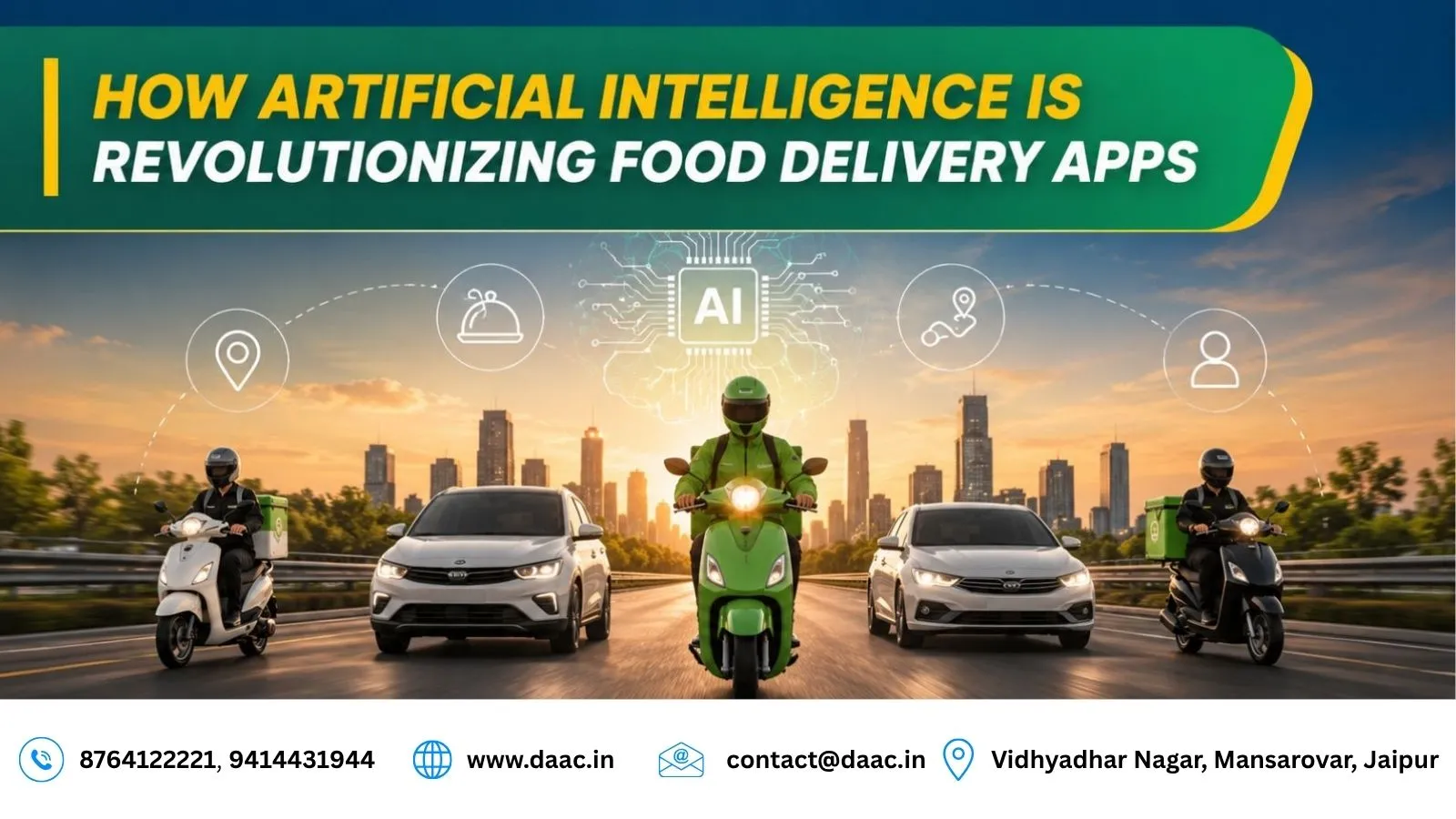
Food delivery apps have become a daily part of modern life. Whether ordering lunch during office hours or dinner after a busy day, consumers expect fast, accurate, and personalized service. To meet these expectations, food delivery platforms are increasingly relying on artificial intelligence.
Today, leading platforms use AI to improve customer experiences, optimize delivery operations, reduce costs, and support restaurant partners. From personalized food recommendations to intelligent route planning, AI is reshaping the entire food delivery ecosystem.
As the food technology industry continues to grow in 2026, businesses that adopt AI-driven solutions are gaining a significant competitive advantage. This article explores how artificial intelligence is transforming food delivery apps and what the future holds for this rapidly evolving sector.
Why Artificial Intelligence Is Becoming Essential for Food Delivery Platforms
Consumer expectations have changed dramatically over the last few years. Users now want instant service, accurate delivery estimates, and recommendations that match their preferences.
Artificial intelligence helps food delivery companies process massive amounts of data in real time and make smarter decisions. Instead of relying on manual processes, businesses can automate tasks and improve efficiency at every stage of the delivery journey.
Some key benefits include:
- Faster order processing
- Better customer satisfaction
- Reduced operational costs
- Improved delivery efficiency
- Higher restaurant profitability
This growing adoption is one reason why demand for AI professionals continues to increase across industries. Many aspiring technology professionals are now exploring the Artificial Intelligence Course in Jaipur to understand how AI is transforming sectors such as food technology, healthcare, and e-commerce.
Personalized Food Recommendations Improve User Experience
One of the most visible applications of AI in food delivery is personalized recommendations.
Every time users browse a food delivery app, AI analyzes data such as:
- Previous orders
- Favorite cuisines
- Ordering time patterns
- Budget preferences
- Location-based behavior
Using this information, the platform suggests restaurants and dishes that are most relevant to each customer.
For example, if a customer frequently orders South Indian breakfast items on weekends, the app may prioritize dosa, idli, or filter coffee recommendations during morning hours.
This level of personalization increases customer engagement and improves conversion rates for food delivery businesses.
Smart Search and Voice Ordering Features
Modern consumers expect convenience. AI-powered search functionality makes it easier for users to find exactly what they want.
Instead of typing exact restaurant names, users can search using natural language queries such as:
- Best pizza near me
- Healthy lunch options
- Budget-friendly dinner
- Vegetarian food delivery
AI understands user intent and delivers relevant results instantly.
Many platforms are also integrating voice assistants that allow customers to place orders through voice commands. This feature improves accessibility and creates a smoother ordering experience.
Real-Time Order Tracking and Accurate Delivery Predictions
Customers want transparency after placing an order. Artificial intelligence helps delivery platforms provide real-time tracking and accurate arrival estimates.
AI continuously analyzes:
- Traffic conditions
- Road closures
- Weather updates
- Delivery partner location
- Restaurant preparation times
By combining these factors, the system can predict delivery times with greater accuracy.
This reduces customer frustration and improves trust in the platform. Businesses benefit because fewer customers contact support teams regarding delivery status.
AI-Powered Route Optimization Reduces Delivery Time
Delivery efficiency directly impacts customer satisfaction and business profitability.
AI algorithms evaluate thousands of route combinations within seconds and identify the fastest delivery path. These systems consider:
- Traffic congestion
- Distance
- Peak-hour conditions
- Multiple order batching
- Delivery agent availability
As a result, food reaches customers faster while delivery companies reduce fuel costs and operational expenses.
Companies using intelligent route optimization often achieve shorter delivery windows and better overall service performance.
Inventory Management Helps Restaurants Reduce Waste
Food waste remains a major challenge in the restaurant industry. Artificial intelligence helps restaurants forecast demand more accurately and manage inventory efficiently.
AI systems analyze historical sales data, seasonal trends, local events, and customer behavior patterns to predict future demand.
Restaurants can then:
- Order ingredients more accurately
- Reduce excess stock
- Minimize food spoilage
- Improve profit margins
For example, if demand for specific menu items increases during weekends, the system can alert restaurant managers in advance.
This predictive approach improves sustainability while reducing operational costs.
Automated Kitchen Operations Enhance Consistency
Many modern restaurants are introducing automation technologies powered by AI.
These systems assist with:
- Food preparation
- Ingredient measurement
- Quality control
- Cooking consistency
- Workflow management
Smart kitchen equipment can monitor cooking temperatures and preparation times automatically.
This ensures customers receive consistent food quality regardless of order volume. Restaurants can also improve productivity during peak demand periods.
As automation expands, software and application development skills are becoming increasingly valuable. Students interested in building intelligent restaurant and delivery platforms often pursue a Mobile App Development Course in Jaipur to learn how modern applications integrate AI-driven features.
Enhancing Customer Support Through AI Chatbots
Customer service is another area where AI is making a significant impact.
AI-powered chatbots can handle common customer queries such as:
- Order status updates
- Refund requests
- Delivery issues
- Restaurant information
- Payment assistance
These virtual assistants provide instant responses without requiring human intervention.
Benefits include:
- Faster support resolution
- Reduced customer wait times
- Lower support costs
- Improved user satisfaction
Human agents can then focus on more complex issues that require personalized assistance.
Improving Food Safety and Hygiene Monitoring
Food safety remains a top priority for restaurants and delivery companies.
Artificial intelligence helps businesses monitor hygiene standards by analyzing operational data and identifying potential risks.
AI systems can track:
- Food storage temperatures
- Kitchen sanitation schedules
- Employee compliance records
- Supply chain quality metrics
Restaurants can proactively address issues before they impact customers.
During health-sensitive situations, AI-powered contactless delivery systems further enhance safety while maintaining convenience.
How AI Supports Sustainable Food Delivery
Sustainability has become an important focus for consumers and businesses alike.
AI contributes to environmentally responsible food delivery in several ways:
Reduced Fuel Consumption
Optimized delivery routes decrease unnecessary travel and lower fuel usage.
Lower Food Waste
Predictive demand forecasting helps restaurants avoid overproduction.
Smart Packaging Decisions
AI analyzes packaging requirements and recommends environmentally friendly alternatives.
Local Restaurant Promotion
Food delivery platforms can prioritize nearby restaurants, reducing transportation distances and supporting local businesses.
These initiatives help companies reduce their environmental footprint while improving operational efficiency.
Emerging AI Trends in Food Delivery for 2026
The next phase of innovation is already underway.
Several emerging technologies are expected to shape the future of food delivery:
Autonomous Delivery Vehicles
Companies are testing self-driving delivery robots and autonomous vehicles to reduce delivery costs.
Drone-Based Delivery
Drone technology has the potential to serve customers in remote locations and reduce delivery times significantly.
Hyper-Personalized Experiences
Future AI systems will provide even more accurate recommendations based on lifestyle, health goals, and dietary preferences.
Predictive Ordering
AI may soon predict when customers are likely to order food and offer personalized promotions before they even open the app.
Advanced Restaurant Analytics
Restaurants will gain deeper insights into customer behavior, helping them make smarter business decisions.
These innovations will continue transforming food delivery into a faster, smarter, and more personalized experience.
Conclusion
Artificial intelligence is revolutionizing food delivery apps by improving personalization, delivery efficiency, customer service, inventory management, and sustainability. What was once a simple ordering platform has evolved into a highly intelligent ecosystem powered by data and automation.
As technology continues to advance, AI will play an even greater role in shaping the future of food delivery. Businesses that embrace these innovations will be better positioned to meet customer expectations and remain competitive in a rapidly changing market.
For consumers, this means faster deliveries, better recommendations, safer food handling, and a more seamless overall experience. The future of food delivery is not just digital—it is intelligent.
Frequently Asked Questions
1. How is artificial intelligence used in food delivery apps?
AI is used for personalized recommendations, delivery route optimization, customer support, demand forecasting, and real-time order tracking.
2. Can AI improve food delivery speed?
Yes. AI analyzes traffic, weather, and delivery partner locations to identify the fastest delivery routes and reduce delays.
3. How does AI help restaurants reduce food waste?
AI predicts customer demand using historical data, allowing restaurants to manage inventory more accurately and avoid overstocking.
4. Are AI-powered food delivery apps safe?
Yes. AI supports contactless delivery, hygiene monitoring, and food safety tracking to improve overall customer safety.
5. What is the future of AI in food delivery?
Future developments include drone deliveries, autonomous delivery vehicles, predictive ordering systems, and advanced personalization technologies.