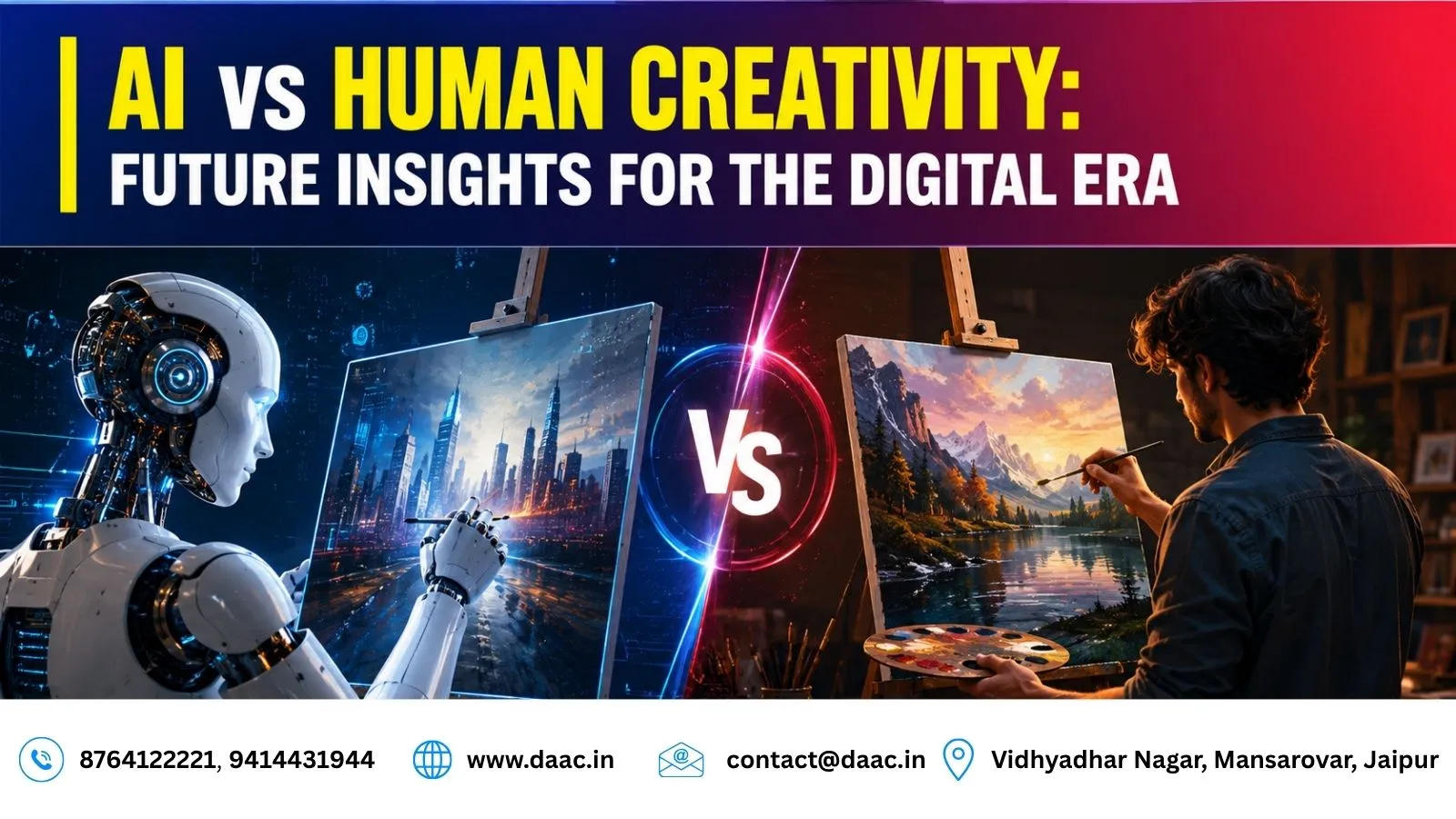
The discussion around AI vs Human Creativity has become one of the most important topics in the digital world. With tools like ChatGPT, Midjourney, Adobe Firefly, and AI-powered design platforms gaining popularity, many students and professionals wonder whether artificial intelligence will eventually replace human creativity. The reality is quite different. While AI is becoming smarter and more efficient, creativity remains deeply connected to human emotions, experiences, and imagination.
In 2026, businesses are increasingly adopting AI tools to improve productivity, but they still rely on human professionals to create meaningful stories, emotional connections, and innovative ideas. Rather than replacing people, AI is transforming how creative work is performed. Understanding this shift is essential for students who want to build successful careers in the digital economy.
What Is Artificial Intelligence Creativity?
Artificial Intelligence Creativity refers to the ability of AI systems to generate content, images, videos, music, and design concepts using machine learning algorithms and vast amounts of data. AI tools analyze patterns from existing information and use those patterns to create new outputs that appear creative.
Today, AI can perform tasks such as:
- Writing articles and blog content
- Creating digital artwork
- Generating social media posts
- Editing videos automatically
- Designing website layouts
- Producing marketing content
These capabilities have significantly improved efficiency in creative industries. However, AI operates through prediction and pattern recognition rather than genuine understanding. It can generate content quickly, but it lacks personal experiences, emotions, and original thought processes that humans naturally possess.
Understanding Human Creativity in the Digital Age
Human creativity is driven by emotions, imagination, culture, experiences, and personal perspectives. Unlike machines, humans can interpret situations, understand emotional contexts, and develop ideas that have never existed before. Creativity allows people to solve problems, inspire others, and communicate complex messages through stories and design.
Human creativity involves:
- Emotional intelligence
- Critical thinking
- Storytelling abilities
- Cultural awareness
- Innovation and imagination
For example, when a designer creates a campaign supporting a social cause, the emotional impact often comes from personal understanding and empathy. AI can assist with design elements, but it cannot genuinely experience or interpret human emotions in the same way.
AI vs Human Creativity: Major Differences
Thinking Process
AI relies on algorithms and historical data to generate outputs. Human creativity comes from experiences, emotions, and unique perspectives developed over time.
Originality
Artificial intelligence creates variations based on existing information. Humans can produce entirely original ideas inspired by imagination and real-life experiences.
Speed and Efficiency
AI can generate content, images, and designs within seconds. Human creativity often requires research, brainstorming, and refinement, making the process slower but often more meaningful.
Adaptability
Humans can adjust quickly to unexpected situations and develop innovative solutions. AI remains dependent on training data and predefined models.
Emotional Understanding
One of the biggest differences in AI vs Human Creativity is emotional depth. Humans create content that resonates emotionally with audiences, while AI can only imitate emotional expression based on patterns.
How AI Is Transforming Creative Industries
The creative sector has experienced major changes due to AI technologies. Industries such as graphic design, digital marketing, video production, and content creation now use AI tools to improve productivity and reduce repetitive tasks.
Areas influenced by AI include:
- Graphic design automation
- AI-powered content generation
- Video editing assistance
- Personalized marketing campaigns
- Website design recommendations
For example, marketing teams now use AI tools to generate content ideas, analyze audience behavior, and optimize advertising campaigns. However, human marketers still make strategic decisions and create brand narratives that connect with audiences.
Students interested in learning modern marketing techniques can explore Digital Marketing Course in Jaipur
Learning these practical skills helps professionals work effectively alongside emerging technologies.
Why Human Creativity Still Matters
Despite rapid technological advancements, human creativity remains irreplaceable in many situations. Businesses continue to seek professionals who can think critically, understand customer emotions, and create authentic experiences.
Emotional Storytelling
People connect with stories that reflect real experiences and emotions. Human creators understand how to build meaningful narratives that inspire action.
Innovation Beyond Data
AI can analyze existing patterns but struggles to generate revolutionary ideas that break traditional thinking. Humans often create innovations by combining unrelated concepts and experiences.
Strategic Decision Making
Creative decisions frequently involve ethics, culture, emotions, and business objectives. Human judgment plays a critical role in balancing these factors.
Understanding Human Behavior
Consumers make purchasing decisions based on emotions and personal values. Human creators understand these motivations more deeply than machines.
The future of AI vs Human Creativity depends on collaboration rather than competition.
Future of Creativity in the AI Era
The Future of Creativity is evolving rapidly. Experts predict that AI will become a valuable assistant for creative professionals rather than a replacement. Creative jobs are expected to change, requiring individuals to combine technical skills with innovative thinking.
Future trends include:
- AI-assisted design workflows
- Personalized content creation
- Faster creative production
- Hybrid creative roles
- Increased demand for strategic thinking
Professionals who learn how to use AI effectively while maintaining strong creative abilities will have significant advantages in the job market.
Skills Needed for Future Creative Careers
To succeed in the modern digital landscape, students should focus on developing both technical and creative skills. Some of the most valuable skills include:
- Graphic Designing
- UI/UX Design
- Video Editing
- Content Creation
- Branding Strategy
- Creative Problem Solving
- AI Tool Utilization
Students interested in web and design careers can also explore Web Designing Course in Jaipur:
These skills help professionals remain competitive while adapting to changing industry demands.
AI vs Human Creativity in Career Opportunities
The demand for creative professionals remains strong across multiple industries. While AI can automate routine tasks, businesses still require human expertise to guide strategy and innovation.
Popular Creative Careers include:
- Graphic Designer
- Digital Marketer
- Content Creator
- UI/UX Designer
- Brand Strategist
- Video Editor
- Creative Director
Organizations increasingly value professionals who can combine creativity with AI-driven tools. This combination allows businesses to achieve greater efficiency while maintaining originality and emotional impact.
How Students Can Prepare for the Future
Students preparing for future careers should focus on continuous learning and practical experience. Building strong portfolios, working on real projects, and understanding AI tools will help them remain relevant in evolving industries.
Key preparation strategies include:
- Learning creative software
- Developing problem-solving skills
- Building professional portfolios
- Understanding AI-powered platforms
- Improving communication abilities
- Staying updated with industry trends
Those who embrace technology while strengthening creative thinking will be better positioned for long-term career success.
Conclusion
The debate surrounding AI vs Human Creativity is not about replacement but transformation. Artificial intelligence offers speed, efficiency, and automation, while human creativity provides imagination, emotion, and innovation. The most successful professionals in the future will be those who learn how to combine both strengths effectively.
As technology continues to evolve, creativity will remain one of the most valuable human skills. By developing creative expertise and learning how to use AI as a supportive tool, students and professionals can build future-ready careers in an increasingly digital world.
FAQs
1. Can AI completely replace human creativity?
No. AI can assist with creative tasks, but it cannot fully replicate human emotions, experiences, imagination, and original thinking.
2. Why is human creativity important in the AI era?
Human creativity helps build emotional connections, develop innovative ideas, and solve complex problems that require critical thinking and cultural understanding.
3. What industries are most affected by AI creativity tools?
Industries such as graphic design, digital marketing, content creation, video editing, and web design are experiencing significant transformation through AI technologies.
4. Which skills are important for future creative careers?
Skills such as graphic design, content creation, UI/UX design, branding, storytelling, and AI tool utilization are becoming increasingly valuable.
5. How can students prepare for careers in the future of creativity?
Students should learn practical digital skills, build strong portfolios, gain project experience, and understand how AI tools can support creative workflows.