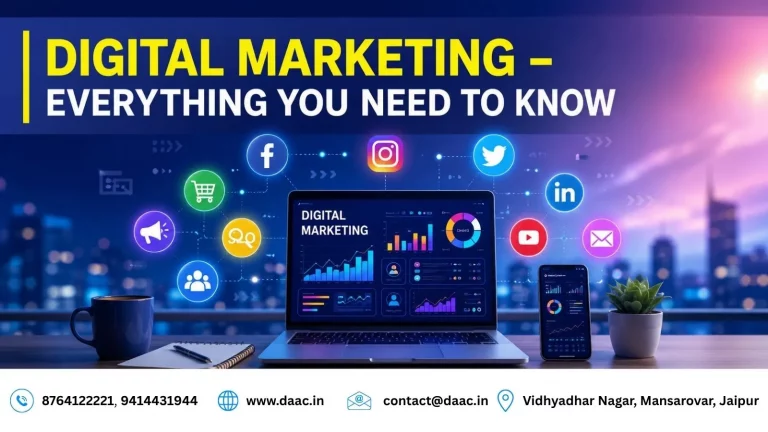
Digital marketing has become one of the most in-demand career fields as businesses continue to expand their online presence. From startups and local businesses to multinational brands, every organization needs skilled professionals who can generate traffic, leads, and sales through digital channels. As a result, enrolling in a Digital Marketing Course in Jaipur has become a popular choice among students, job seekers, entrepreneurs, and working professionals.
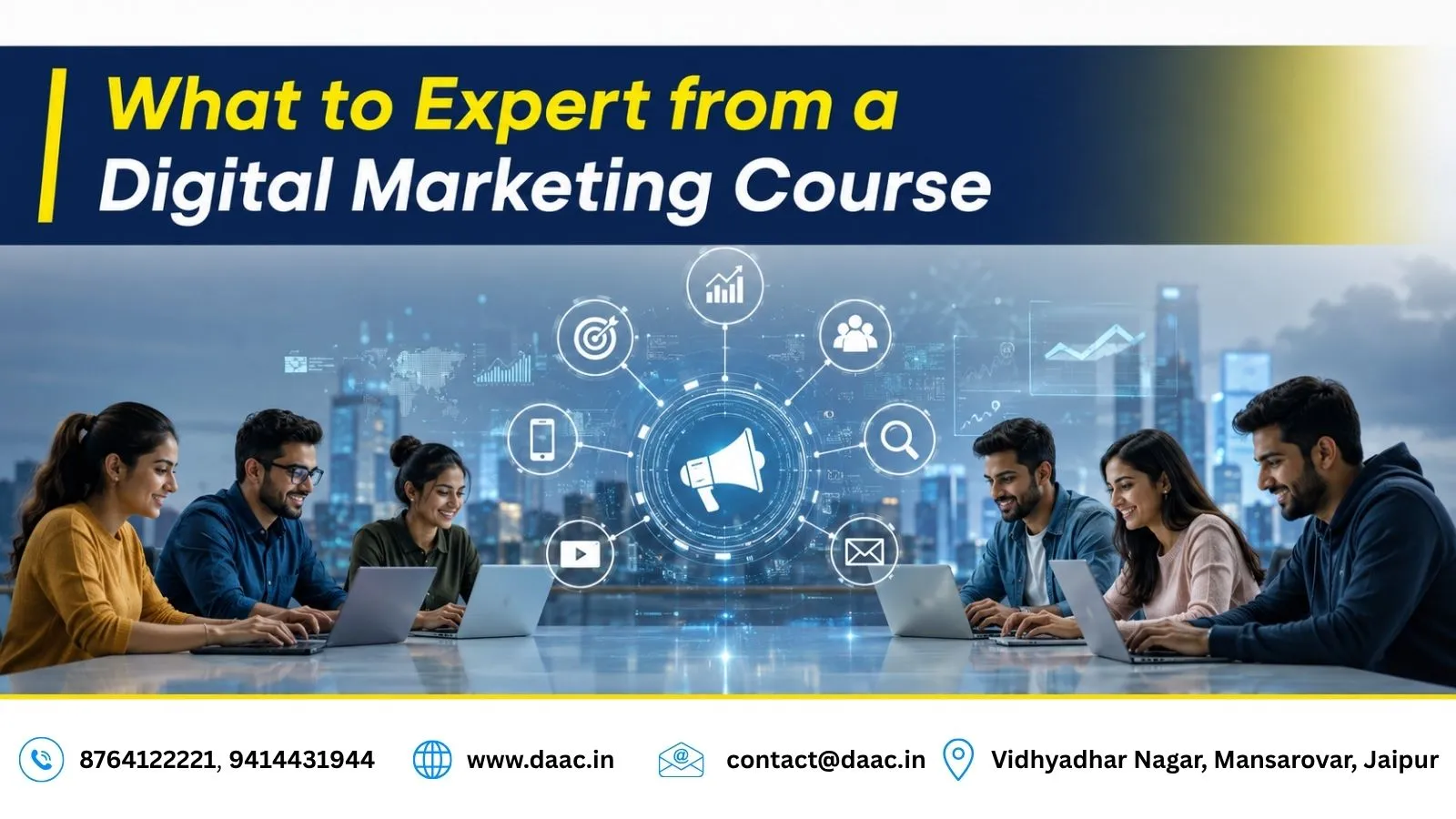
However, many beginners are unsure about what they will actually learn during the training program. A modern digital marketing course is much more than learning how to run social media pages. It covers SEO, paid advertising, content marketing, analytics, AI-powered marketing tools, and real-world campaign management. Understanding what to expect before joining can help you choose the right training program and build a successful career.
Why Digital Marketing Skills Are More Important Than Ever
The digital economy is growing rapidly, and companies are investing larger portions of their marketing budgets into online channels. Consumers now discover products, compare services, and make purchasing decisions through search engines, social media platforms, and websites.
A professional digital marketing course prepares students to meet current industry requirements by teaching practical skills that businesses actively seek. Whether you want to work for an agency, start freelancing, or grow your own business, digital marketing knowledge can create multiple career opportunities.
In 2026, employers are looking for candidates who understand both traditional digital marketing strategies and emerging technologies such as AI-driven marketing automation and data analytics.
Comprehensive Understanding of Digital Marketing Fundamentals
One of the first things students learn is how the digital marketing ecosystem works. Before moving to advanced strategies, it is important to understand how different channels contribute to business growth.
A quality course typically covers:
- Search Engine Optimization (SEO)
- Social Media Marketing (SMM)
- Content Marketing
- Email Marketing
- Pay-Per-Click Advertising (PPC)
- Web Analytics
- Marketing Automation
These modules help students understand how online campaigns are planned, executed, and measured.
A strong foundation ensures that learners can adapt to changing marketing trends and technologies throughout their careers.
Search Engine Optimization (SEO) Training
SEO remains one of the most valuable skills in digital marketing because it helps websites generate organic traffic from search engines. Modern SEO involves much more than inserting keywords into content.
Students learn:
- Keyword research techniques
- On-page optimization
- Technical SEO fundamentals
- Link-building strategies
- Local SEO optimization
- Content optimization
Understanding SEO allows marketers to improve website visibility and attract potential customers without relying entirely on paid advertising.
Many students who want to strengthen their website development knowledge alongside SEO often explore a Web Designing Course in Jaipur to better understand how websites influence search performance.
Social Media Marketing and Brand Building
Social media continues to play a major role in customer engagement and brand awareness. Businesses use platforms such as Instagram, Facebook, LinkedIn, YouTube, and X to connect with audiences and promote products.
A digital marketing course teaches students how to:
- Create social media strategies
- Plan content calendars
- Manage paid campaigns
- Analyze audience behavior
- Improve engagement rates
Students also learn how businesses use influencer marketing and short-form video content to increase reach and conversions.
Practical assignments often involve creating social media campaigns and evaluating their performance using analytics tools.
AI-Powered Marketing and Automation Tools
One of the biggest additions to modern training programs is the inclusion of artificial intelligence tools. AI is transforming how marketers create content, analyze data, and optimize campaigns.
Students are introduced to:
- AI content creation tools
- Marketing automation platforms
- Chatbots and conversational marketing
- Predictive analytics
- Customer segmentation
Businesses increasingly expect marketers to understand AI-assisted workflows because these tools improve efficiency and campaign performance.
Learning AI-powered marketing techniques helps students stay competitive in the evolving digital landscape.
Practical Training Through Live Projects
Theoretical knowledge alone is not enough to build a successful career in digital marketing. Employers prefer candidates who have practical experience working on real campaigns.
A good course includes:
- Live projects
- Case studies
- Campaign creation
- Website optimization exercises
- Performance reporting
Students gain hands-on experience using industry-standard tools and applying concepts in real-world scenarios.
Practical learning also helps build confidence and prepares students for interviews and workplace responsibilities.
Google Ads and Paid Advertising Skills
Paid advertising remains one of the fastest ways for businesses to generate leads and sales. Digital marketing courses typically include comprehensive training in paid media management.
Students learn:
- Google Search Ads
- Display Advertising
- YouTube Ads
- Remarketing Campaigns
- Budget Management
- Conversion Tracking
Understanding paid advertising allows marketers to deliver measurable business results and improve return on investment.
These skills are highly valued by agencies, startups, and e-commerce companies looking to scale their online growth.
Analytics and Data-Driven Decision Making
Modern marketing relies heavily on data analysis. Businesses want marketers who can measure campaign performance and make informed decisions based on data.
Students learn how to use:
- Google Analytics
- Google Search Console
- Social media insights
- Performance dashboards
- Conversion tracking tools
By understanding user behavior and campaign metrics, marketers can identify opportunities for improvement and maximize marketing effectiveness.
Analytics training also helps students understand how marketing activities contribute to business goals.
Industry Certifications and Career Preparation
Certifications provide credibility and demonstrate expertise to potential employers. Many training institutes include certification preparation as part of their curriculum.
Students may earn certifications related to:
- SEO
- Google Ads
- Analytics
- Social Media Marketing
- Content Marketing
A recognized certification strengthens a resume and increases job opportunities, particularly for freshers entering the industry.
In addition to certifications, students often receive interview preparation, portfolio development guidance, and career counseling support.
Why Choosing the Right Institute Matters
The quality of training significantly impacts career outcomes. A well-structured program should focus on practical learning rather than only theoretical concepts.
Institutes such as DAAC emphasize:
- Industry-relevant curriculum
- Live project experience
- Expert trainers
- Practical assignments
- Career-focused guidance
Students who combine digital marketing skills with technical knowledge from a Full Stack Developer Course in Jaipur often gain additional advantages in understanding website performance, conversion optimization, and online business growth.
Career Opportunities After Completing a Digital Marketing Course
Digital marketing offers diverse career paths across multiple industries. As businesses continue investing in online growth, the demand for skilled professionals remains strong.
Popular career options include:
- Digital Marketing Executive
- SEO Specialist
- Social Media Manager
- PPC Specialist
- Content Marketer
- Email Marketing Executive
- Marketing Analyst
- Freelance Digital Marketer
Students can work with agencies, startups, e-commerce brands, multinational companies, or even start their own digital marketing consultancy.
Conclusion
A digital marketing course in 2026 is designed to provide a combination of technical knowledge, creative skills, analytical thinking, and practical experience. Students learn SEO, social media marketing, paid advertising, analytics, AI-powered tools, and campaign management techniques that are directly applicable in the workplace.
Choosing the right training program can significantly impact your career growth and help you develop the skills needed to succeed in today’s competitive digital economy. With businesses increasingly relying on online marketing, digital marketing continues to be one of the most promising career options for students and professionals alike.
FAQs
1. What will I learn in a digital marketing course?
You will learn SEO, social media marketing, Google Ads, content marketing, email marketing, analytics, and AI-powered marketing tools.
2. Is digital marketing a good career in 2026?
Yes. Digital marketing remains one of the fastest-growing career fields due to increasing business investment in online marketing channels.
3. Do I need technical knowledge before joining a digital marketing course?
No. Most beginner-friendly courses start with fundamentals and require no prior technical experience.
4. How long does it take to learn digital marketing?
Most professional courses can be completed within three to six months, depending on the curriculum and practical training provided.
5. What job opportunities are available after completing a digital marketing course?
You can work as an SEO Specialist, Social Media Manager, PPC Expert, Content Marketer, Digital Marketing Executive, or freelance digital marketer.