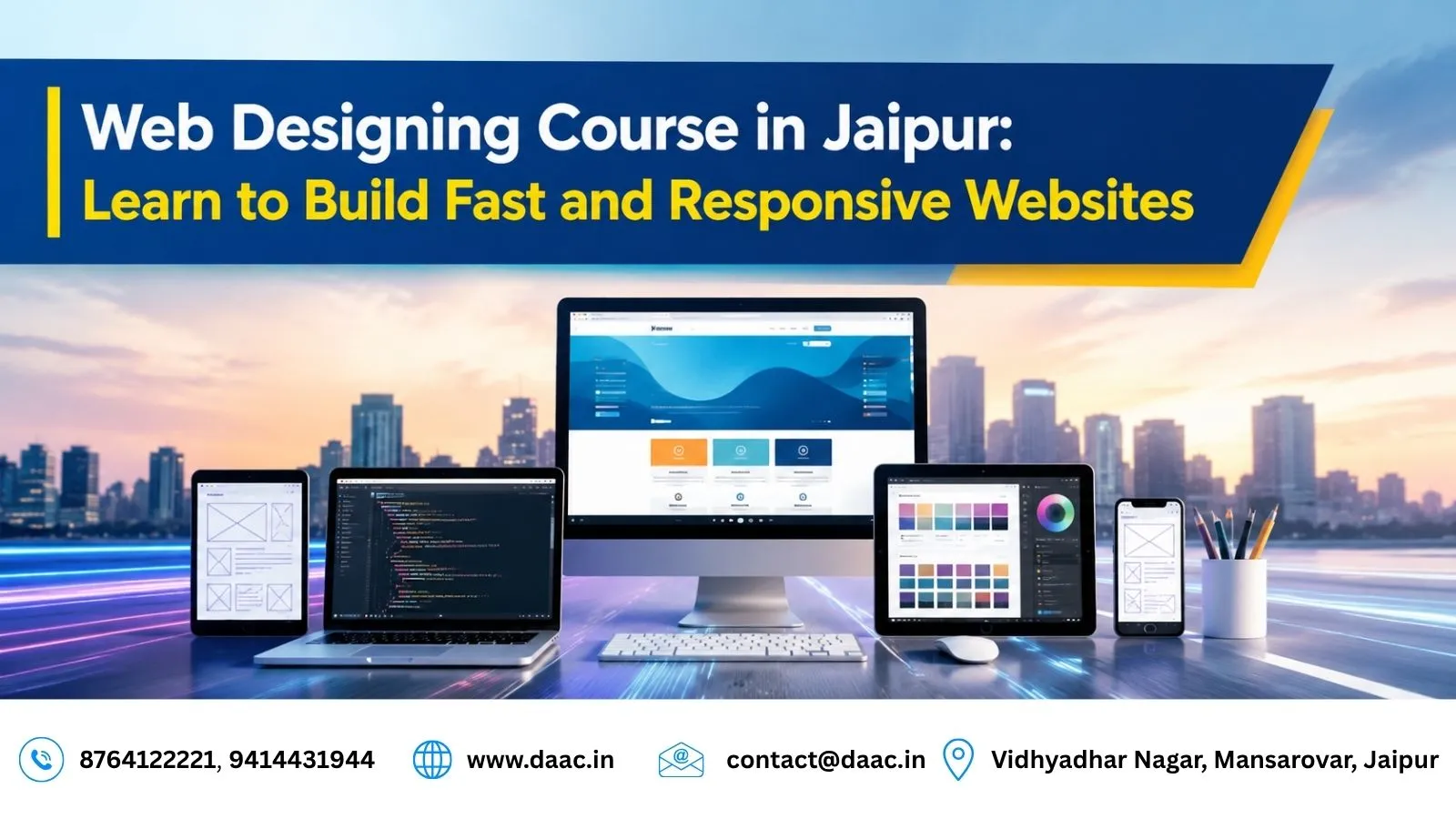
The demand for skilled web designers continues to grow as businesses increasingly invest in digital platforms. From startups and local businesses to large enterprises, every organization needs websites that are fast, responsive, and user-friendly. As a result, enrolling in a Web Designing Course in Jaipur has become one of the smartest career choices for students looking to enter the technology industry.
Modern websites are no longer judged only by appearance. They must load quickly, work smoothly on mobile devices, follow accessibility standards, and provide a seamless user experience. Learning these skills through professional training can help students build job-ready expertise and create real-world projects that attract employers and clients.
What Is Web Designing and Why Is It Important in 2026?
Web designing is the process of planning, creating, and optimizing websites using design principles and coding technologies. It combines creativity with technical skills to ensure websites are visually appealing and function effectively across all devices.
In 2026, businesses expect websites to deliver:
- Fast loading speeds
- Mobile responsiveness
- Better user experiences
- SEO-friendly structures
- Accessibility compliance
A professional web design course teaches students how to create websites that meet these modern requirements while preparing them for industry projects.
Core Skills You Learn in a Web Designing Course
A quality training program focuses on both design and development fundamentals. Students begin by understanding website structure and gradually learn how to build complete responsive websites.
Important skills include:
- HTML for content structure
- CSS for styling and layouts
- Responsive design techniques
- Website optimization methods
- User interface fundamentals
- Basic SEO implementation
These foundational skills help students create websites that look professional and perform efficiently across desktops, tablets, and smartphones.
Understanding HTML and CSS Fundamentals
Every website starts with HTML and CSS. HTML defines the structure of a webpage, while CSS controls its appearance.
Students learn how to use semantic elements such as:
- Header
- Navigation
- Section
- Article
- Footer
Using proper HTML structure improves accessibility and search engine understanding. Modern web design also requires clean coding practices, which help websites load faster and become easier to maintain.
A strong understanding of HTML and CSS creates the foundation needed for advanced design and frontend development skills.
Responsive Web Design: A Must-Have Skill
Today, most users browse websites on mobile devices. Because of this, responsive design has become an essential skill for every web designer.
Responsive web design ensures that websites automatically adapt to different screen sizes and resolutions without affecting usability.
Students learn:
- Media queries
- Flexible layouts
- Responsive images
- Mobile-first development
- Cross-device testing
Major brands like Amazon, Flipkart, and Airbnb rely heavily on responsive design because it improves user engagement and conversion rates.
Modern Layout Systems: Flexbox and CSS Grid
Creating responsive layouts has become easier with modern CSS technologies.
Flexbox
Flexbox is useful for arranging items in a single row or column. It simplifies alignment and spacing between elements.
CSS Grid
CSS Grid allows designers to build advanced two-dimensional layouts using rows and columns.
Learning both technologies helps students:
- Create professional layouts
- Reduce coding complexity
- Improve website responsiveness
- Build scalable designs
These skills are considered essential in modern web designing training programs.
Website Speed and Performance Optimization
Website performance directly impacts user satisfaction and search rankings. Google prioritizes websites that load quickly and provide smooth browsing experiences.
Students learn optimization techniques such as:
- Image compression
- Lazy loading
- CSS and JavaScript minification
- Browser caching
- Performance auditing
Understanding Core Web Vitals helps designers create websites that meet Google’s performance standards while improving user retention.
Tools Used by Professional Web Designers
Modern designers use various tools throughout the design and development process.
Popular tools include:
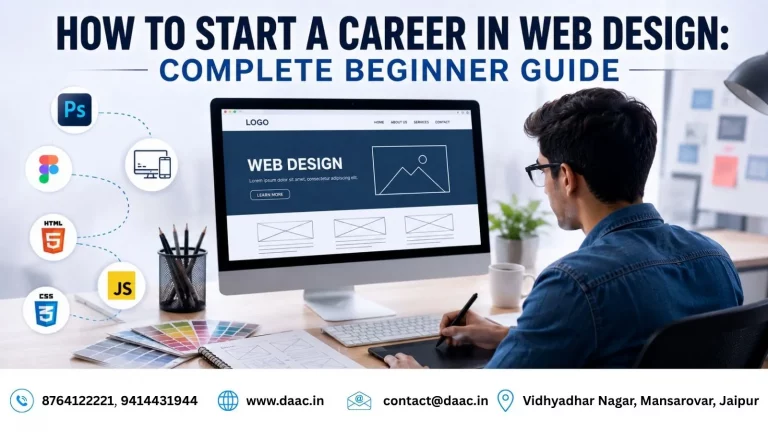
- Figma for UI design
- VS Code for coding
- Chrome DevTools for debugging
- Lighthouse for performance testing
- GitHub for version control
Frameworks such as Bootstrap and Tailwind CSS are also introduced to help students build websites more efficiently.
Real Projects and Portfolio Development
Practical experience is one of the most valuable parts of any course. Employers often evaluate portfolios before considering candidates for interviews.
Students typically build:
- Personal portfolio websites
- Business websites
- Landing pages
- Service-based websites
- Responsive web applications
A strong portfolio demonstrates technical skills and improves placement opportunities.
Students interested in expanding their development knowledge often continue with a Full Stack Developer Course in Jaipur, which covers both frontend and backend technologies.
Career Opportunities After Learning Web Design
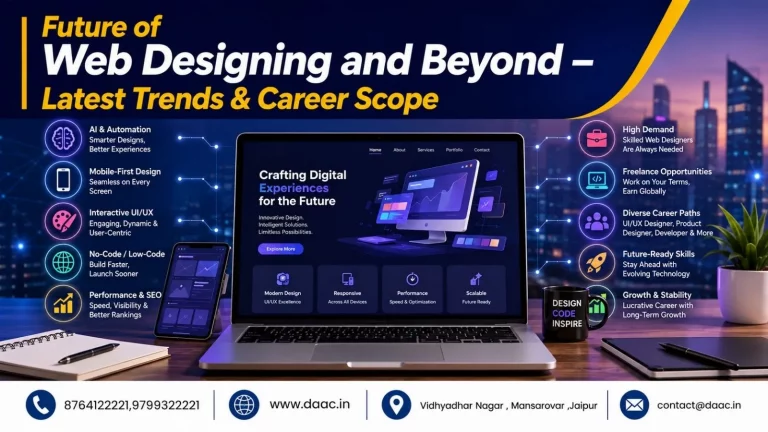
A growing digital economy has created numerous opportunities for skilled web designers. Businesses need professionals who can build and maintain modern websites.
Popular career options include:
- Web Designer
- UI Designer
- Frontend Developer
- Website Consultant
- Freelance Web Designer
The demand for professionals with practical web development knowledge continues to increase across industries.
For students interested in combining design skills with digital business strategies, a Digital Marketing Course in Jaipur can provide additional career advantages.
Why Choose DAAC for Web Designing Training?
Choosing the right institute plays a major role in career success. Practical learning and project experience are often more valuable than theoretical knowledge alone.
DAAC focuses on:
- Industry-oriented curriculum
- Hands-on projects
- Updated technologies
- Portfolio development
- Career guidance
- Beginner-friendly training
Students receive exposure to real-world projects that help them understand industry expectations and improve employability.
Is Web Designing a Good Career in 2026?
Yes. The demand for websites continues to increase as businesses expand their online presence. Every company needs digital platforms that attract customers and provide better user experiences.
A web designer career offers opportunities in freelancing, agencies, startups, and corporate organizations. Professionals who continuously upgrade their skills can move into UI/UX design, frontend development, or full-stack development roles.
With the right training and consistent practice, web design remains one of the most accessible and rewarding technology careers in 2026.
Conclusion
Learning web design is an excellent choice for students who want to combine creativity with technology. A professional Web Designing Course in Jaipur provides the skills needed to build responsive websites, optimize performance, and create engaging digital experiences.
As businesses continue investing in digital growth, skilled web designers will remain in demand. By mastering HTML, CSS, responsive layouts, and modern design tools, students can build strong portfolios and create successful careers in the web industry.
FAQs
1. What is a Web Designing Course in Jaipur?
A Web Designing Course in Jaipur teaches students how to create responsive websites using HTML, CSS, design principles, and modern web technologies.
2. How long does it take to learn web design?
Most students can learn the fundamentals within 8 to 12 weeks, depending on practice and project work.
3. Do I need coding knowledge before joining?
No. Most beginner-friendly courses start from the basics and require no prior coding experience.
4. What career opportunities are available after learning web design?
Students can work as web designers, frontend developers, UI designers, freelancers, or website consultants.
5. What is the average salary of a web designer in India?
Freshers typically earn between ₹2.5 LPA and ₹5 LPA, while experienced professionals can earn significantly more based on skills and project experience.