In today’s digital era, web and mobile applications have become an essential part of our daily lives. From online shopping to social media platforms, everything is powered by software applications built by developers. Among them, a Full Stack Developer plays one of the most important roles because they can handle both frontend and backend development. This makes them highly valuable in the IT industry, especially in startups and product-based companies where multi-skilled professionals are required.
What is a Full Stack Developer?
A Full Stack Developer is a professional who can work on both the frontend and backend of a web application. The frontend is the part users interact with, while the backend manages databases, server logic, and application performance. A strong understanding of both layers helps developers build complete and functional applications.
Modern businesses prefer hiring full stack developers because they reduce dependency on multiple specialists. This makes development faster, more efficient, and cost-effective. Strong Full Stack Developer Skills are essential for anyone who wants to build a successful career in web development and software engineering.
Essential Skills Required for Full Stack Developers
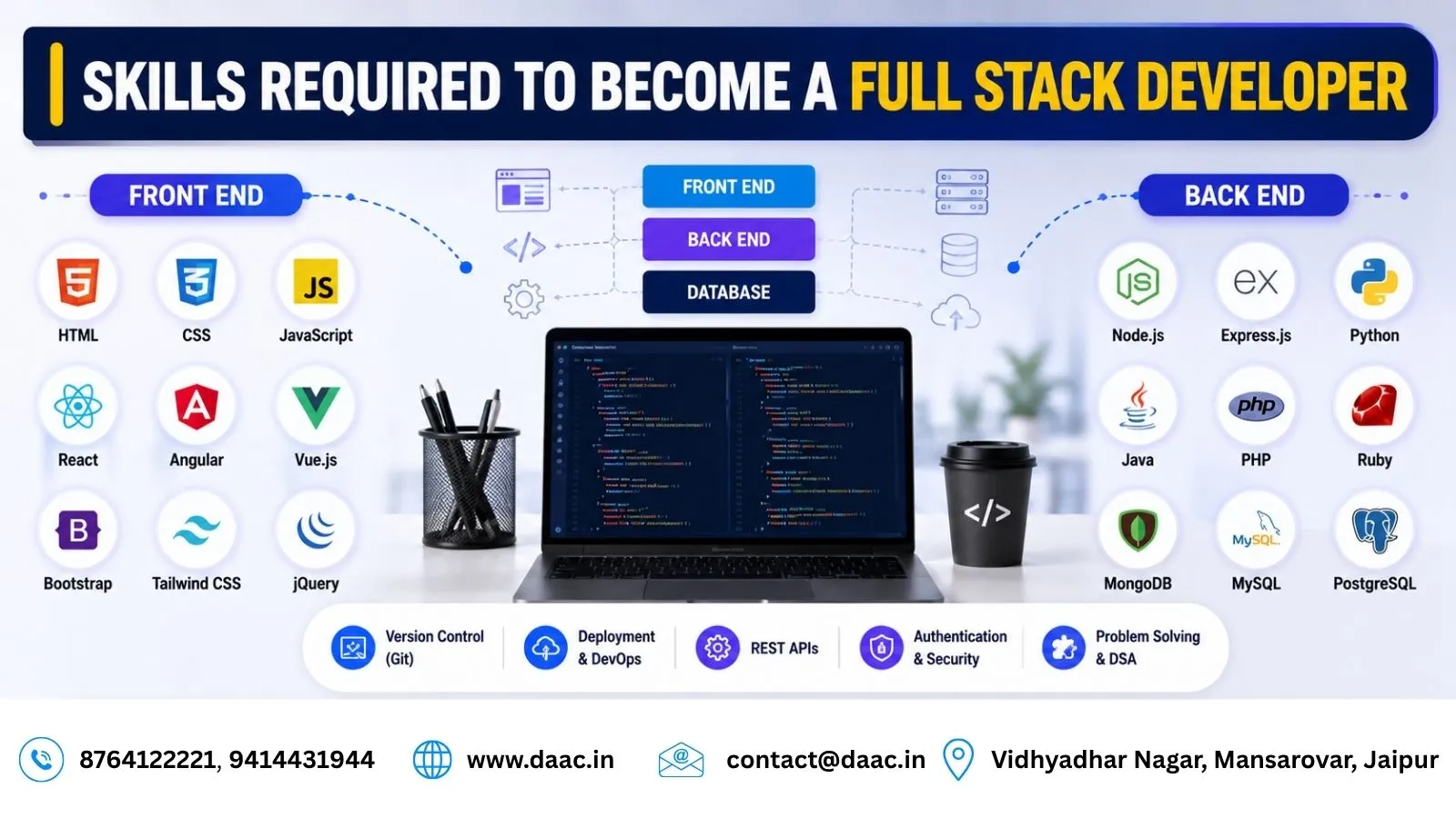
To become a successful full stack developer, you need a combination of technical and problem-solving skills. These skills help you build scalable and efficient applications.
Some of the core technologies include:
- HTML and CSS for structuring and styling web pages
- JavaScript for dynamic and interactive web development
- Python or Java for backend development
- SQL for database management
These technologies form the foundation of Web Development Skills required in modern IT jobs. Along with these, understanding frameworks and libraries is equally important for real-world application development.
Frontend and Backend Development Skills
Frontend development focuses on creating user interfaces that are visually appealing and easy to use. Technologies like React, Angular, and Vue.js are widely used in modern applications. A good frontend developer ensures smooth navigation, responsiveness, and user-friendly design.
Backend development handles server-side operations such as data storage, authentication, and business logic. Technologies like Node.js, Django, and Spring Boot are commonly used. A strong understanding of both frontend and backend helps in building complete applications, known as Frontend Backend Development expertise.
Important Tools and Technologies
Apart from programming languages, full stack developers must be familiar with essential tools and frameworks used in real-world projects. These include:
- Node.js for backend JavaScript runtime
- React for building dynamic user interfaces
- Django for Python-based web development
- MySQL and MongoDB for database management
These tools are widely used in industry projects and are often covered in a professional Full Stack Developer Course to prepare students for job-ready skills.
Role and Responsibilities of a Full Stack Developer
A full stack developer is responsible for designing, developing, and maintaining complete web applications. Their work includes:
- Creating user-friendly web interfaces
- Designing and managing databases
- Developing server-side logic
- Ensuring application security and performance
- Testing and debugging applications
Because of their multi-skilled nature, they are often considered the backbone of development teams in startups and small businesses.
Career Opportunities and Future Scope
The demand for full stack developers is growing rapidly due to the expansion of digital platforms. Companies are actively hiring professionals who can handle multiple layers of development. This makes it one of the most promising career paths in the IT industry.
A Full Stack Developer Career offers opportunities in web development companies, software firms, IT startups, and freelancing projects. Developers can also work remotely for international clients, increasing earning potential and career flexibility. The average salary varies based on experience, but skilled developers are highly paid in the industry.
How to Become a Full Stack Developer
Becoming a full stack developer requires a structured learning approach. Here are the key steps:
1. Define Your Goal
Start by deciding what type of applications you want to build. This helps you choose the right technologies and learning path.
2. Learn the Basics
Begin with HTML, CSS, and JavaScript. These are the foundation of web development and must be mastered before moving forward.
3. Practice Regularly
Build small projects like landing pages, calculators, and simple web apps to strengthen your understanding.
4. Learn Advanced Technologies
Move on to frameworks like React, Node.js, and Django. These are essential for modern application development.
5. Build Real Projects
Create complete projects such as e-commerce websites or portfolio platforms. This helps you gain real-world experience.
Importance of Continuous Learning
Technology evolves rapidly, and full stack developers must continuously upgrade their skills. New frameworks, libraries, and tools are introduced regularly. Staying updated ensures better job opportunities and long-term career growth.
Enrolling in a structured Full Stack Developer Course can help learners stay aligned with industry standards and gain hands-on experience through real projects and mentorship.
Benefits of Becoming a Full Stack Developer
There are several advantages of choosing this career path:
- High demand in the IT industry
- Better salary opportunities
- Flexibility to work on multiple projects
- Freelancing and remote job options
- Strong career growth potential
These benefits make it one of the most attractive roles in modern software development.
Conclusion
Becoming a full stack developer requires dedication, consistent practice, and continuous learning. By mastering both frontend and backend technologies, you can build complete web applications and secure high-paying job opportunities in the IT industry. Whether you choose self-learning or a structured training program, developing strong Full Stack Developer Skills will open doors to a successful and future-proof career in technology.
FAQs
1. What skills are required to become a full stack developer?
You need HTML, CSS, JavaScript, backend languages like Python or Node.js, and database knowledge like SQL or MongoDB.
2. Is full stack development a good career in 2026?
Yes, it is one of the most in-demand careers due to the growing need for web and mobile applications across industries.
3. Do I need a degree to become a full stack developer?
No, a degree is not mandatory. You can learn through online courses, bootcamps, or training institutes.
4. How long does it take to become a full stack developer?
It usually takes 6–12 months of consistent learning and practice to become job-ready.
5. What is the average salary of a full stack developer?
Salary depends on experience and skills, but full stack developers generally earn competitive packages in the IT industry.