Video content has become the backbone of digital communication in 2026. Businesses, content creators, filmmakers, marketing agencies, and social media influencers rely heavily on videos to engage audiences and build brand awareness. As demand for high-quality video production continues to rise, companies are actively seeking skilled editors who can transform raw footage into professional and engaging content.
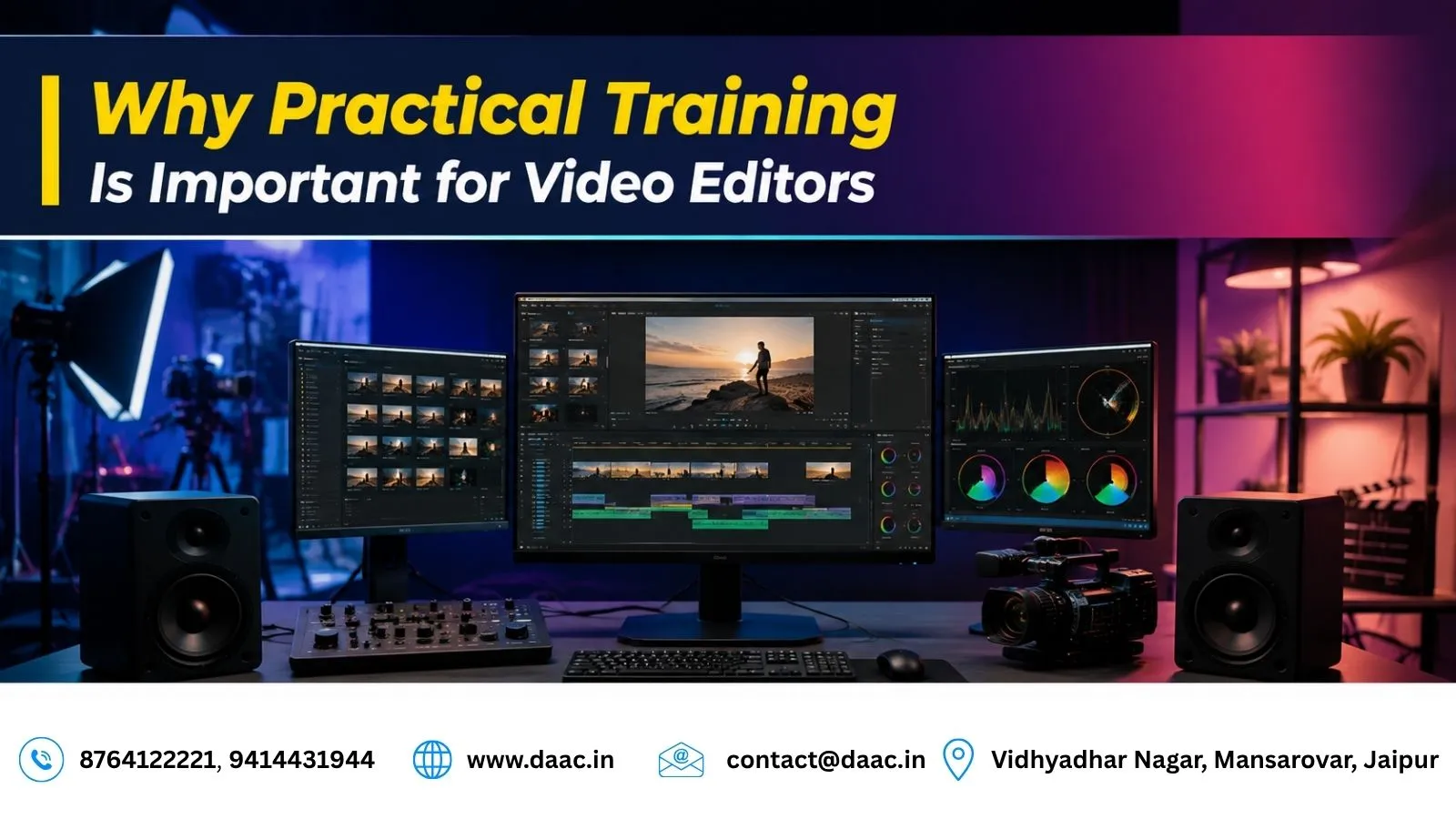
While learning editing theory is important, practical experience plays a much bigger role in building a successful career. Video editing is a skill-based profession where employers evaluate portfolios, project experience, creativity, and technical expertise rather than academic qualifications alone. This is why practical training has become one of the most important components of professional video editing education.
Students who participate in hands-on projects, software training, and real-world assignments develop confidence, creativity, and industry readiness much faster than those who rely only on theoretical learning.
Why the Demand for Video Editors Is Growing
The growth of digital platforms has created massive opportunities for video editors. Every day, brands publish videos on YouTube, Instagram, LinkedIn, Facebook, and other platforms to connect with their audiences.
Several industries now depend on professional video editors, including:
- Digital marketing agencies
- Media and entertainment companies
- E-commerce brands
- Educational platforms
- Corporate organizations
- Film production houses
- YouTube content creators
According to current industry trends, short-form videos, promotional content, educational videos, podcasts, and AI-assisted video production are driving demand for skilled editors worldwide.
Because of this growth, practical video editing training has become essential for students who want to enter the industry with job-ready skills.
Practical Learning Helps Students Understand Real Editing Workflows
Many beginners believe video editing is simply cutting and joining clips. In reality, professional editing involves storytelling, pacing, color correction, sound design, visual effects, and audience engagement strategies.
When students work on live projects, they learn how professional workflows operate from start to finish.
Practical training helps students understand:
- Project planning
- Media organization
- Timeline management
- Audio synchronization
- Export settings
- Client requirements
- Revision management
These experiences prepare students for real industry situations that cannot be fully understood through theory alone.
Learning Industry-Standard Software Through Hands-On Practice
Professional video editors use advanced tools that require consistent practice to master. Watching tutorials may provide basic understanding, but practical implementation develops real expertise.
Some of the most widely used editing tools include:
- Adobe Premiere Pro
- Adobe After Effects
- Adobe Audition
- DaVinci Resolve
- Final Cut Pro
Through practical assignments, students learn how to:
- Edit videos efficiently
- Apply transitions
- Perform color grading
- Improve audio quality
- Create professional effects
- Optimize content for various platforms
Mastering these tools increases employability and opens opportunities across multiple industries.
Live Projects Build Creativity and Editing Confidence
Creativity is one of the most valuable skills for a video editor. Every project presents unique challenges that require innovative solutions.
When students work on live assignments, they learn how to create content for different purposes, including:
- YouTube videos
- Instagram Reels
- Brand advertisements
- Corporate presentations
- Educational content
- Product promotions
Practical exposure allows students to experiment with editing styles, transitions, storytelling techniques, and visual effects.
This process strengthens creative thinking while improving confidence in handling professional projects independently.
Practical Training Helps Students Develop Storytelling Skills
Great video editing is not just about technical execution. It is about telling a story that captures attention and keeps viewers engaged.
Storytelling skills are developed through repeated practice and project experience.
Students learn how to:
- Structure narratives effectively
- Maintain viewer attention
- Create emotional impact
- Build logical content flow
- Enhance audience engagement
Professional editors understand that even simple videos can become powerful when storytelling principles are applied correctly.
This skill becomes especially important in marketing, filmmaking, and social media content creation.
Portfolio Development Creates Better Career Opportunities
One of the biggest advantages of practical training is portfolio development.
Employers and freelance clients typically want to see previous work before hiring an editor. A strong portfolio demonstrates both technical skills and creative abilities.
Students who complete practical assignments can showcase:
- Promotional videos
- Social media content
- Motion graphics projects
- Corporate presentations
- Video advertisements
- Creative editing samples
A portfolio often influences hiring decisions more than certificates alone.
This is why practical training should always include multiple project-based assignments.
Motion Graphics and Visual Effects Enhance Career Growth
Modern video editing extends beyond basic cutting and trimming. Businesses increasingly require editors who can create animations, motion graphics, and visual effects.
Practical training helps students learn:
- Text animations
- Motion graphics
- Kinetic typography
- Visual effects integration
- Intro and outro creation
- Brand animation
These skills significantly increase earning potential and make candidates more competitive in the job market.
Students interested in creative media production often complement their editing knowledge with a Graphic Designing Course in Jaipur to improve visual communication and design fundamentals.
Combining design and editing skills creates stronger career opportunities.
Industry Exposure Improves Professional Readiness
Practical training introduces students to professional standards and workplace expectations.
Through internships, project reviews, and mentor guidance, students learn how to:
- Meet project deadlines
- Communicate with clients
- Handle feedback professionally
- Manage multiple projects
- Follow production workflows
These experiences reduce the gap between classroom learning and industry requirements.
Students enter the workforce with greater confidence because they have already worked on projects similar to those handled by professional editors.
Social Media Editing Skills Are More Important Than Ever
The rise of short-form video platforms has changed the video editing industry significantly.
Businesses now prioritize content designed for:
- Instagram Reels
- YouTube Shorts
- TikTok-style videos
- Facebook Videos
- LinkedIn Content
Practical training teaches students how to optimize videos for these platforms while maintaining audience engagement.
Modern editors must understand:
- Vertical video formats
- Audience retention techniques
- Trend-based editing
- Fast-paced storytelling
- Platform-specific requirements
These skills are highly valuable for agencies and content creators.
How DAAC Helps Students Become Professional Video Editors
DAAC focuses on industry-oriented learning through practical assignments and real-world projects. The objective is to help students develop technical expertise while gaining confidence through hands-on experience.
Students receive training in:
- Adobe Premiere Pro
- After Effects
- Motion Graphics
- Video Production Workflows
- Social Media Video Editing
- Professional Editing Techniques
The curriculum emphasizes practical implementation rather than theoretical concepts alone.
Students interested in expanding their content creation capabilities often explore the Digital Marketing Course in Jaipur because video content plays a critical role in modern digital campaigns and brand promotion.
This combination helps students understand both content production and content marketing strategies.
Roadmap to Build a Successful Video Editing Career
Students can follow a structured approach to build a strong career in video editing.
Step 1: Learn Editing Fundamentals
Start with basic concepts such as cutting, transitions, sequencing, and audio editing.
Step 2: Master Professional Software
Develop expertise in Adobe Premiere Pro and After Effects through consistent practice.
Step 3: Work on Real Projects
Build practical experience by editing promotional videos, social media content, and creative projects.
Step 4: Create a Professional Portfolio
Showcase your best work through a portfolio website or video reel.
Step 5: Apply for Internships and Jobs
Gain industry experience through internships, freelance projects, and entry-level positions.
Step 6: Continue Learning
Stay updated with AI-powered editing tools, new software features, and evolving content trends.
Conclusion
The importance of practical training for video editors continues to grow as the industry becomes more competitive and technology-driven. While theoretical knowledge provides a foundation, practical experience develops the real skills employers and clients expect.
Live projects, software mastery, portfolio development, storytelling practice, and industry exposure help students become job-ready professionals. Practical training also improves creativity, confidence, and problem-solving abilities, which are essential for long-term career success.
For aspiring video editors, choosing a training program that focuses on hands-on learning can significantly accelerate career growth and open opportunities in media production, digital marketing, content creation, freelancing, and entertainment industries.
FAQs
1. Why is practical training important for video editors?
Practical training provides real-world experience, helps students understand professional workflows, and improves editing confidence through hands-on projects.
2. Which software should beginners learn for video editing?
Adobe Premiere Pro and Adobe After Effects are among the most widely used tools for professional video editing and motion graphics.
3. Can beginners get jobs after completing a video editing course?
Yes. Students with practical project experience and a strong portfolio can apply for internships, entry-level jobs, and freelance opportunities.
4. How long does it take to become a professional video editor?
Most students can develop job-ready skills within a few months of consistent practice and project-based learning.
5. Is video editing a good career in 2026?
Yes. The growing demand for digital content, social media videos, advertising campaigns, and online education continues to create strong career opportunities for skilled video editors.