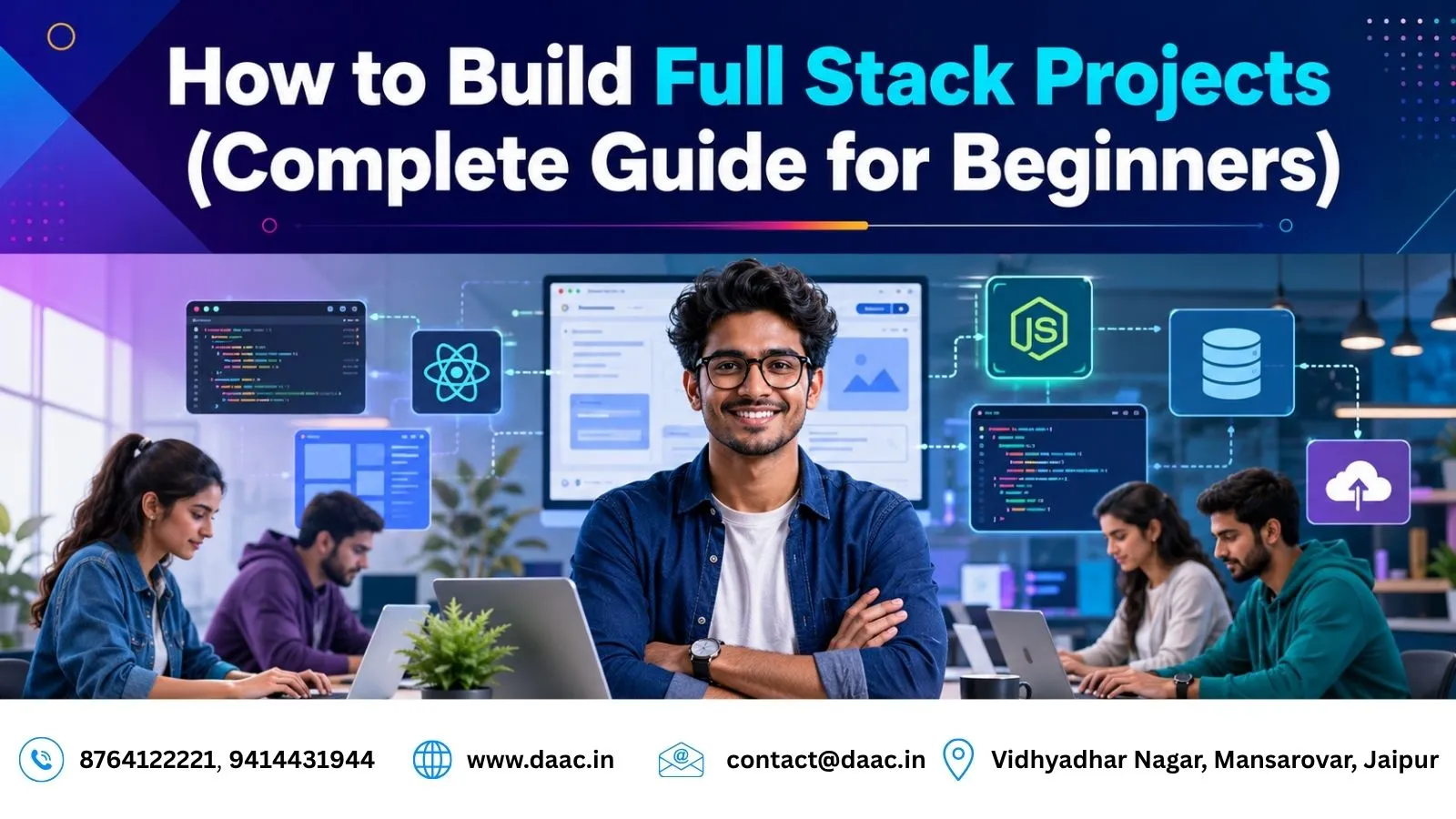
Learning how to build full stack projects is one of the most important steps for anyone aiming to become a job-ready web developer in 2026. Full stack development combines both frontend and backend technologies, allowing developers to create complete web applications from scratch.
Today, companies are actively hiring developers who can handle real-world applications independently. This means practical experience is more valuable than theoretical knowledge. Building full stack projects helps you gain hands-on experience, improve problem-solving skills, and build a strong portfolio that can attract recruiters.
In this guide, you will learn the step-by-step process of building full stack applications, tools required, project ideas, and career opportunities in India.
What is a Full Stack Project?
A full stack project is a complete web application that includes both frontend and backend components along with a database system.
It typically consists of three major layers:
- Frontend (Client Side): HTML, CSS, JavaScript, React, Angular, or Vue
- Backend (Server Side): Node.js, PHP, Python, or Java
- Database Layer: MySQL, MongoDB, PostgreSQL
All these components work together to create functional and scalable applications used in real-world environments.
For example, an e-commerce website where users browse products, add items to a cart, and complete payments is a full stack application.
Why Building Full Stack Projects is Important
Full stack projects are essential for anyone who wants to become a professional developer.
They help you:
- Understand real-world application flow
- Improve coding and debugging skills
- Build a strong job-ready portfolio
- Gain confidence in development tools
- Prepare for technical interviews
Employers in India prefer candidates who can demonstrate practical project experience rather than just theoretical knowledge.
Building projects also helps you understand how frontend, backend, and database systems interact in real applications.
Step-by-Step Process to Build Full Stack Projects
1. Choose a Real-World Project Idea
The first step is selecting a simple yet practical idea.
Beginner-friendly project ideas include:
- Blog platform
- E-commerce website
- Portfolio builder
- Job portal
- Online booking system
Choosing real-world problems helps you understand actual development challenges and prepares you for industry-level work.
2. Plan Your Project Structure
Before writing code, proper planning is essential.
You should define:
- Project features (login, dashboard, payments)
- Technology stack (MERN, MEAN, LAMP)
- Database structure
- UI wireframe
- User flow
Planning helps you avoid confusion during development and improves efficiency.
3. Build the Frontend
Frontend development focuses on user interface and experience.
Technologies used:
- HTML5 and CSS3
- JavaScript
- React.js, Angular, or Vue.js
Key focus areas:
- Responsive design for mobile and desktop
- Clean and user-friendly interface
- Fast loading performance
A strong frontend ensures users interact smoothly with your application.
4. Develop the Backend
Backend development handles server-side logic and application processing.
Common technologies include:
- Node.js
- PHP
- Python (Django or Flask)
Backend responsibilities:
- API creation
- User authentication
- Data processing
- Security implementation
A well-structured backend ensures application stability and performance.
5. Connect Database
The database stores and manages application data.
Popular choices include:
- MySQL (SQL-based)
- MongoDB (NoSQL-based)
- PostgreSQL
Database integration allows your application to store user data, transactions, and content efficiently.
6. Testing and Debugging
Testing is a crucial stage in full stack development.
You should test for:
- Functional errors
- API failures
- UI issues
- Security vulnerabilities
Tools like Postman and browser developer tools help in debugging and API testing.
7. Deploy Your Project
Once development is complete, deployment makes your project live.
Popular platforms:
- AWS
- Vercel
- Netlify
Deployment helps you showcase your project to recruiters and build an online portfolio.
Best Full Stack Project Ideas for Beginners
Working on practical ideas helps you strengthen your skills.
Some useful project ideas include:
- Social media application
- Food delivery system
- Real-time chat app
- Learning management system
- Admin dashboard
These projects help you understand real-world development scenarios.
Skills Required to Build Full Stack Projects
To become successful in full stack development, you need both technical and logical skills.
Key skills include:
- HTML, CSS, JavaScript
- React or Angular
- Node.js or PHP
- Database management
- API integration
- Git and GitHub
Soft skills such as problem-solving and logical thinking are equally important.
Career Opportunities in Full Stack Development
Full stack development offers multiple career paths in the IT industry.
Popular roles include:
- Full Stack Developer
- Frontend Developer
- Backend Developer
- Software Engineer
- Web Application Developer
With growing demand in India, full stack developers are among the most highly paid professionals in the IT sector.
Many students start their journey by enrolling in a Full Stack Developer Course in Jaipur to gain structured training and real project experience.
Salary Expectations in India (2026)
Full stack development offers strong salary growth.
- Fresher: ₹3.5 LPA – ₹6 LPA
- 1–3 Years: ₹6 LPA – ₹12 LPA
- Experienced: ₹12 LPA – ₹25 LPA+
Salary depends on skills, project experience, and technical expertise.
Common Mistakes Beginners Should Avoid
Many beginners struggle due to avoidable mistakes such as:
- Starting without planning
- Ignoring frontend-backend integration
- Not practicing real projects
- Copying code without understanding
- Skipping debugging
Avoiding these mistakes helps you become a better developer faster.
Future Scope of Full Stack Development
Full stack development continues to grow in demand due to digital transformation.
Future trends include:
- AI-integrated web applications
- Cloud-based systems
- Serverless architecture
- Progressive web apps
- Real-time applications
Companies prefer developers who can adapt to new technologies and build scalable applications.
Conclusion
Learning how to build full stack projects is one of the most effective ways to become a successful web developer in 2026. It helps you gain practical experience, improve technical skills, and build a strong portfolio for job opportunities.
By following a structured approach—starting from planning to deployment—you can develop real-world applications that impress employers.
Consistency, practice, and hands-on project building are the keys to becoming a skilled full stack developer. The more projects you build, the more confident and job-ready you become.
FAQs
1. How do beginners start building full stack projects?
Beginners should start with simple projects like blogs or portfolios and gradually move to advanced applications.
2. Which tech stack is best for full stack development?
The MERN stack is one of the most popular choices for beginners and professionals.
3. How many projects should I build to get a job?
At least 3–5 well-developed full stack projects are recommended for job interviews.
4. Is full stack development a good career in India?
Yes, it is one of the most in-demand and high-paying careers in the IT industry.
5. Can I learn full stack development without a degree?
Yes, with the right training, practice, and projects, anyone can become a full stack developer.