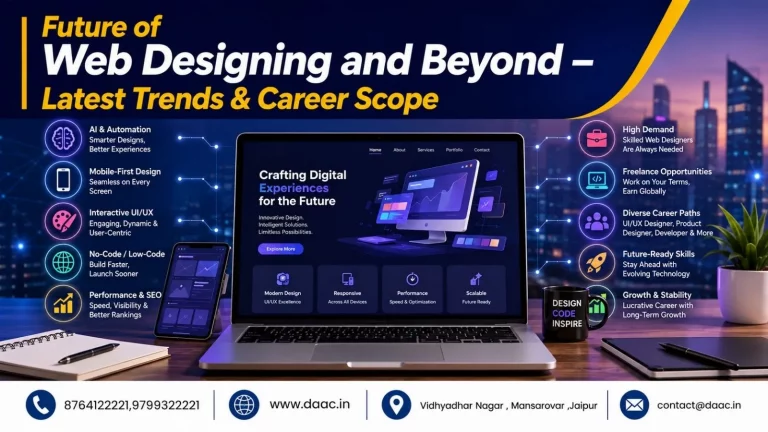

The demand for professional websites continues to grow as businesses, startups, and personal brands increasingly establish their online presence. This trend has created excellent opportunities for aspiring web designers. However, choosing the right Web Designing Course can be challenging because numerous training institutes and online platforms offer similar programs. Selecting the right course is important because it directly impacts your skills, confidence, and future career opportunities.
Whether you are a student, graduate, freelancer, or working professional, enrolling in a quality training program can help you build practical skills and prepare for real-world projects. Understanding what makes a course valuable will help you make a smarter decision and invest your time and money wisely.
Why Learning Web Designing Is a Smart Career Choice
Web designing remains one of the most in-demand digital skills in 2026. Every business needs an attractive and user-friendly website to connect with customers. From local businesses to global brands, organizations require skilled designers who can create engaging online experiences.
Unlike many traditional career paths, web designing allows flexibility. Professionals can work full-time, freelance, or even start their own design agency. The increasing demand for responsive websites, mobile-friendly layouts, and user-focused designs has made this field highly rewarding for creative individuals seeking long-term career growth.
Types of Web Designing Courses Available
Before selecting a course, it is important to understand the different learning formats available. Each format offers unique benefits depending on your schedule, learning style, and career goals.
Online Web Designing Courses
Online courses have become increasingly popular because they offer flexibility and convenience. Students can learn from anywhere and access recorded lessons according to their availability. This learning format is suitable for working professionals and college students who cannot attend regular classroom sessions.
Online programs often provide updated learning resources, assignments, and project-based training. However, learners need strong self-discipline and motivation to complete the course successfully and apply the concepts effectively.
Offline Web Designing Courses
Offline courses provide classroom-based learning where students interact directly with trainers and peers. Many learners prefer this method because they receive instant feedback, practical guidance, and structured learning support throughout the training period.
Students can collaborate on projects, participate in discussions, and gain hands-on experience using industry-standard tools. Offline learning is particularly beneficial for beginners who require additional support while developing foundational design skills.
What Should Be Included in a Quality Web Designing Course?
The curriculum is one of the most important factors to evaluate before enrollment. A good course should cover both design principles and practical development skills required by the industry.
Essential topics include:
- HTML fundamentals
- CSS styling techniques
- Responsive web design
- JavaScript basics
- UI/UX principles
- Website wireframing
- Figma and design tools
- SEO fundamentals
- Portfolio development
- Real-world projects
A course that combines theory with practical assignments helps students develop job-ready skills and gain confidence in handling client requirements.
Check the Experience of Trainers
The quality of instructors significantly affects your learning experience. Experienced trainers can explain complex concepts in simple ways and provide practical insights based on real industry projects.
Before joining any institute, research the trainer’s background, professional experience, and student reviews. Trainers who have worked on live projects can provide valuable guidance that goes beyond textbooks and tutorials. Learning from industry professionals often helps students understand current market expectations and emerging design trends.
For students looking to strengthen their design foundation, exploring a professional Web Designing Course in Jaipur can provide hands-on training, live projects, and mentorship from experienced trainers.
Compare Course Fees With Value Offered
Many students focus only on course fees while making a decision. Although budget is important, it should not be the only factor. A low-cost course may lack practical exposure, while a slightly higher investment could offer placement support, projects, certifications, and mentorship.
Evaluate the overall value rather than just the price. Consider factors such as project work, industry tools, portfolio guidance, internship opportunities, and trainer expertise. The right course should provide skills that deliver long-term career benefits rather than short-term savings.
Importance of Practical Projects
Web designing is a skill-based profession. Employers and clients want to see what you can create rather than only reviewing certificates. Therefore, practical project work should be a core part of the training program.
Students should work on multiple website projects during the course. These projects help build confidence and create a professional portfolio. Real-world assignments also improve problem-solving abilities and prepare learners for actual client requirements in future job roles.
Placement Support and Career Guidance
Many learners join a course to improve their employment opportunities. Placement assistance can be an important factor when comparing training institutes. Some institutes provide interview preparation, resume building, portfolio reviews, and direct company referrals.
Career guidance becomes especially valuable for freshers entering the industry. Support from experienced mentors can help students identify suitable job roles and understand current hiring trends within the web design market.
Read Student Reviews Before Enrolling
Student reviews provide valuable insights into the actual learning experience. Reviews often highlight strengths and weaknesses that may not be visible in promotional materials. Pay attention to feedback related to teaching quality, project work, trainer support, and placement assistance.
Look for reviews on Google, social media platforms, and educational forums. Consistently positive feedback usually indicates a reliable training provider that delivers quality education and student satisfaction.
Online vs Offline: Which Is Better?
Both learning methods have advantages depending on individual needs.
Online Learning Benefits
- Flexible schedule
- Learn from anywhere
- Lower cost
- Recorded sessions available
- Self-paced learning
Offline Learning Benefits
- Direct interaction with trainers
- Immediate doubt resolution
- Better networking opportunities
- Classroom discipline
- Collaborative project experience
Students should choose the format that aligns with their learning preferences and availability.
More importantly, many learners combine web design with development skills. Pursuing a Web Development Course in Jaipur after learning design can significantly improve career opportunities and help students become full-stack professionals.
Future Scope of Web Designing in 2026
The future of web designing remains promising due to continuous digital transformation. Businesses increasingly invest in user experience, responsive websites, and modern design systems. Emerging technologies such as AI-assisted design tools, no-code platforms, and interactive user experiences are creating new opportunities for skilled designers.
Companies now seek professionals who understand both aesthetics and functionality. Learning modern design practices helps students remain competitive and adapt to changing industry requirements. This makes web designing a future-proof career choice for creative and technology-focused individuals.
Conclusion
Choosing the right Web Designing Course can significantly influence your career success. Instead of focusing solely on fees or advertisements, evaluate the curriculum, trainer expertise, practical projects, placement support, and student reviews. A well-structured course helps build strong technical skills and prepares students for real-world challenges.
Whether you choose online or offline learning, prioritize practical experience and industry relevance. With the right training and dedication, web designing can become a rewarding and long-term career path in the growing digital economy.
FAQs
1. Who can join a Web Designing Course?
Anyone can join, including students, graduates, freelancers, entrepreneurs, and working professionals interested in creating websites and digital experiences.
2. How long does it take to learn web designing?
Most professional courses take between 3 to 6 months depending on the curriculum, learning mode, and practical training included.
3. Is coding necessary for web designing?
Basic coding knowledge such as HTML, CSS, and JavaScript is helpful and often included in professional web designing programs.
4. What is the average salary of a web designer in India?
Entry-level web designers can earn competitive salaries, while experienced professionals and freelancers often earn significantly higher based on their expertise and project portfolio.
5. What should I check before enrolling in a web designing course?
Review the curriculum, trainer experience, project work, placement support, student feedback, certification, and practical exposure before making your decision.