If you are searching for what is a full stack developer, the simple answer is: a full stack developer is a software professional who can work on both the front end and back end of a web application.
A modern application usually has multiple layers. The frontend is what users see and interact with, while the backend handles application logic, APIs, authentication, databases, and server-side operations. A full stack developer understands how these layers connect and can contribute across the development lifecycle.
In 2026, full stack development also increasingly involves cloud deployment, APIs, automated testing, application security, and AI-assisted development. This means the full stack developer meaning has expanded beyond simply knowing a frontend and backend programming language.
Whether you are a student, graduate, career changer, or beginner in programming, understanding the role can help you decide whether full stack development is the right career direction for you.
What Is a Full Stack Developer?
Full Stack Developer Definition
A full stack developer is a developer who works across the major layers of a software application, including the user interface, application logic, databases, APIs, and server-side systems.
For a typical web application, these layers may include:
Frontend → Backend → API → Database → Server/Cloud
A full stack developer does not necessarily need to be an expert in every technology involved. Instead, they should understand how the different components work together and be able to develop, integrate, troubleshoot, and improve them.
For example, an e-commerce application may require:
- A product interface
- User registration
- Login functionality
- Product search
- Shopping cart
- Payment integration
- Order processing
- Database storage
- Admin dashboard
A full stack developer can contribute to multiple parts of this application.
Understanding the Full Stack Concept
So, what is full stack?
The word “stack” refers to the collection of technologies used to build an application.
A development stack can include:
- Frontend technologies
- Backend technologies
- Database technologies
- APIs
- Development tools
- Testing tools
- Deployment infrastructure
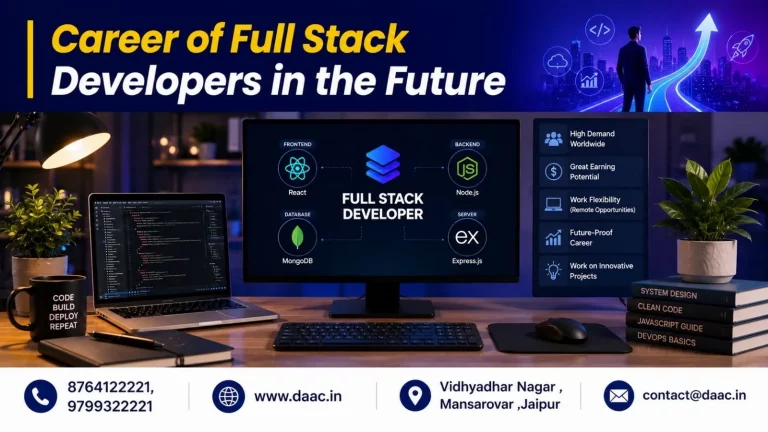
For example, a JavaScript-based stack may use React for the frontend, Node.js and Express for the backend, and a database such as MongoDB or PostgreSQL.
Another organization may use completely different technologies.
Therefore, full stack development is not one specific programming language or technology. It is an approach to application development that covers multiple layers of a software system.
Why Businesses Prefer Full Stack Developers
Businesses often need development teams that can move efficiently between different parts of an application.
A full stack developer can potentially:
- Understand frontend and backend requirements
- Connect APIs with user interfaces
- Work with databases
- Debug issues across application layers
- Build prototypes
- Contribute to deployment
- Collaborate with specialized developers
This can be particularly useful for startups and smaller development teams where individual developers may handle multiple responsibilities.
However, larger organizations may also employ full stack developers alongside specialists in frontend engineering, backend engineering, databases, cloud infrastructure, security, or data engineering.
The value of a full stack developer is therefore not simply that one person “does everything.” It is the ability to understand and work across the application as a connected system.
What Does a Full Stack Developer Do?
Front-End Development Responsibilities
The frontend is the part of an application that users interact with directly.
A full stack developer working on the frontend may handle:
- Page layouts
- Navigation
- Forms
- Buttons and interactions
- Responsive design
- API integration
- Client-side validation
- State management
- Error handling
- Accessibility
Common frontend technologies include:
- HTML
- CSS
- JavaScript
- React
- Other modern frontend frameworks and libraries
For example, consider a registration page.
The frontend collects the user’s information and sends it to the backend through an API. The backend validates the information and stores the appropriate data.
Understanding this complete flow is an important part of being a full stack developer.
Back-End Development Responsibilities
The backend manages the application’s server-side logic.
Typical backend responsibilities include:
- Creating APIs
- Processing requests
- Validating information
- Implementing business logic
- Managing authentication
- Connecting to databases
- Handling errors
- Managing permissions
- Integrating external services
Backend development can involve technologies such as:
- Node.js
- Java
- Python
- PHP
- .NET
- Go
The specific technology depends on the organization and project.
For a JavaScript-based full stack pathway, Node.js can allow developers to use JavaScript on the server side as well as in frontend development.
Database and Server Management Tasks
Applications need somewhere to store and retrieve information.
A full stack developer should understand fundamental database concepts such as:
- Tables or collections
- Records or documents
- Relationships
- Queries
- Indexes
- CRUD operations
- Data validation
Popular database categories include relational and NoSQL databases.
Developers should also understand basic server and deployment concepts.
These may include:
- Environment variables
- Application configuration
- Hosting
- Domain names
- HTTPS
- Logs
- Deployment pipelines
- Cloud infrastructure
A developer does not necessarily need to become a dedicated cloud engineer, but understanding how an application reaches production is increasingly useful.
Skills Required to Become a Full Stack Developer
Technical Skills and Programming Languages
The technical foundation of a full stack developer usually includes several areas.
Frontend:
- HTML
- CSS
- JavaScript
- Responsive design
- Frontend frameworks
Backend:
- At least one backend programming language
- Server-side development
- REST APIs
- Authentication
- Error handling
Database:
- SQL or NoSQL fundamentals
- Database design
- Queries
- CRUD operations
Development tools:
- Git
- Version control
- API testing
- Debugging tools
- Package managers
Deployment:
- Hosting fundamentals
- Environment configuration
- CI/CD concepts
- Cloud basics
The goal is not to learn every technology available.
A better approach is to choose one coherent stack and develop strong fundamentals before expanding into additional technologies.
Problem-Solving and Analytical Thinking
Programming is fundamentally a problem-solving activity.
A full stack developer may encounter questions such as:
- Why is the API returning an error?
- Why is the database query slow?
- Why is the frontend displaying outdated information?
- Why is authentication failing?
- Why does the application work locally but fail after deployment?
Solving these problems requires logical thinking and systematic debugging.
In 2026, this remains important even with AI coding assistants.
AI tools can help generate code, explain errors, and suggest implementation approaches, but developers still need to verify generated code, understand system behaviour, identify incorrect assumptions, and make appropriate technical decisions.
The World Economic Forum’s latest skills research identifies analytical thinking as a leading core skill and highlights AI and big data, technological literacy, and creative thinking among important growing skill areas.
Communication and Team Collaboration
Full stack development is not only about writing code.
Developers commonly work with:
- UI/UX designers
- Product managers
- QA engineers
- Backend specialists
- Frontend specialists
- DevOps engineers
- Business teams
A developer should be able to explain technical issues in understandable language.
For example, instead of simply saying “the API is broken,” a developer should be able to explain:
What happened → Why it happened → What impact it has → What solution is proposed
Good communication makes technical collaboration much easier.
Full Stack Developer Career Opportunities in 2026
Industries Hiring Full Stack Developers
Full stack development skills can be applied across many industries.
Examples include:
- IT services
- Software product companies
- E-commerce
- FinTech
- Healthcare technology
- Education technology
- Travel and hospitality
- Logistics
- Media
- SaaS
- Digital agencies
- Startups
Applications in these industries may range from customer portals and dashboards to enterprise platforms and mobile-backed web services.
The technology industry is also changing because of AI. The World Economic Forum’s Future of Jobs research identifies software and application developers among technology-related roles expected to experience strong growth through 2030.
For aspiring developers, this means the career path is increasingly connected with AI-enabled development, cloud technologies, security, automation, and data-driven applications.
Freelancing vs Full-Time Jobs
Full stack development can support both employment and freelance work.
Full-time roles may provide:
- Structured career progression
- Team-based development
- Regular projects
- Mentorship
- Exposure to larger systems
Freelancing can provide:
- Flexible project selection
- Remote opportunities
- Direct client interaction
- Independent work
- Multiple project types
Freelancers may build:
- Business websites
- E-commerce applications
- Dashboards
- Customer portals
- Internal business applications
- Custom APIs
However, successful freelancing requires more than technical skills. Client communication, project estimation, documentation, deadlines, and requirement management are equally important.
Future Scope of Full Stack Development
The future scope of full stack development is increasingly connected with several technology trends.
AI-Assisted Development
Developers can use AI tools for code generation, debugging assistance, documentation, testing, and learning.
Cloud-Native Applications
Applications increasingly rely on cloud infrastructure, managed databases, APIs, containers, and automated deployment.
API-First Development
Applications frequently communicate through APIs, making API design and integration important full stack skills.
Application Security
Authentication, authorization, secure data handling, input validation, and protection against common vulnerabilities are becoming essential development practices.
Automated Testing
Modern development teams increasingly integrate automated testing into development and deployment workflows.
This means the future meaning of full stack developer is likely to continue evolving. The core concept remains working across application layers, but the surrounding tools and engineering practices continue to change.
How to Start Your Journey as a Full Stack Developer
Learning Path for Beginners
If you are starting from zero, avoid learning multiple frameworks simultaneously.
A structured learning path can look like:
Step 1: Learn HTML and CSS
Step 2: Learn JavaScript fundamentals
Step 3: Learn Git and version control
Step 4: Learn a frontend framework such as React
Step 5: Learn backend development
Step 6: Learn REST APIs
Step 7: Learn databases and CRUD operations
Step 8: Learn authentication and authorization
Step 9: Build complete full stack applications
Step 10: Learn testing and debugging
Step 11: Learn deployment and cloud fundamentals
Step 12: Build a professional portfolio
This sequence creates a foundation before introducing more advanced concepts.
Certifications and Training Programs
Formal training is not mandatory for every developer, but structured learning can help beginners avoid common gaps.
A training program can provide:
- A planned curriculum
- Instructor guidance
- Practical assignments
- Project experience
- Doubt-solving support
- Code reviews
- Interview preparation
Certifications can also demonstrate that you have studied a particular technology or platform.
However, certification should complement practical skills rather than replace them.
When selecting a program, examine the syllabus, projects, instructor support, practical exposure, and technology versions being taught.
Building a Strong Portfolio
A portfolio is one of the best ways to demonstrate practical full stack skills.
Instead of creating ten very small projects, focus on a few meaningful applications.
For example:
Project 1: E-commerce Application
Include:
- User authentication
- Product catalogue
- Search
- Cart
- Orders
- Admin functionality
Project 2: Task Management Application
Include:
- User accounts
- Projects
- Tasks
- Status updates
- Role-based access
Project 3: Learning Platform
Include:
- Courses
- Student accounts
- Progress tracking
- Content management
- Dashboard
For each project, explain:
- The problem being solved
- Technology stack
- Database structure
- API architecture
- Authentication approach
- Challenges
- Testing
- Deployment
This gives potential employers a clearer understanding of how you think and build software.
Full Stack Developer vs Specialized Developer
It is also useful to understand that full stack development does not mean replacing specialized roles.
A frontend specialist may have deeper expertise in interface architecture, accessibility, performance, and user experience.
A backend specialist may focus more deeply on distributed systems, APIs, databases, scalability, and server architecture.
A full stack developer typically develops broader knowledge across these areas.
Therefore, the right path depends on your interests and career goals.
Final Thoughts
So, what is a full stack developer?
A full stack developer is a software professional who can work across the major layers of an application, including frontend, backend, databases, APIs, and deployment-related processes.
The full stack developer meaning has evolved as modern software development has become more connected with cloud computing, automation, security, APIs, testing, and artificial intelligence.
For beginners, the most practical approach is to start with HTML, CSS, and JavaScript, then learn a frontend framework, backend development, databases, APIs, authentication, testing, and deployment.
Most importantly, learn by building.
A developer who can take an idea from user interface → backend logic → database → API → testing → deployment has developed the practical understanding that defines full stack development.