
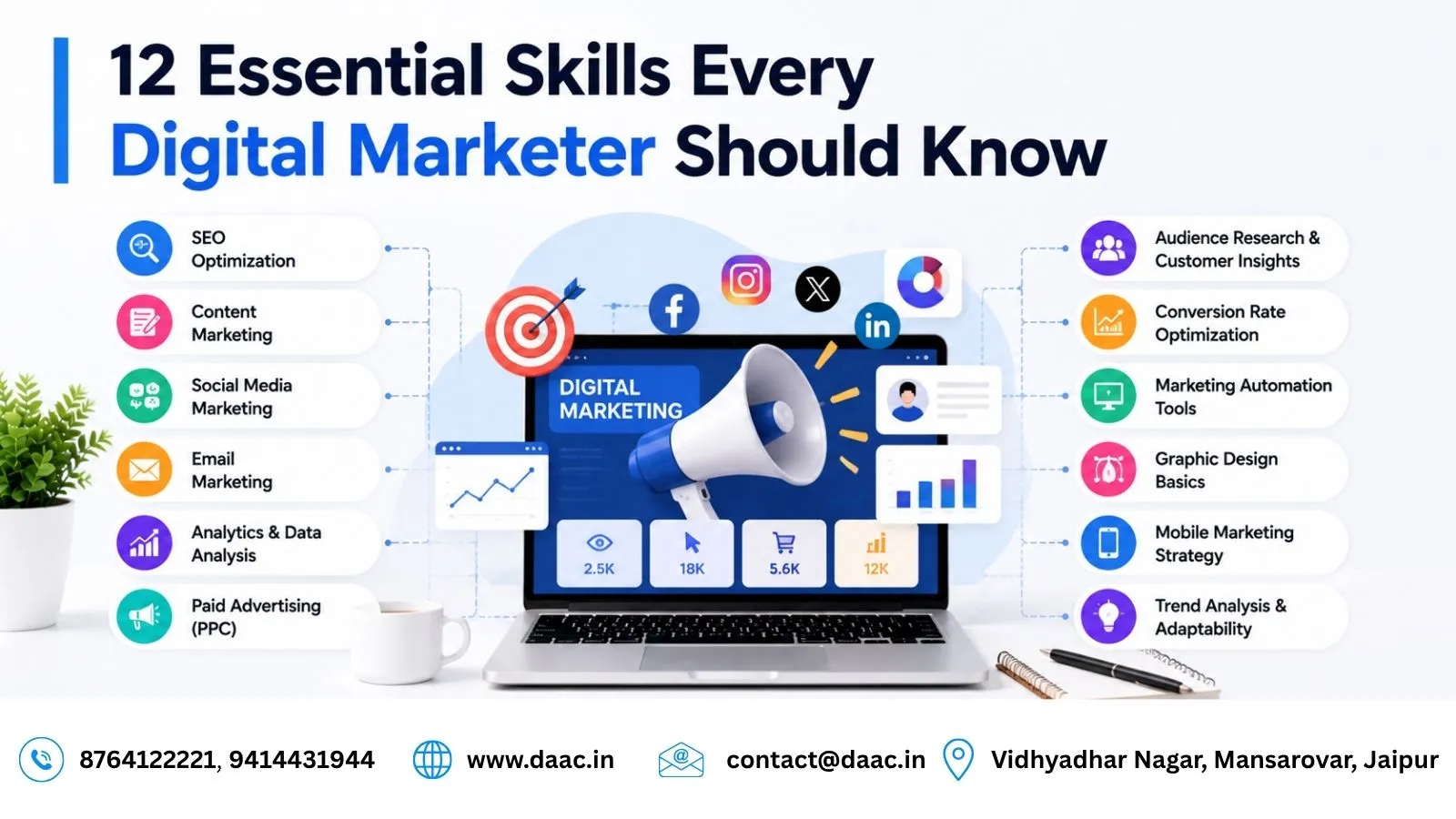
Digital marketing has become one of the fastest-growing career fields worldwide. Businesses of every size are investing heavily in online promotion, creating massive opportunities for skilled professionals. Whether you are a student, freelancer, entrepreneur, or job seeker, developing strong Digital Marketing Skills can help you build a successful and future-ready career. As technology evolves, marketers must continuously update their knowledge to stay competitive and deliver measurable results for businesses.
Why Digital Marketing Skills Are Important in 2026
The digital landscape is changing rapidly with artificial intelligence, automation tools, voice search, and personalized marketing becoming mainstream. Companies now expect marketers to understand multiple channels and technologies instead of focusing on a single area. Modern marketers must combine creativity with analytical thinking to create campaigns that generate engagement, leads, and revenue.
According to industry reports, businesses increasingly prefer professionals who can handle content creation, search engine optimization, paid advertising, and customer engagement together. This demand has made digital marketing one of the most attractive career choices for freshers and experienced professionals alike.
1. Data Analytics for Better Marketing Decisions
One of the most valuable skills for marketers today is understanding data. Every online action generates useful information about customer behavior. Website visits, purchase history, click-through rates, and user engagement provide insights that help marketers make better decisions.
Companies like Amazon and Netflix rely heavily on customer data to personalize experiences. Marketers who understand Data Analytics can identify trends, improve campaigns, and allocate budgets more effectively. This skill helps businesses maximize returns while improving customer satisfaction.
2. Understanding Data Cleansing
Collecting data alone is not enough. Marketers must ensure the information they use is accurate and relevant. Data cleansing involves removing duplicate, outdated, or incorrect information from databases.
Clean data leads to better targeting and improved campaign performance. For example, sending promotional emails to inactive or incorrect addresses can reduce engagement rates. Maintaining an organized database ensures businesses communicate effectively with the right audience and achieve better marketing outcomes.
3. UX Design Understanding
User experience plays a critical role in digital marketing success. A website may attract visitors through advertising, but poor user experience can drive them away before conversion. Understanding UX principles helps marketers create customer-focused campaigns that improve engagement and satisfaction.
Marketers should learn how visitors interact with websites, landing pages, and digital content. This knowledge allows them to optimize customer journeys and increase conversions. Companies with strong user experience strategies often outperform competitors in customer retention and brand loyalty.
4. Continuous Learning and Industry Awareness
Digital marketing trends evolve quickly. What worked two years ago may no longer produce results today. Successful marketers stay updated through blogs, industry reports, webinars, podcasts, and professional training programs.
Artificial intelligence tools, automation platforms, and new social media features continue transforming the marketing landscape. Continuous learning helps professionals remain relevant and competitive. Investing time in upgrading skills is essential for long-term success in this dynamic industry.
5. SEO and SEM Knowledge
SEO and SEM: The Foundation of Online Visibility
Search engines remain one of the most important traffic sources for businesses. Understanding SEO and SEM enables marketers to improve website visibility and attract targeted audiences. Search engine optimization focuses on organic rankings, while search engine marketing includes paid advertising strategies.
Google processes billions of searches every day. Businesses that appear prominently in search results often generate higher traffic and better conversion opportunities. Marketers who master keyword research, on-page optimization, and paid campaigns become valuable assets for any organization.
For students looking to build expertise in this field, enrolling in a relevant Digital Marketing training program can provide practical experience and industry-focused knowledge.
6. Audience Targeting and Customer Segmentation
Effective marketing requires reaching the right people with the right message. Audience segmentation helps businesses categorize customers based on demographics, interests, behavior, and purchasing habits.
Platforms such as Google Ads and Meta Ads allow advertisers to create highly targeted campaigns. Marketers who understand audience segmentation can reduce advertising costs while improving conversion rates. Accurate targeting ensures marketing efforts generate maximum value and business growth.
7. CMS Knowledge
Content Management Systems simplify website management and content publishing. Platforms such as WordPress power millions of websites globally and have become essential tools for marketers.
A basic understanding of CMS platforms allows marketers to publish content, optimize pages, and manage website updates without relying entirely on developers. This flexibility improves efficiency and enables faster implementation of marketing campaigns.
8. Managing Plugins and Website Enhancements
Modern websites rely on plugins and extensions to improve functionality. Marketers often need to install SEO tools, analytics tracking systems, contact forms, and performance optimization plugins.
Understanding how these tools work helps marketers enhance website performance and user experience. Small improvements such as faster loading speeds and improved navigation can significantly impact search rankings and conversion rates.
9. Communication Skills
Strong communication is essential in every marketing role. Marketers must present ideas clearly to customers, team members, and stakeholders. Effective communication helps build trust, strengthen relationships, and improve brand perception.
Whether writing blog content, creating advertisements, or conducting presentations, communication skills influence campaign success. Marketers who can explain complex concepts in simple language often achieve better engagement and stronger customer connections.
10. Social Media Marketing Expertise
Social platforms have become powerful marketing channels for businesses across industries. Effective Social Media Marketing involves much more than posting content regularly. Marketers must understand audience behavior, engagement strategies, and platform-specific trends.
Brands like Nike and Starbucks use social media to create meaningful conversations with customers. Successful marketers focus on content quality, consistency, and audience interaction to build brand awareness and loyalty. Social media remains one of the most influential digital channels in modern marketing.
11. Paid Advertising Skills
Paid advertising allows businesses to reach highly targeted audiences quickly. Platforms such as Google Ads, Facebook Ads, LinkedIn Ads, and YouTube Ads offer advanced targeting options that improve campaign effectiveness.
Marketers who understand bidding strategies, audience segmentation, and ad optimization can generate significant returns on investment. Paid advertising remains an essential component of modern digital marketing strategies, especially for businesses seeking rapid growth and lead generation.
12. Video Marketing and Content Creation
Video content continues to dominate digital platforms. Research consistently shows that consumers engage more with video than other content formats. Brands use videos for product demonstrations, educational content, customer testimonials, and social media campaigns.
Video marketing helps businesses communicate messages more effectively while building trust with audiences. Marketers who understand video creation, editing, and storytelling gain a competitive advantage in today’s content-driven environment. As video consumption grows, this skill becomes increasingly valuable.
Career Opportunities After Learning Digital Marketing
Digital marketing offers diverse career paths for professionals from both technical and non-technical backgrounds. Popular job roles include:
- SEO Specialist
- Content Marketing Executive
- Social Media Manager
- PPC Expert
- Email Marketing Specialist
- Digital Marketing Analyst
- Performance Marketer
- Marketing Automation Specialist
The growing demand for skilled professionals creates excellent opportunities for career growth, freelancing, and entrepreneurship.
Conclusion
Developing strong Digital Marketing Skills is essential for building a successful career in today’s digital economy. Businesses are actively seeking professionals who can combine creativity, analytics, communication, and technology to drive results. Skills such as SEO and SEM, content creation, audience targeting, and video marketing are becoming increasingly important as competition grows online.
For students and professionals looking to enter this field, continuous learning and practical experience are key. With the right training and dedication, digital marketing can offer excellent career opportunities, financial growth, and long-term professional success.
FAQs
1. What are the most important digital marketing skills in 2026?
Data analytics, SEO, content marketing, paid advertising, social media management, and video marketing are among the most important skills for digital marketers.
2. Can non-technical students learn digital marketing?
Yes. Digital marketing is suitable for both technical and non-technical students. Most concepts focus on strategy, communication, and marketing rather than coding.
3. Why is SEO important for digital marketers?
SEO helps businesses improve search visibility, attract organic traffic, and generate qualified leads without relying entirely on paid advertising.
4. Is digital marketing a good career option?
Yes. Digital marketing offers strong job demand, multiple specialization options, freelancing opportunities, and long-term career growth.
5. How can I start learning digital marketing?
You can begin through professional training programs, online courses, industry blogs, practical projects, and internships that provide real-world experience.