
Web development has become one of the most in-demand skills in today’s digital-first world. Every business, brand, and organization needs a website or web application to establish an online presence. This growing demand has made web development a highly valuable and future-ready career option.
Whether you want to build your own website, start freelancing, or pursue a professional IT career, learning web development provides strong opportunities for growth. It combines creativity, logic, and problem-solving to create interactive digital experiences.
In this guide, you will understand web development basics, course structure, syllabus, skills required, and career opportunities in a simple and practical way.
What is Web Development?
Web development is the process of creating websites and web applications that run on the internet. It includes designing layouts, writing code, managing databases, and ensuring smooth functionality.
A website is what users see and interact with, but behind it is a combination of programming, structure, and logic that makes everything work.
Web development is mainly divided into two parts:
Frontend Development
Frontend development focuses on the visual part of a website that users interact with directly. It includes design, layout, colors, buttons, and user experience.
Technologies used:
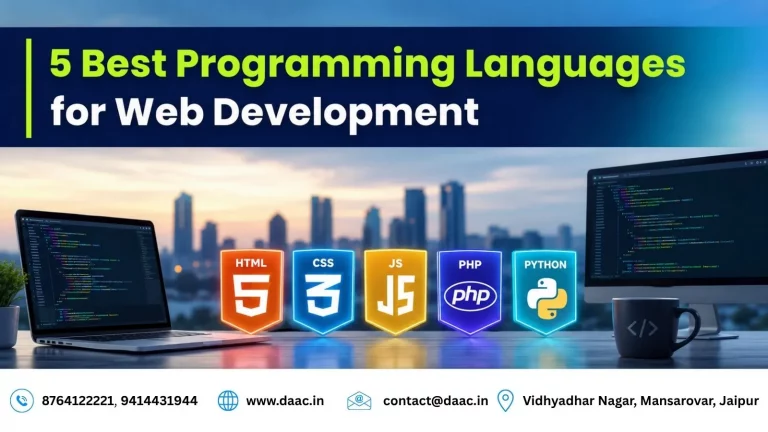
- HTML
- CSS
- JavaScript
- React JS
- Angular
For example, when you open an e-commerce website and see product images, menus, and buttons, that is frontend development.
Backend Development
Backend development manages the server-side operations of a website. It handles data processing, authentication, and database management.
Technologies used:
- Node.js
- PHP
- Python
- Java
- MySQL
- MongoDB
For example, when you log in to a website or make a purchase online, backend systems process your data securely.
Why Web Development is a Great Career Choice
Web development is one of the fastest-growing careers in the IT industry. It offers strong job security and high earning potential.
Key benefits include:
- High demand across industries
- Attractive salary packages
- Freelancing opportunities
- Remote work flexibility
- Continuous learning and growth
Companies across sectors like e-commerce, education, healthcare, and finance constantly hire skilled web developers.
Course Overview
A professional web development course is designed to take students from beginner to advanced level through structured learning and practical training.
Typical course structure includes:
- HTML and CSS fundamentals
- JavaScript programming
- Responsive web design
- Frontend frameworks
- Backend development
- Database management
- Full-stack development
- Project-based learning
Most modern institutes also include live projects and portfolio building to improve job readiness.
Students can also explore structured training programs like Web Development Course in Jaipur for practical industry exposure and hands-on experience.
Web Development Course Syllabus
A standard web development syllabus covers both theoretical concepts and practical implementation.
Frontend Syllabus
- HTML5 structure and elements
- CSS styling and layouts
- JavaScript fundamentals
- Responsive design techniques
- Bootstrap framework
- UI/UX basics
Backend Syllabus
- Server-side programming
- API development
- Database management
- Authentication systems
- CRUD operations
Full Stack Development
- Integration of frontend and backend
- Version control using Git and GitHub
- Deployment of applications
- Real-world project development
Skills Required to Become a Web Developer
To become a successful web developer, students need both technical and non-technical skills.
Technical Skills
- HTML, CSS, JavaScript
- React or Angular
- Node.js or PHP
- Database systems (MySQL, MongoDB)
- Git and version control
- API integration
Soft Skills
- Problem-solving ability
- Logical thinking
- Creativity
- Communication skills
- Attention to detail
These skills help developers build efficient, user-friendly, and scalable web applications.
How to Start Learning Web Development
Starting a web development journey is simple if you follow a structured approach.
Step 1: Learn Basics
Begin with HTML, CSS, and JavaScript. These form the foundation of all web technologies.
Step 2: Practice Regularly
Build small projects like landing pages, portfolios, or blogs to apply your knowledge.
Step 3: Learn Advanced Tools
Move to frameworks like React or backend technologies like Node.js.
Step 4: Work on Projects
Real-world projects help you understand how websites are built in the industry.
Step 5: Build Portfolio
Showcase your work on GitHub or personal websites to attract employers.
Deployment of a Website
Once a website is built, it needs to be published online.
Web Hosting
Web hosting stores your website files and makes them accessible on the internet.
Domain Name
A domain name is your website’s address, such as www.example.com.
Deployment Process
-
Upload files to server
-
Connect domain name
-
Test website functionality
-
Fix bugs and optimize performance
Important Features of Modern Web Development
Modern websites are not just static pages. They include advanced features to improve user experience.
Responsive Design
Websites must work smoothly on mobile, tablet, and desktop devices.
Cross-Browser Compatibility
Websites should function properly on all browsers like Chrome, Firefox, and Safari.
Performance Optimization
Fast loading speed improves user experience and SEO ranking.
Accessibility
Websites should be usable for all users, including people with disabilities.
Career Opportunities in Web Development
Web development offers multiple career paths depending on your skills and interests.
Popular roles include:
- Frontend Developer
- Backend Developer
- Full Stack Developer
- UI Developer
- Web Designer
- Software Engineer
With experience, developers can also move into roles like team lead, project manager, or software architect.
Students can also specialize further by joining advanced programs like Full Stack Developer Course in Jaipur for better career growth.
Future Scope of Web Development
The future of web development is highly promising due to rapid digital transformation.
Emerging trends include:
- AI-powered websites
- Progressive Web Apps (PWA)
- Cloud-based applications
- Headless CMS
- Automation tools
As businesses continue moving online, the demand for skilled web developers will continue to grow.
Conclusion
Web development is a powerful and future-proof career option that combines creativity and technical skills. It offers endless opportunities in freelancing, jobs, startups, and global companies.
By learning core technologies like HTML, CSS, JavaScript, and backend frameworks, you can build strong foundations for a successful IT career. With consistent practice, real-world projects, and proper training, anyone can become a professional web developer.
If you are planning to enter the IT industry, web development is one of the best starting points for long-term growth and success.
FAQs
1. Is web development a good career in 2026?
Yes, web development is a highly in-demand and future-proof career with strong job opportunities worldwide.
2. How long does it take to learn web development?
On average, it takes 4 to 6 months to learn basics and 8 to 12 months to become job-ready with practice.
3. Do I need a degree to become a web developer?
No, a degree is not mandatory. Skills, projects, and practical experience matter more than formal education.
4. What is the average salary of a web developer?
Freshers can earn ₹3 LPA to ₹6 LPA, while experienced developers can earn significantly higher packages.
5. Can I become a web developer without coding experience?
Yes, beginners can start from scratch by learning HTML, CSS, and JavaScript step by step.