Web design is one of the most creative and in-demand career paths in the digital industry today. Every business, from startups to global enterprises, needs a visually appealing and user-friendly website to attract customers and build trust.
In 2026, web design has evolved beyond just creating attractive layouts. It now includes user experience design, responsive interfaces, mobile-first design, and modern UI/UX principles. This makes it a powerful career option for students who want to combine creativity with technology.
If you are wondering how to start a career in web design, this guide will help you understand the skills, roadmap, tools, and job opportunities required to succeed in this field.
Why Web Design Is a High-Growth Career in 2026
The digital world is expanding rapidly, and businesses are investing heavily in their online presence. A well-designed website is often the first impression of a brand, making web designers essential for business success.
Web design is in demand because:
- Every business needs a website
- E-commerce platforms are growing rapidly
- Mobile internet usage is increasing
- UI/UX has become a business priority
- Companies want better user engagement
Modern web designers are not just artists; they are problem solvers who improve user experience and drive business growth.
Skills Required to Become a Web Designer
To build a successful career in web design, you need a combination of technical and creative skills.
Core Technical Skills
The foundation of web design includes:
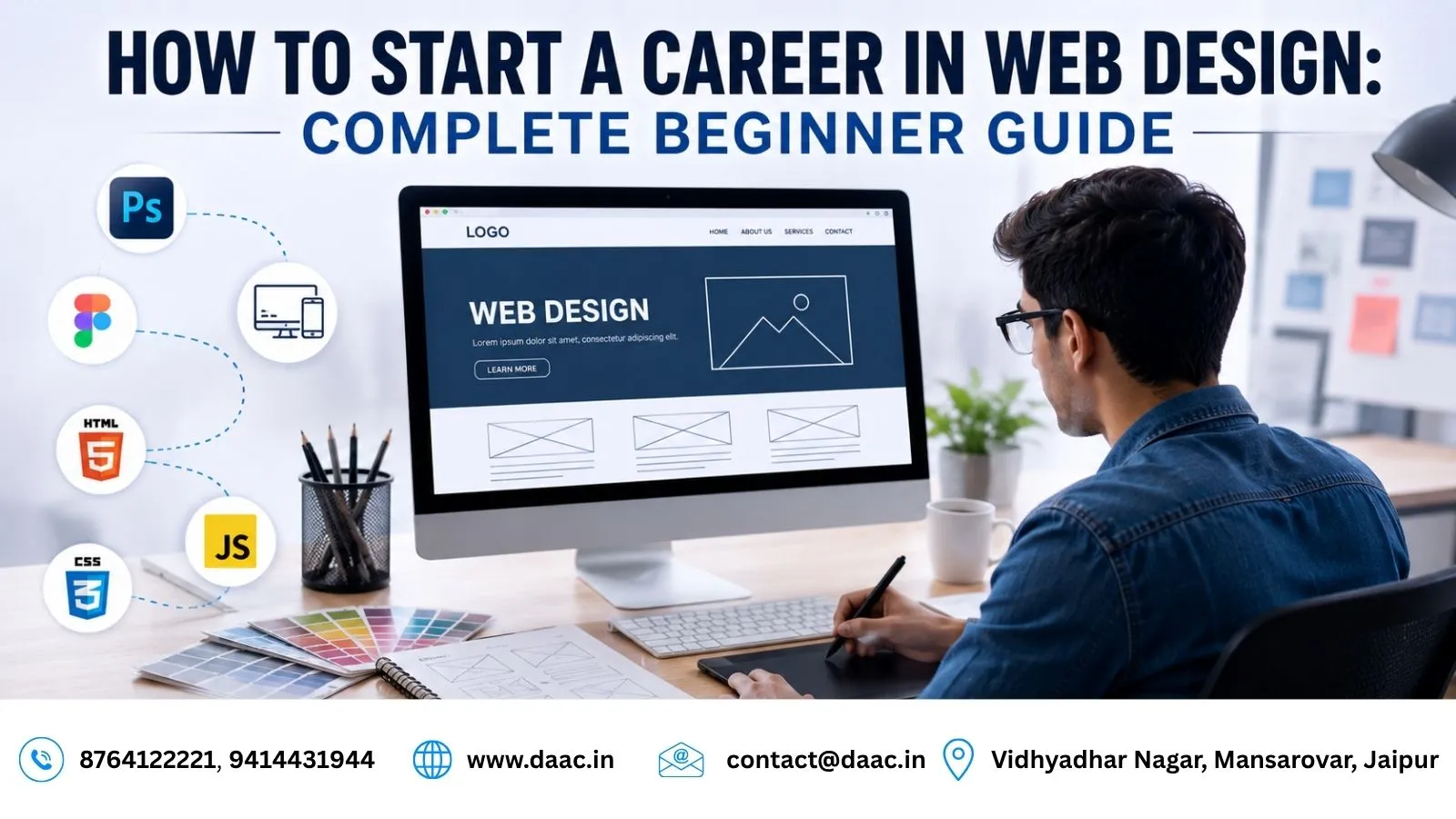
- HTML for structure
- CSS for styling
- JavaScript for interactivity
- Responsive design principles
- Basic understanding of frameworks
These technologies help you build functional and visually appealing websites.
Design Skills
Along with coding, design understanding is essential:
- Color theory
- Typography
- Layout design
- UI/UX principles
- Visual hierarchy
A strong design sense helps you create websites that are both attractive and user-friendly.
Tools Used in Web Design
Professional web designers use modern tools such as:
- Figma
- Adobe XD
- Photoshop
- VS Code
- Webflow
These tools help in designing prototypes, layouts, and real-world website interfaces.
Step-by-Step Roadmap to Start a Web Design Career
Starting a career in web design becomes easier when you follow a structured learning path.
Step 1: Learn the Basics of Web Technologies
Begin with HTML, CSS, and basic JavaScript. These are the building blocks of all websites.
Step 2: Understand Design Principles
Study how colors, fonts, and layouts work together. Practice by redesigning existing websites.
Step 3: Practice Real Projects
Work on small projects such as:
- Personal portfolio website
- Business landing pages
- Blog templates
- E-commerce homepage design
Step 4: Learn UI/UX Design
Understand user behavior and how people interact with websites. Focus on simplicity and usability.
Step 5: Build a Portfolio
A strong portfolio is the most important factor in getting hired. It should showcase:
- Website designs
- UI prototypes
- Responsive layouts
- Live projects
Employers value practical work more than theoretical knowledge.
Step 6: Apply for Internships or Freelance Work
Start with internships or freelance projects to gain real-world experience and industry exposure.
Importance of Portfolio in Web Design Career
A portfolio acts as your professional identity in the web design industry. It shows your creativity, technical skills, and problem-solving ability.
A good portfolio should include:
- Clean UI designs
- Mobile-friendly websites
- Real client projects (if available)
- Case studies explaining your process
Students often gain portfolio-building experience through structured training programs such as a Web Designing Course in Jaipur, where they work on real-world projects under expert guidance.
Job Opportunities in Web Design
Web design offers multiple career paths across different industries.
Popular job roles include:
- Web Designer
- UI Designer
- UX Designer
- Front-End Developer
- Visual Designer
- Product Designer
Industries hiring web designers include IT companies, digital agencies, startups, e-commerce businesses, and software firms.
Salary Expectations in Web Design
Web design offers competitive salaries, especially for skilled professionals with strong portfolios.
Average salary ranges in India:
| Experience Level | Salary Range |
|---|---|
| Fresher | ₹3 LPA – ₹5 LPA |
| 2–4 Years | ₹5 LPA – ₹10 LPA |
| Senior Designer | ₹10 LPA – ₹18 LPA |
| UI/UX Specialist | ₹8 LPA – ₹20 LPA |
Freelancers can also earn based on project complexity and international clients.
Freelancing Opportunities in Web Design
Web design is one of the best careers for freelancing. Designers can work with clients globally and earn flexible income.
Common freelance projects include:
- Website redesign
- Landing pages
- UI mockups
- Branding websites
- WordPress design
Platforms like Upwork, Fiverr, and Freelancer offer global opportunities for web designers.
Common Mistakes Beginners Should Avoid
Many beginners struggle due to avoidable mistakes such as:
- Focusing only on theory
- Ignoring practice projects
- Copying designs without understanding
- Not learning responsive design
- Skipping portfolio creation
Consistent practice and real-world projects are essential for success.
Future Scope of Web Design
Web design is evolving rapidly with new technologies such as:
- AI-based design tools
- No-code platforms
- Interactive UI systems
- Motion design
- AR/VR interfaces
Despite automation tools, creative and user-focused design will always require human expertise.
This ensures long-term career stability and growth opportunities.
Conclusion
Starting a career in web design is a great choice for students who are creative, curious, and interested in technology. With the right skills, tools, and practice, anyone can build a successful career in this field.
Web design not only offers job opportunities but also freelancing freedom, creative satisfaction, and long-term growth potential.
By focusing on continuous learning, building strong portfolios, and gaining real-world experience, you can establish yourself as a professional web designer in 2026 and beyond.
Frequently Asked Questions
1. Do I need coding to become a web designer?
Basic knowledge of HTML, CSS, and JavaScript is recommended, but advanced coding is not always required for UI/UX roles.
2. Is web design a good career in 2026?
Yes. With increasing digital demand, web design remains a strong and future-proof career option.
3. How long does it take to learn web design?
It usually takes 3 to 6 months to learn basics and 6 to 12 months to become job-ready with practice.
4. Can I become a web designer without a degree?
Yes. Skills, portfolio, and practical experience matter more than formal degrees in this field.
5. What is the average salary of a web designer in India?
Freshers typically earn ₹3–5 LPA, while experienced designers can earn significantly higher salaries depending on skills and experience.