HTML is the foundation of every website on the internet. Whether you want to become a web designer, web developer, or front-end professional, learning HTML is the first step toward building a successful career in technology. Many students and freshers start their journey with HTML because it helps them understand how web pages are structured and displayed in browsers.
Today, companies expect candidates to have a strong understanding of HTML basics before moving to advanced technologies. Practicing HTML Interview Questions is one of the best ways to improve your knowledge and prepare for job opportunities. These questions help beginners understand important concepts while identifying areas that need improvement.
Why HTML Is Important for Every Beginner
HTML, or HyperText Markup Language, is used to create the structure of web pages. Every website uses HTML elements to organize content such as text, images, videos, forms, and links. Without HTML, browsers would not know how to display information properly.
Learning HTML provides a strong foundation for CSS, JavaScript, React, and other modern technologies. Students who start with HTML often find it easier to understand advanced web development concepts later. This is why most professional training institutes include HTML as a core module in their web design and development programs.
Benefits of Learning HTML
- Easy to learn for beginners
- Essential for web development careers
- Works with all modern browsers
- Required for front-end development
- Helps create responsive websites
- Builds a foundation for advanced technologies
Students looking for professional guidance can explore the Web Designing Course in Jaipur
Understanding HTML Interview Questions Before Job Preparation
Most recruiters ask fundamental HTML questions during internships, fresher interviews, and junior developer hiring processes. These questions evaluate your understanding of tags, attributes, forms, tables, semantic elements, and document structure.
Practicing interview-based questions improves confidence and helps candidates answer technical questions more effectively. For example, understanding the difference between <div> and <span> or knowing the purpose of semantic tags can leave a positive impression during interviews.
Many successful developers spend time reviewing common interview questions before attending technical rounds because it helps reinforce concepts and improve recall speed.
Important Topics Covered in HTML MCQ Questions
Before attempting multiple-choice questions, it is important to understand the major topics commonly covered in assessments and interviews.
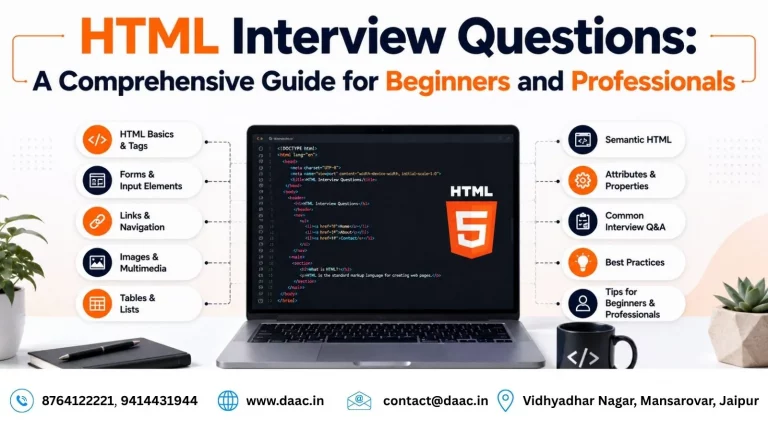
Core HTML Topics Include:
- HTML document structure
- Tags and attributes
- Links and navigation
- Lists and tables
- Forms and input fields
- Images and multimedia
- Semantic HTML
- HTML5 elements
- Meta tags
- Accessibility concepts
Most HTML MCQ Questions focus on these areas because they represent the fundamental skills required for web development roles.
Top Categories Covered in HTML Questions and Answers
The 50 questions included in your learning material cover various categories that are frequently asked during interviews and online assessments.
1. Basic HTML Fundamentals
These questions test your understanding of:
- HTML full form
- Document structure
- Comments
- Tags
- Elements
Examples include:
- What does HTML stand for?
- What is the purpose of HTML?
- How is an HTML document structured?
These concepts form the building blocks of web development and are often asked in fresher interviews.
2. Links, Images, and Multimedia
Modern websites rely heavily on visual content and navigation. Recruiters frequently ask questions related to hyperlinks, images, videos, and embedded content.
Important concepts include:
- Anchor tags
- Image tags
- Video embedding
- Iframes
- External resources
Understanding these topics helps developers create interactive and user-friendly websites.
3. Forms and User Input
Forms play a major role in websites because they allow users to submit information.
Common form-related topics include:
- Input fields
- Radio buttons
- Checkboxes
- Labels
- Text areas
- Select dropdowns
Many HTML Questions and Answers focus on forms because they are widely used in registration pages, login systems, and contact forms.
How HTML Quiz for Beginners Improves Learning
One of the most effective ways to learn HTML is through regular practice and self-assessment. Taking an HTML Quiz for Beginners helps students identify weak areas and improve understanding through active learning.
Instead of only reading theory, quizzes encourage learners to apply concepts and think critically. This approach improves retention and makes learning more engaging.
For example, answering questions related to semantic HTML elements such as <nav>, <aside>, and <figure> helps students remember their practical usage more effectively than passive reading alone.
Common HTML Mistakes Beginners Should Avoid
While learning HTML, beginners often make mistakes that affect website functionality and structure.
Some common errors include:
- Forgetting closing tags
- Incorrect nesting of elements
- Missing alt attributes in images
- Using deprecated tags
- Poor semantic structure
- Improper form labels
Avoiding these mistakes early helps learners write cleaner and more professional code.
Students who want practical projects and expert mentorship can also explore the Web Development Course in Jaipur.
Best Practices to Learn HTML Faster
Learning HTML becomes easier when you combine theory with practical implementation. Instead of memorizing tags, focus on creating small projects and experimenting with different elements.
Effective Learning Methods
- Build simple web pages daily
- Practice coding exercises
- Take online quizzes regularly
- Analyze website source code
- Create forms and tables
- Learn semantic HTML
- Work on mini projects
Consistent practice is far more effective than studying large amounts of theory without implementation.
Career Opportunities After Learning HTML
HTML is often the first step toward several technology careers. Once you understand HTML, you can continue learning CSS, JavaScript, frameworks, and modern development tools.
Popular career options include:
- Web Designer
- Front-End Developer
- UI Designer
- UI/UX Designer
- Web Developer
- WordPress Developer
- Full Stack Developer
Companies across industries require professionals who understand web technologies. As businesses continue expanding their digital presence, demand for skilled web professionals remains strong.
Why HTML Knowledge Still Matters in 2026
Some beginners believe modern website builders have reduced the importance of coding. However, HTML remains a critical skill because every website still relies on structured markup behind the scenes.
Even professionals using tools like WordPress, Figma, Webflow, or modern frameworks benefit from understanding HTML fundamentals. Strong HTML knowledge improves debugging, customization, accessibility, and SEO performance.
This is why HTML Interview Questions continue to appear in technical interviews, certification exams, and placement assessments across the industry.
Conclusion
Learning HTML is one of the smartest decisions for anyone planning a career in web design or web development. The 50 questions covered in this guide help beginners strengthen their understanding of essential concepts while preparing for interviews and assessments.
Regular practice with HTML MCQ Questions, real coding exercises, and project-based learning will help you build confidence and improve technical skills. Whether your goal is freelancing, securing a job, or pursuing advanced web technologies, HTML provides the foundation needed for long-term success in the digital world.
FAQs
1. What are the most important HTML interview questions for beginners?
Questions related to document structure, tags, forms, links, images, semantic elements, and HTML5 features are commonly asked in beginner-level interviews.
2. Are HTML MCQ questions useful for job preparation?
Yes. MCQ-based practice improves conceptual understanding, increases confidence, and helps candidates prepare for technical assessments and interviews.
3. How long does it take to learn HTML?
Most beginners can learn HTML fundamentals within a few weeks through regular practice and project-based learning.
4. Can I become a web developer after learning HTML?
HTML is the first step. You should also learn CSS, JavaScript, responsive design, and development frameworks to become a professional web developer.
5. Is HTML still relevant in 2026?
Yes. HTML remains the foundation of all websites and web applications, making it an essential skill for web designers, developers, and digital professionals.