Introduction: Skills Matter More Than Degrees in 2026
The 2026 hiring process now focuses on hiring outcomes because organizations have started to value data analytics skills more than formal degrees, which enables candidates to obtain high-paying data analytics positions despite lacking technical expertise. The blog provides a simplified data analytics career path by identifying essential data analyst skills, advanced data analytics tools, and AI-powered data analytics and business intelligence skills that professionals need to maintain their marketability through 2026, to understand data analyst salary trends until 2026, and to prepare for upcoming developments in data analytics.
Why Skills Are Critical in a Data Analytics Career
The results-oriented analytics environment requires Data analytics skills 2026 as its main hiring standard because organizations need workers who can analyze data and create dashboards, and resolve actual business challenges instead of requiring academic qualifications. The ability to master in-demand data analyst skills and advanced data analytics tools, and AI-powered data analytics and business intelligence skills in 2026 enables better employment opportunities, which establish a straightforward data analytics career progression path while increasing knowledge about data analyst salary data for 2026 and creating career prospects for high-paying data analytics positions that match future industry trends.
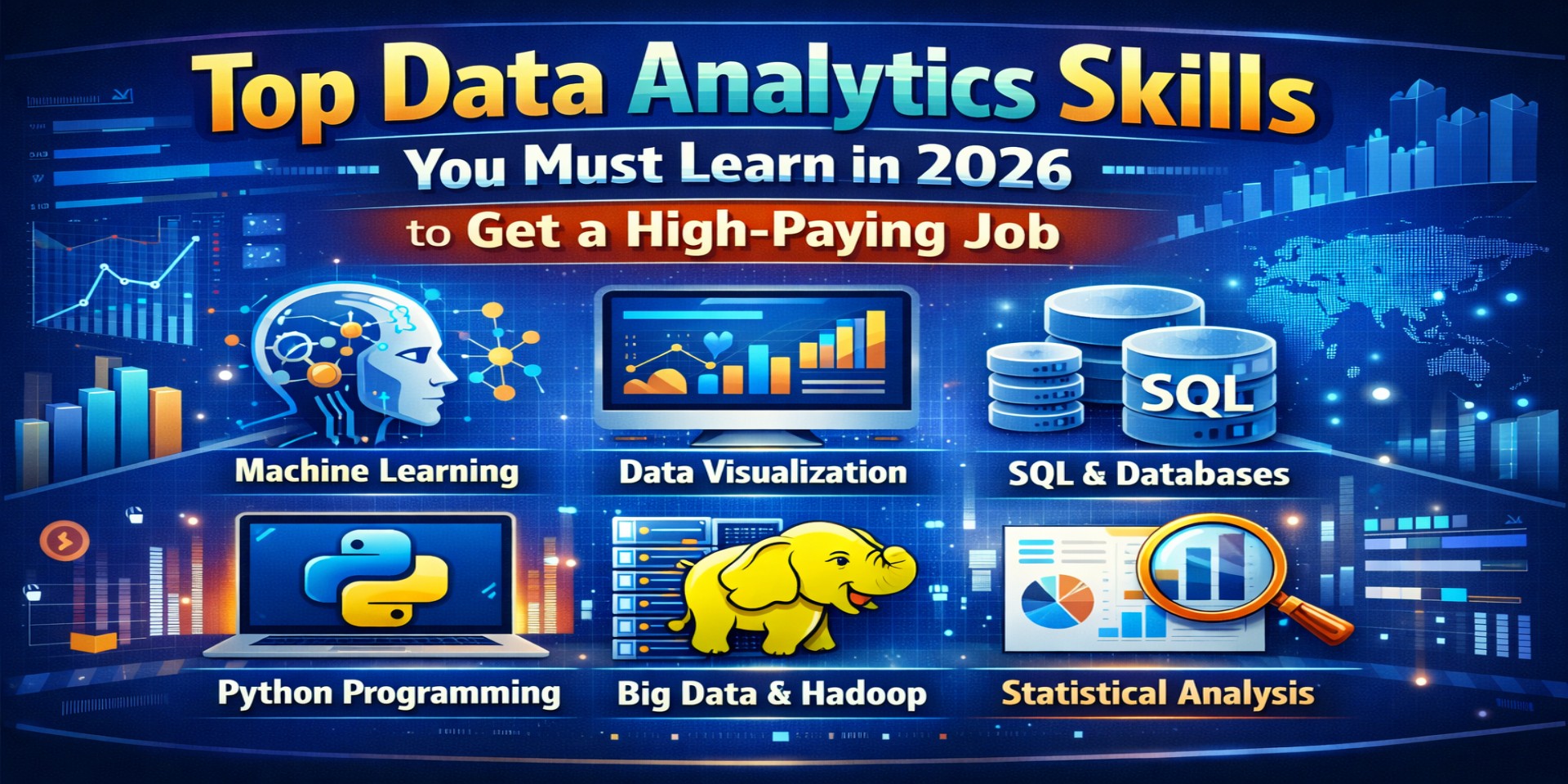
Top Data Analytics Skills You Must Learn in 2026
Excel serves as the essential skill required for basic operations.
Even in 2026, Excel functions as the primary analytical tool, which requires VLOOKUP/HLOOKUP, Pivot Tables, data cleaning, and dashboard creation skills as essential entry-level data analytics abilities. Mastery of Excel provides critical support for data analyst skills, which are in high demand, while it helps to build business intelligence competencies, fast-tracks the data analytics career path, and creates better opportunities for landing high-paying data analytics positions that match the 2026 data analyst salary patterns and future data analytics trends.
SQL – Most Important Technical Skill
Data analysts must learn SQL because it enables them to retrieve data from databases through its various features, including SELECT queries, filters, joins, and subqueries. Data analysts need to master SQL because it helps them develop essential skills for their profession while accessing advanced analytics tools that support AI-based data analytics processes, which lead to high-paying careers in data analytics. Algorithms track. The salary progression of data analysts begins at entry-level rates and leads to higher-paying positions, which match market research about data analytics salaries in 2026 and future trends.
Power BI or Tableau – Data Visualization
Power BI and Tableau serve as two data visualization tools that enable organizations to achieve rapid business insights through their interactive dashboards and data modeling capabilities, DAX functions, and filter options. The software serves as a fundamental component for three different data analytics skills, which will be required in 2026, for 2026 business intelligence skills, and for high-paying data analyst positions that require in-demand data analytics skills. The data analytics career path provides a scalable framework that leads to permanent professional development through AI-driven data analytics and advanced data analytics technologies, and future salary developments for data analysts in 2026 and beyond.
Python – Smart Automation Skill
Python delivers a strategic business advantage through its Pandas and NumPy libraries, together with data cleaning scripts and workflow optimization tools, which enable users to conduct rapid data analysis and automate their processes. The proficiency in the Python language enables users to work with AI-based data analytics systems, advanced data analytics tools, and big data analytics technologies, which help them build their data analytics skills. The data analytics career path receives acceleration through Python proficiency, while it creates better salary alignment with 2026 data analyst trends and increases job opportunities for future data analytics positions.
Data Cleaning & Preparation
Data cleaning functions as an essential operational task for analytics purposes because it involves three main processes, which include handling missing data, complete data removal, and transforming datasets into required formats while checking the accuracy of all data elements. An expert in this subject area can help develop data analytics competencies between 2026 and 2026. Essential data analyst competencies become reinforced through this process while users gain proficiency in advanced data analytics tools and artificial intelligence-based data analytics systems. The process functions as a primary component that develops our business intelligence capabilities through data analytics expertise and establishes a complete data analytics career path that leads to high-salary data analytics positions and provides knowledge about data analyst salary patterns until 2026 and supports enduring success in future data analytics developments.
Business & Domain Knowledge
Business and domain knowledge allow Data Analysts to convert raw data into useful insights through their ability to comprehend business challenges and key performance indicators, and specific industry metrics, while different analytics methods are applied to sales and healthcare domains. The capability enhances data analytics abilities, which results in superior data analyst competencies and improved business intelligence capabilities, and provides support for AI-driven data analytics and a specialized data analytics work path, and better opportunities to secure high-income data analytics positions, andan understanding of data analyst salary developments until 2026 and future data analytics career sustainability.
Basic Statistics & Analytical Thinking
Data Analysts require basic statistical knowledge, which includes mean and median, mode, and correlation and trend analysis, to interpret data with confidence because these skills form the basis of their work. The skills enable business intelligence development in 2026, which assists AI-driven data analytics and advanced analytics tools, and creates a professional path for data analytics specialists who seek high-paying data analytics positions while gaining knowledge about 2026 data analyst salary patterns and data analytics future requirements.
Communication & Storytelling with Data
Data analysts use their communication skills and data storytelling abilities to deliver dashboard presentations that show their insights and their recommendations for action. The skill creates growth for data analytics skills in 2026 and develops essential skills for data analysts and strengthens business intelligence skills 2026 and creates connections with AI-driven data analysis and advanced data analytics tools and establishes a data analysis profession map which leads to better job opportunities in high-salary data analytics positions and matches data analyst salary patterns for the year 2026 and equips professionals with knowledge about upcoming data analytics developments.
Understanding of AI and automation systems requires basic knowledge of their respective functioning methods.
The Data Analyst profession requires a fundamental understanding of AI data processing and automation functions and predictive analysis methods, which will become essential in 2026. The professional development of this expertise enables data analysts to acquire necessary competencies for 2026 while developing their capacity to apply AI-powered data analytics and advanced data analytics tools and big data analytics methods which will help them create their career path in data analytics while enhancing their chances to secure high-paying data analytics positions which will help them achieve their salary goals as data analysts in 2026 and develop their future skills and knowledge in data analytics
Hands-On Projects & Portfolio
The year 2026 requires you to demonstrate your abilities through actual project work, interactive dashboards, and case studies in order to make yourself attractive to potential employers. The process of creating an effective portfolio allows data analytics professionals to develop their analytical abilities while demonstrating their proficiency in essential data analyst competencies and gaining hands-on experience with advanced data analytics tools and AI-powered data analytics and business intelligence total development which establishes a comprehensive data analytics career path and provides them with access to high-salary data analytics positions and tracks with 2026 data analyst wage patterns while making them ready for upcoming developments in data analytics.
How DAAC Helps Students Learn These Skills
• Practical Training: DAAC provides hands-on experience with real datasets and exercises, which help students develop their data analytics skills for 2026 and their future data analyst requirements in the field of data analytics.
• Industry Tools: Students learn advanced data analytics tools together with AI-powered data analytics systems,s which help them develop business intelligence skills that are essential for high-paying data analytics positions.
• Live Projects: Learners can develop their data analytics career path through live project work, which provides them with essential big data analytics abilities and shows them the salary patterns of data analysts for 2026.
• Job-Ready Skills: DAAC prepares students for industry employment through its combination of theoretical knowledge and practical experience, which develops their essential data analyst competencies and enables their entrance into high-paying data analytics roles in 2026.
Skill Priority for Beginners (Important)
• Excel: Start with Excel to build foundational data analytics skills in 2026 and core in-demand data analyst skills for immediate job readiness.
• SQL: Learn SQL early to manage and query data effectively, which enhances advanced data analytics tools skills and business intelligence abilities until 2026.
• Power BI: Focus on Power BI to create interactive dashboards and visualizations that improve AI-powered data analytics and future data analytics developments.
• Data Cleaning: Prioritize data cleaning to handle real-world datasets efficiently, which helps develop big data analytics capabilities and create a practical data analytics career path.
• Python (Basics): Learn Python basics to automate tasks and analyze data faster, which helps develop essential data analyst skills and creates high-paying data analytics employment opportunities that match data analyst salary patterns until 2026.
Conclusion
According to research in 2026, employers prefer candidates who can perform data analysis, develop dashboards, and solve business challenges rather than choosing candidates who hold college degrees. Learners can develop their data analytics expertise by studying data analyst skills and advanced data analytics tools, AI-powered data analytics systems, and business intelligence skills in 2026. The data analytics career roadmap demonstrates how learners can improve their chances of securing high-paying data analytics positions while maintaining their salary alignment with current data analyst trends for 2026 and staying relevant in future data analytics developments.
Important FAQs
Q1: Do I need a technical background to become a Data Analyst in 2026?
No, with the right data analytics skills in 2026 and hands-on experience in advanced data analytics tools and AI-powered data analytics, anyone can enter the field.
Q2: Which skills should I prioritize as a beginner?
Beginners should focus on Excel, SQL, Power BI, Data Cleaning, and Python (Basics) to build in-demand data analyst skills and a strong data analytics career roadmap.
Q3:Can hands-on projects help me get a high-paying job?
The answer is affirmative because people who gain practical experience through live projects and portfolio development acquire business intelligence skills and big data analytics skills which prepare them for future well-paying data analytics positions.