
Software testing remains one of the most popular entry points into the IT industry. As businesses continue releasing web applications, mobile apps, and enterprise software, the demand for skilled quality assurance professionals is growing steadily. Companies are looking for candidates who can identify defects, ensure software quality, and improve user experience before products reach customers.
For freshers entering the QA field, interview preparation plays a critical role in securing their first job. Recruiters often evaluate candidates based on their understanding of testing fundamentals, practical problem-solving abilities, and familiarity with real-world testing scenarios.
This guide covers the most important Manual Testing Interview Questions and Answers that freshers should prepare for in 2026. Along with theoretical concepts, you’ll learn how interviewers assess analytical thinking, defect reporting skills, Agile knowledge, and testing methodologies.
Why Manual Testing Is Still Relevant in 2026
Many candidates assume that automation has completely replaced manual testing. However, manual testing remains essential because human observation is necessary for evaluating usability, user experience, exploratory testing, and complex business workflows.
Manual testers are often involved in:
- Requirement analysis
- Test case creation
- Exploratory testing
- Defect reporting
- User acceptance testing
- Regression verification
- Agile sprint validation
Most companies continue hiring freshers for manual testing roles because it helps them understand software quality fundamentals before transitioning into automation testing.
Basic Manual Testing Interview Questions
1. What is Manual Testing?
Manual testing is a software testing process where testers execute test cases manually without using automation tools. The primary objective is to identify defects, verify functionality, and ensure the application behaves according to business requirements.
A tester performs actions as an end user and compares actual results with expected outcomes.
2. What Is Software Testing?
Software testing is the process of evaluating software to identify defects, verify requirements, and ensure the product meets quality standards before release.
The main goals include:
- Detecting bugs
- Improving software quality
- Enhancing user experience
- Reducing business risks
3. What Is a Test Case?
A test case is a documented set of conditions, inputs, execution steps, and expected results used to verify whether a software feature works correctly.
A standard test case contains:
- Test Case ID
- Test Scenario
- Preconditions
- Test Steps
- Expected Result
- Actual Result
- Status
4. What Is a Defect or Bug?
A defect is a flaw in software that causes incorrect behavior or unexpected results.
Example:
If a login page accepts invalid credentials and still grants access, it is considered a bug.
Important Software Testing Concepts
What Is STLC?
STLC stands for Software Testing Life Cycle. It defines the structured phases followed during software testing.
Major STLC phases include:
- Requirement Analysis
- Test Planning
- Test Case Design
- Test Environment Setup
- Test Execution
- Defect Reporting
- Test Closure
Interviewers frequently ask this question to evaluate your understanding of the testing workflow.
What Is SDLC?
Software Development Life Cycle is the complete process used to design, develop, test, deploy, and maintain software applications.
Common SDLC models include:
- Waterfall
- Agile
- Spiral
- V-Model
Understanding SDLC helps testers collaborate effectively with developers and project managers.
Types of Testing Interview Questions
What Are the Different Types of Testing?
Several testing methods are used throughout software development.
Functional Testing
Functional testing verifies whether application features work according to requirements.
Regression Testing
Regression testing ensures previously working functionalities continue working after updates or modifications.
Smoke Testing
Smoke testing checks critical functionalities to determine whether a software build is stable enough for detailed testing.
Sanity Testing
Sanity testing validates specific changes or bug fixes before broader testing activities begin.
User Acceptance Testing
UAT is performed by end users or clients to verify whether the software meets business requirements.
Regression Testing Interview Question
What Is Regression Testing?
Regression testing involves re-executing previously tested functionalities after code modifications to ensure new changes have not introduced defects.
For example, if developers update the payment module, testers verify payment functionality as well as related areas like order confirmation and invoice generation.
Regression testing is one of the most frequently asked topics in QA interviews.
Test Case and Defect Management Questions
What Is a Test Scenario?
A test scenario is a high-level functionality that needs verification.
Example:
Verify Login Functionality.
Multiple test cases can be created under a single test scenario.
What Is the Difference Between Test Scenario and Test Case?
| Test Scenario | Test Case |
|---|---|
| High-level description | Detailed execution steps |
| Covers broader functionality | Covers specific validation |
| Less detailed | Highly detailed |
What Is a Bug Life Cycle?
The Bug Life Cycle represents the stages a defect passes through from identification to closure.
Typical stages include:
- New
- Assigned
- Open
- Fixed
- Retest
- Verified
- Closed
Understanding this process demonstrates familiarity with professional QA workflows.
Students learning practical testing concepts often strengthen their understanding through the Software Testing Course in Jaipur, where defect tracking and real-time project testing are covered extensively.
Scenario-Based Manual Testing Interview Questions
If You Find a Critical Bug Before Release, What Will You Do?
The correct approach includes:
- Report the issue immediately
- Log the defect in the tracking tool
- Provide detailed reproduction steps
- Attach screenshots and evidence
- Inform stakeholders
- Retest after resolution
Interviewers evaluate communication skills and defect management processes through this question.
What If a Developer Says the Bug Is Not Reproducible?
You should:
- Reverify the issue
- Check environment details
- Record detailed steps
- Share screenshots or videos
- Provide logs if available
A collaborative approach helps developers identify and resolve defects efficiently.
What Will You Do If Testing Time Is Limited?
When testing deadlines are tight:
- Prioritize critical functionalities
- Perform smoke testing
- Focus on high-risk modules
- Execute important regression tests
- Communicate risks clearly
This demonstrates practical decision-making abilities.
Agile Testing Interview Questions
What Is Agile Testing?
Agile testing is a continuous testing approach where QA teams work closely with developers throughout the development lifecycle.
Instead of testing only after development completion, testing occurs during every sprint.
What Is a Sprint?
A sprint is a short development cycle, usually lasting one to four weeks, during which a specific set of features is developed and tested.
Each sprint delivers working software increments.
What Is the Role of a Tester in Agile?
A tester participates in:
- Requirement discussions
- Sprint planning
- Test case preparation
- Continuous testing
- Defect validation
- Sprint reviews
Agile knowledge has become increasingly important for QA professionals in modern software companies.
JIRA and Testing Tools Questions
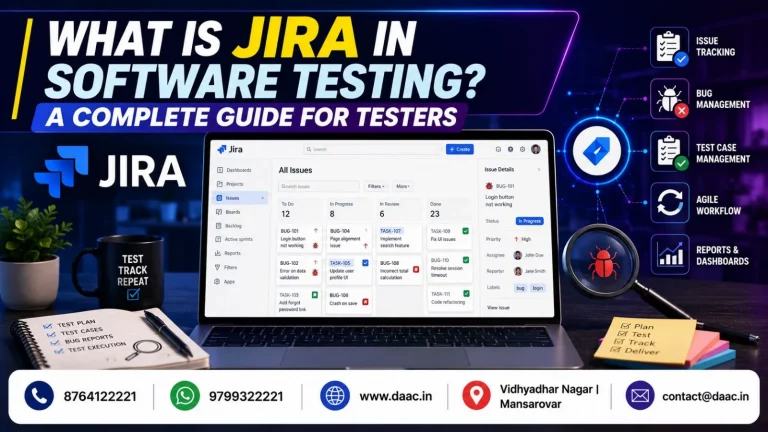
What Is JIRA?
JIRA is a popular project management and defect tracking tool used by software development teams.
Key functions include:
- Bug tracking
- Sprint management
- Task assignment
- Progress monitoring
- Reporting
What Is a Test Management Tool?
A test management tool helps organize testing activities such as:
- Test case creation
- Test execution tracking
- Reporting
- Requirement mapping
Examples include:
- TestRail
- Zephyr
- qTest
What Is a Bug Tracking Tool?
Bug tracking tools help teams manage defects efficiently.
Popular tools include:
- JIRA
- Bugzilla
- Mantis
- Azure DevOps
Understanding these tools improves your chances during QA interviews.
Common HR Questions for Manual Testers
Why Do You Want to Work in Software Testing?
A strong answer could be:
“I enjoy analyzing applications, identifying issues, and contributing to software quality. Testing allows me to combine analytical thinking with problem-solving while helping deliver better products to users.”
What Are Your Strengths as a Tester?
Examples:
- Attention to detail
- Logical thinking
- Patience
- Communication skills
- Problem-solving ability
How Do You Handle Tight Deadlines?
You can explain that you prioritize critical functionalities, communicate risks clearly, and focus on delivering maximum quality within available timelines.
These answers demonstrate professionalism and maturity.
How DAAC Helps Students Prepare for QA Interviews
Technical knowledge alone is not enough to secure a testing job. Candidates also need interview confidence, practical exposure, and project experience.
DAAC prepares students through:
- Mock interviews
- Live project testing
- Real defect reporting exercises
- Agile project exposure
- Resume preparation
- Scenario-based interview practice
Students pursuing broader development knowledge often combine testing skills with the Full Stack Developer Course in Jaipur, helping them understand both application development and quality assurance processes.
This combination significantly improves employability in today’s competitive IT market.
Conclusion
Manual testing remains one of the most effective entry points into the software industry in 2026. Companies continue hiring freshers who understand testing fundamentals, defect management, Agile practices, and software quality processes.
While preparing for interviews, focus on practical understanding rather than memorizing answers. Recruiters prefer candidates who can explain concepts clearly and apply them in real-world scenarios.
By practicing these Manual Testing Interview Questions and Answers regularly, building project experience, and improving communication skills, freshers can confidently approach QA interviews and increase their chances of securing a rewarding career in software testing.
FAQs
1. Is manual testing a good career option for freshers in 2026?
Yes. Manual testing remains an excellent entry-level career path and provides a strong foundation for automation testing and advanced QA roles.
2. What skills are required for a manual testing job?
Candidates should understand SDLC, STLC, test case writing, defect tracking, Agile concepts, and basic testing methodologies.
3. Do manual testers need coding knowledge?
Coding is not mandatory for manual testing, but basic programming knowledge can be beneficial for career growth.
4. Which tool is most commonly used in manual testing?
JIRA is one of the most widely used tools for bug tracking and project management.
5. How can freshers prepare for manual testing interviews?
Practice interview questions, understand testing concepts, work on real projects, learn defect reporting, and participate in mock interviews.