Introduction: What Is Generative AI?
Generative Artificial Intelligence is a kind of intelligence that can make things, like text, images, videos, music, and even code, all by itself without people telling it what to do. Generative artificial intelligence does this on its own, which is really cool.
It can make lots of things, for example:
- Generative Artificial Intelligence makes text.
- Generative Artificial Intelligence makes images.
- Generative Artificial Intelligence makes videos, music, and code too.
In the year 2026, Generative AI is really taking off as one of the growing areas in technology. Lots of companies, startups, and students are exploring what Generative AI can do.
This blog is for people who are new to Generative AI. It will tell you:
- What Generative AI is
- Applications of Generative AI
- Tools used for Generative AI
- Career opportunities in Generative AI
How Generative AI Works
Generative Artificial Intelligence uses machine learning models to create things that look real. It commonly uses language models and diffusion models, which help it generate outputs that seem human-made.
Types of Generation:
- Text Generation: Chatbots, content creation, code generation
- Image Generation: AI art, design, product mockups
- Audio & Video: Music composition, voice cloning, video synthesis
Examples of Generative AI Tools:
- ChatGPT, MidJourney, DALL·E, GitHub Copilot
Applications of Generative AI in 2026
- Education & Learning: AI tutors, automated notes, personalized study material
- Content Creation: Blogs, scripts, video content for YouTube & social media
- Software Development: Code generation and automation
- Design & Art: AI-assisted graphic design, logos, and advertising
- Healthcare: Drug discovery, medical image generation
- Business & Marketing: AI-generated reports, product recommendations
Why Students Should Learn Generative AI
Students should learn Generative AI because:
- It is very useful and fun
- It allows creativity in making music, pictures, and stories
- It helps in learning new things
Examples:
- Learning history by creating pictures of what things looked like in the past
- Learning science by creating models of things too small or too big to see
Benefits for Students:
- High demand in tech & non-tech sectors
- Lucrative career opportunities
- Creative and technical skill development
- Early adoption gives a competitive advantage
Generative AI is no longer optional; it is core to future IT careers.
Tools to Know in 2026
Text: ChatGPT, Jasper AI, Copy.ai
Images: DALL·E, MidJourney, Stable Diffusion
Code: GitHub Copilot, CodeT5
Audio/Video: Murf, Pictory, Synthesia
Data & AI Models: HuggingFace, OpenAI API
Tip: Start with free versions and explore hands-on projects.
Skills Required for Generative AI Careers
- Programming Basics: Python, JavaScript
- Machine Learning Fundamentals: Neural networks, training models
- Data Handling: Data preprocessing, NLP, computer vision basics
- Tool Mastery: Using AI platforms and APIs
- Creativity & Problem Solving: Combine AI outputs for real-world applications
Generative AI Career Opportunities in 2026
- AI Content Creator
- AI Developer / Engineer
- Prompt Engineer
- AI Researcher
- AI Consultant
Freshers and students can start by working on projects and then grow in the domains of their choice.
How to Get Started as a Beginner
- Learn Python basics – essential for AI scripting
- Understand AI concepts – machine learning, neural networks, NLP
- Use AI tools – ChatGPT, DALL·E, Copilot
- Create mini-projects – text generation, image generation, AI chatbots
- Build portfolio & showcase skills – GitHub, blog, YouTube
DAAC is very helpful for students who are starting out.
DAAC Provides:
- Beginner-friendly AI courses
- Hands-on projects & sandbox practice
- Career guidance and AI portfolio building
- Real-time mentorship
DAAC helps students gain skills, confidence, and real-world project experience, which prepares them for careers in AI.
Common Myths About Generative AI
❌ Myth 1: Generative AI will replace humans
✅ Truth: Generative AI is a tool that assists humans in completing tasks more efficiently, making life easier and more fun.
❌ Myth 2: Only coders can learn AI
✅ Truth: AI can be learned by people in various fields including artists, designers, and non-technical domains.
❌ Myth 3: AI is too advanced for beginners
✅ Truth: Structured learning makes it easy for beginners to start and succeed in AI.
Final Thoughts
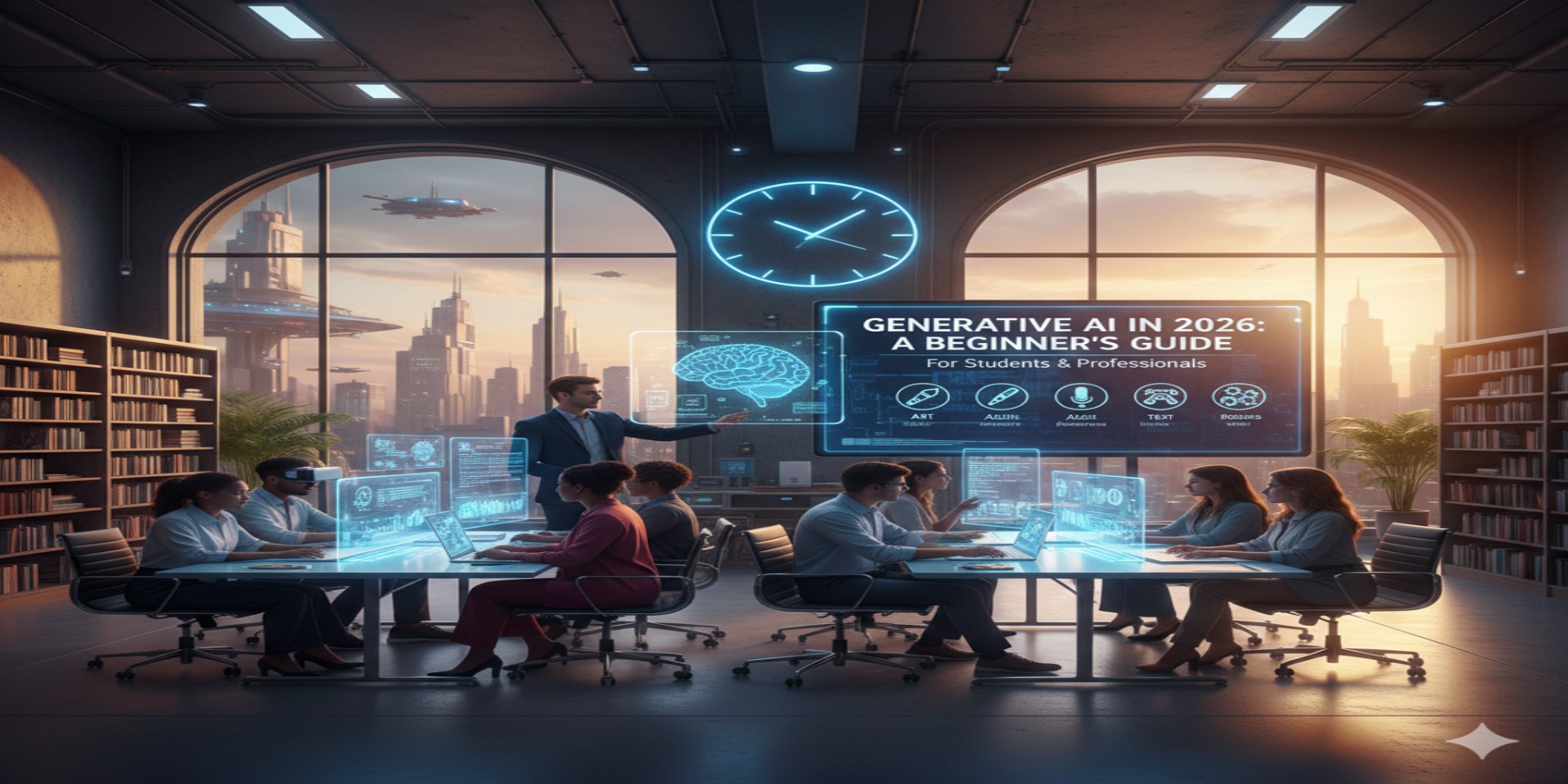
Generative AI in 2026 is changing the way we create content, code, and designs.
For students and beginners:
- Learning Generative AI can open doors to high-demand jobs
- It enables creativity and technical growth
- Starting small, building skills, creating projects, and staying updated with AI tools is the key
Please Also Read This Blog
Why Salesforce Is the Best Career Choice in 2026 (Complete Guide for Students)