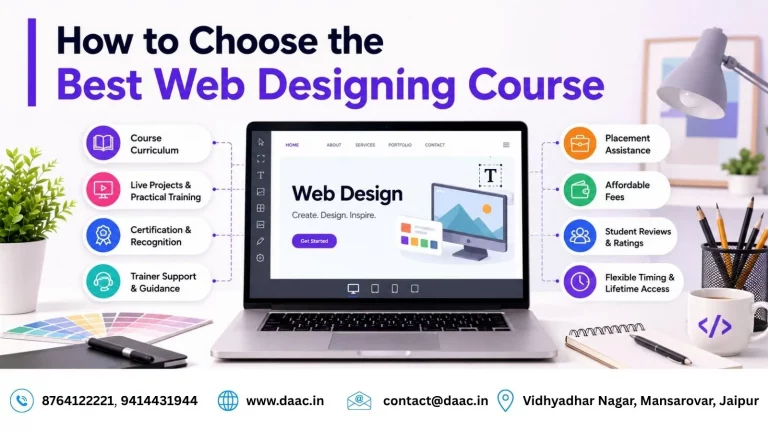
Have you ever visited a website and wondered how it was created? The colors, layouts, images, buttons, and animations you see on websites are all carefully planned and designed. This process is called web designing. In today’s digital world, every business, brand, and organization needs a website, which makes web designing one of the most in-demand skills. A Web Designing Course helps beginners understand how websites are built and how design and functionality work together to create engaging user experiences.
What is Web Design All About?
Web design is the process of creating the visual appearance and user experience of a website. It involves planning layouts, selecting colors, choosing fonts, and arranging content in a way that is both attractive and easy to use. Think of it like designing a house where every room has a purpose, and everything must be placed in a structured and organized manner for smooth functionality.
Modern web design is not just about appearance. It also focuses on usability and responsiveness. Websites must work properly on mobile phones, tablets, and desktops. Designers also ensure that users can easily navigate through pages and find information quickly. A well-structured website improves engagement, builds trust, and helps businesses achieve their goals effectively in the digital space.
What You Will Learn in a Web Designing Course
A Web Designing Course is designed to provide both theoretical knowledge and practical skills. Students learn how to create websites using modern tools and technologies. The course usually includes training in HTML, CSS, JavaScript basics, and design tools like Figma or Adobe XD. These skills help learners build real-world websites and understand how professional web projects are developed.
Apart from technical skills, students also learn design principles such as color theory, typography, spacing, and visual hierarchy. Understanding these concepts helps in creating visually appealing and user-friendly websites. Many institutes also include practical projects to help students gain hands-on experience and improve their Web Design Skills for better career opportunities in the industry.
Exciting Career Opportunities in Web Designing
The demand for web designers is continuously growing as businesses shift towards online platforms. After completing a web designing course, students can explore various career paths such as web designer, UI designer, front-end developer, and freelance website designer. Each role offers different responsibilities and growth opportunities depending on individual interests and skills.
Many professionals also choose freelancing, where they work with clients from different industries. Others join companies and work as part of creative or development teams. With experience, designers can move into advanced roles such as senior UI/UX designer or creative director. The Web Development Career path offers long-term stability and continuous learning opportunities in the ever-evolving digital industry.
Why Pursue a Web Designing Course?
Choosing a web designing course is a smart decision for anyone interested in creativity and technology. It provides a perfect combination of design thinking and technical skills. As businesses continue expanding online, the demand for skilled designers is increasing rapidly. This makes web designing a highly valuable and future-oriented career choice.
Another major benefit is flexibility. Web designers can work in offices, remotely, or as freelancers. The field also offers opportunities for continuous growth and learning. With experience, professionals can explore advanced areas such as animation, interaction design, and even UI UX Design, which focuses on improving user experience and engagement across digital platforms.
Syllabus of a Web Designing Course
A typical web designing course covers a wide range of topics to build strong foundational knowledge. Students begin with HTML and CSS, which are the building blocks of websites. They then move on to JavaScript basics to understand interactivity and dynamic elements. Alongside coding, design principles are taught to ensure students can create visually appealing layouts.
The syllabus also includes responsive design techniques, SEO basics, and introduction to design tools. Practical assignments and real-world projects are an important part of training. These help students understand how professional websites are created and maintained. Institutes offering Web Design Training ensure that learners gain both technical and creative skills required in the industry.
Duration of the Course
The duration of a web designing course usually depends on the institute and course structure. Most beginner-level programs range from six months to one year. During this time, students are trained in both theoretical concepts and practical applications. Short-term courses focus on basic skills, while advanced programs provide deeper knowledge and project-based learning.
The duration is designed to ensure that learners have enough time to practice and build a strong portfolio. Regular assignments, workshops, and live projects help students gain real-world experience. This structured learning approach prepares students for industry challenges and improves their confidence in building professional websites.
Course Fees and Investment Value
The fees for a web designing course vary depending on the institute, course level, and facilities provided. While some courses are affordable, advanced programs with additional certifications may cost more. However, this should be seen as an investment in your future career rather than just an expense.
Quality education and practical training often lead to better job opportunities and higher earning potential. Many institutes also offer installment plans or financial assistance to support students. Considering the growing demand for web designers, the return on investment for this course is generally very positive in the long term.
Placements and Internship Opportunities
Many reputed training institutes provide placement assistance to students after course completion. This includes interview preparation, resume building, and direct connections with hiring companies. Internships are also an important part of the learning process, allowing students to gain real industry experience before starting full-time jobs.
Placement opportunities help students transition smoothly from training to professional careers. Working on real projects during internships improves confidence and practical understanding. Institutes offering structured programs ensure that students are industry-ready and capable of handling professional web design projects effectively in real work environments.
Career Opportunities After Web Designing Course
After completing a web designing course, students can explore multiple career options. These include roles such as web designer, UI/UX designer, front-end developer, and freelance designer. Each role offers different responsibilities and growth paths depending on individual interests.
Many professionals also choose to expand their skills further by learning advanced technologies. This helps them move into higher-paying roles and specialized positions. The combination of creativity and technical knowledge makes web designing a flexible and rewarding career choice in today’s digital world.
Conclusion: Embrace the Journey
A web designing course is more than just learning how to build websites. It is about developing creativity, problem-solving skills, and technical expertise. It opens doors to multiple career opportunities and allows individuals to work in a fast-growing digital industry. Whether you want to work in a company or start freelancing, web designing offers flexibility and long-term growth.
By joining a structured Web Designing Course, beginners can build strong Web Design Skills, explore creative possibilities, and start a successful Web Development Career. With continuous learning and practice, anyone can become a professional web designer and contribute to shaping the digital world of the future.
FAQs
1. What is a Web Designing Course?
A Web Designing Course teaches you how to create and design websites using tools like HTML, CSS, JavaScript, and design software such as Figma. It focuses on layout, visuals, and user experience.
2. Do I need coding knowledge before joining a web designing course?
No, beginners can join easily. Most courses start from basic HTML and CSS and gradually move to advanced design concepts and tools.
3. What is the duration of a web designing course?
The duration usually ranges from 6 months to 1 year, depending on the institute and course depth. Some short-term programs may also be available.
4. What are the job opportunities after completing web designing?
You can work as a web designer, UI/UX designer, front-end developer, or freelancer. You can also work in IT training institutes or digital agencies.
5. Is web designing a good career in 2026?
Yes, web designing is a high-demand career because every business needs a website. It offers freelancing, job opportunities, and long-term growth in the IT industry.