
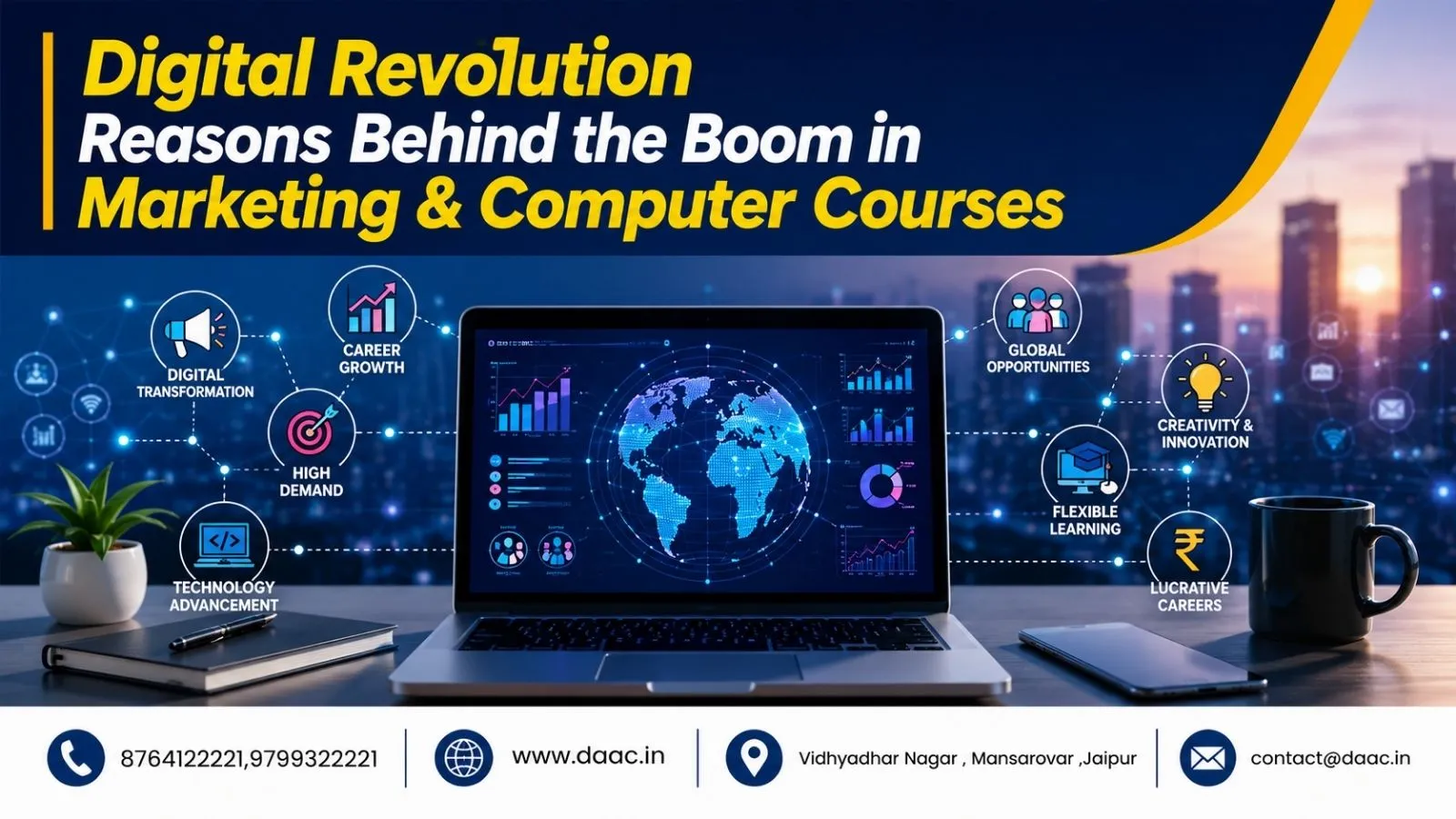
Key Takeaways
- Digital transformation is creating massive demand for technology-based skills.
- Businesses need professionals skilled in marketing and computer technologies.
- Remote work opportunities are increasing across digital industries.
- Computer and marketing skills offer strong career growth and job security.
- Continuous innovation keeps these industries future-ready.
The world is experiencing an unprecedented digital revolution. From education and healthcare to business and entertainment, technology is reshaping every aspect of modern life. As organizations increasingly shift their operations online, the demand for skilled professionals has grown significantly. This transformation has led to a remarkable rise in the popularity of Digital Marketing and Computer Courses, making them some of the most sought-after learning programs in 2026.
Students, professionals, and entrepreneurs are actively investing in digital skills because they understand their importance in today’s competitive economy. Whether someone wants to build a successful career, start a business, or stay relevant in a rapidly changing market, digital knowledge has become essential. The growing demand for skilled professionals continues to drive interest in technology-focused training programs worldwide.
1. Digital Transformation is Reshaping Every Industry
Digital transformation is one of the biggest reasons behind the increasing demand for technology education. Businesses are moving their services online to improve efficiency, reach larger audiences, and enhance customer experiences. From online shopping platforms to digital banking services, almost every industry now depends on technology to operate successfully.
Organizations require professionals who understand digital tools, websites, online advertising, and customer engagement strategies. As a result, individuals with expertise in digital platforms are becoming highly valuable. This shift has significantly increased enrollment in Digital Marketing Course programs and computer training institutes across India and around the world.
2. Expanding Career Opportunities Across Industries
One of the strongest factors driving the popularity of digital education is the vast range of career opportunities available. Unlike traditional professions that may be limited by location or industry, digital careers offer flexibility and global reach. Companies across sectors actively seek professionals with digital skills to strengthen their online presence and improve business performance.
Career opportunities include digital marketing specialists, SEO executives, content strategists, web developers, UI designers, social media managers, and data analysts. These roles offer excellent growth potential and competitive salaries. The increasing demand for technology professionals ensures that learners can access rewarding career paths after acquiring relevant skills.
3. Rise of Remote Work and Flexible Careers
The global workforce has undergone major changes in recent years. Remote work has become more common, and companies are increasingly hiring talent regardless of geographical boundaries. Digital professionals often have the advantage of working from home, freelancing, or collaborating with international clients without relocating.
This flexibility makes technology-based careers highly attractive for students and working professionals. Skills learned through Digital Marketing and Computer Courses can open doors to freelance projects, remote employment opportunities, and independent consulting careers. This level of flexibility supports better work-life balance while providing access to global markets.
4. Growing Opportunities for Entrepreneurs
Technology has made entrepreneurship more accessible than ever before. Individuals with digital skills can launch online businesses, manage e-commerce stores, create digital products, or establish marketing agencies with relatively low startup costs. The internet provides entrepreneurs with the ability to reach customers worldwide and scale their businesses efficiently.
Digital marketing knowledge helps entrepreneurs attract customers, build brand awareness, and generate revenue online. Similarly, technical skills such as website development and design allow business owners to create professional online platforms without relying entirely on external service providers. These capabilities provide a significant competitive advantage in today’s business environment.
5. Continuous Learning and Innovation
Technology evolves rapidly, creating an environment of continuous learning and innovation. Professionals in digital industries regularly explore new tools, platforms, and strategies to stay competitive. This dynamic nature keeps careers exciting and intellectually stimulating while encouraging ongoing skill development.
Fields such as artificial intelligence, automation, and data analytics continue to influence digital marketing and web technologies. Students who pursue modern training programs gain exposure to emerging trends and industry practices. Those interested in advanced technical careers often continue their journey through a Web Development Course to build deeper expertise and expand their opportunities.
6. High Demand for Digital Skills
Businesses recognize that digital skills directly contribute to growth, customer engagement, and profitability. As competition increases across industries, organizations invest heavily in professionals who can help them achieve their digital objectives. This demand has created a strong job market for individuals with relevant technical and marketing expertise.
According to industry trends, digital marketing specialists, web developers, and designers remain among the most in-demand professionals globally. Companies require experts who can create effective online experiences, manage digital campaigns, and improve website performance. This sustained demand provides greater job security and long-term career stability.
7. Easy Access to Learning Resources
Learning technology skills has become more accessible than ever before. Students can now access quality education through training institutes, online courses, workshops, and certification programs. This accessibility has removed many traditional barriers associated with skill development and professional education.
Affordable learning options allow individuals from diverse backgrounds to acquire valuable knowledge at their own pace. Many training institutes combine classroom instruction with practical projects, helping learners gain hands-on experience. This approach ensures students develop job-ready skills while building confidence in their abilities.
8. Adaptability in a Rapidly Changing World
The ability to adapt is one of the most valuable qualities in today’s workforce. Technological advancements continue to transform industries, creating new opportunities while replacing outdated processes. Individuals with digital skills can adapt more effectively to these changes and remain competitive in evolving job markets.
Learning modern technologies helps professionals stay relevant as new tools and platforms emerge. Those who invest in continuous learning are better positioned to take advantage of future opportunities. Students seeking creative and technical career paths often explore a Web Designing Course in Jaipur to build versatile skills that remain valuable across industries.
How Digital Skills Benefit Students and Professionals
Digital education provides advantages that extend beyond employment opportunities. Some key benefits include:
- Improved problem-solving abilities
- Better communication and collaboration skills
- Increased productivity through digital tools
- Enhanced creativity and innovation
- Stronger professional confidence
- Access to global career opportunities
- Ability to work independently or remotely
- Long-term career growth potential
These benefits make digital learning a practical investment for individuals at every stage of their careers.
Why Businesses Prefer Digitally Skilled Professionals
Modern organizations require employees who can contribute to digital growth and innovation. Professionals with strong digital capabilities help companies improve customer experiences, increase visibility, and optimize business operations. This makes technology skills highly valuable across various departments and industries.
Employers appreciate candidates who understand both technical and business aspects of digital transformation. Such professionals can bridge communication gaps, support strategic initiatives, and drive measurable results. As digital adoption continues to expand, businesses will increasingly prioritize candidates with relevant technology and marketing expertise.
Conclusion
The rapid growth of technology has fundamentally changed how businesses operate and how individuals build successful careers. The increasing popularity of Digital Marketing and Computer Courses reflects the growing importance of digital skills in the modern economy. These programs provide learners with practical knowledge, career opportunities, and the ability to adapt to future technological advancements.
Whether you are a student, professional, or entrepreneur, investing in digital education can help you remain competitive and future-ready. As technology continues to evolve, individuals with strong digital skills will be well-positioned to take advantage of emerging opportunities and contribute meaningfully to the digital economy.
FAQs
1. Why are digital marketing and computer courses becoming so popular?
These courses are popular because businesses increasingly rely on technology and digital platforms, creating strong demand for skilled professionals across industries.
2. What career opportunities are available after learning digital skills?
Career options include digital marketer, SEO specialist, web developer, web designer, content strategist, social media manager, and many other technology-focused roles.
3. Can digital skills help in starting a business?
Yes. Digital skills enable entrepreneurs to build websites, market products online, manage customer engagement, and grow businesses more effectively.
4. Are digital marketing and computer courses suitable for beginners?
Absolutely. Most training programs are designed for beginners and gradually introduce advanced concepts through practical learning and projects.
5. Do digital careers offer remote work opportunities?
Yes. Many digital professions support remote work, freelancing, and international collaboration, providing flexibility and access to global opportunities.