
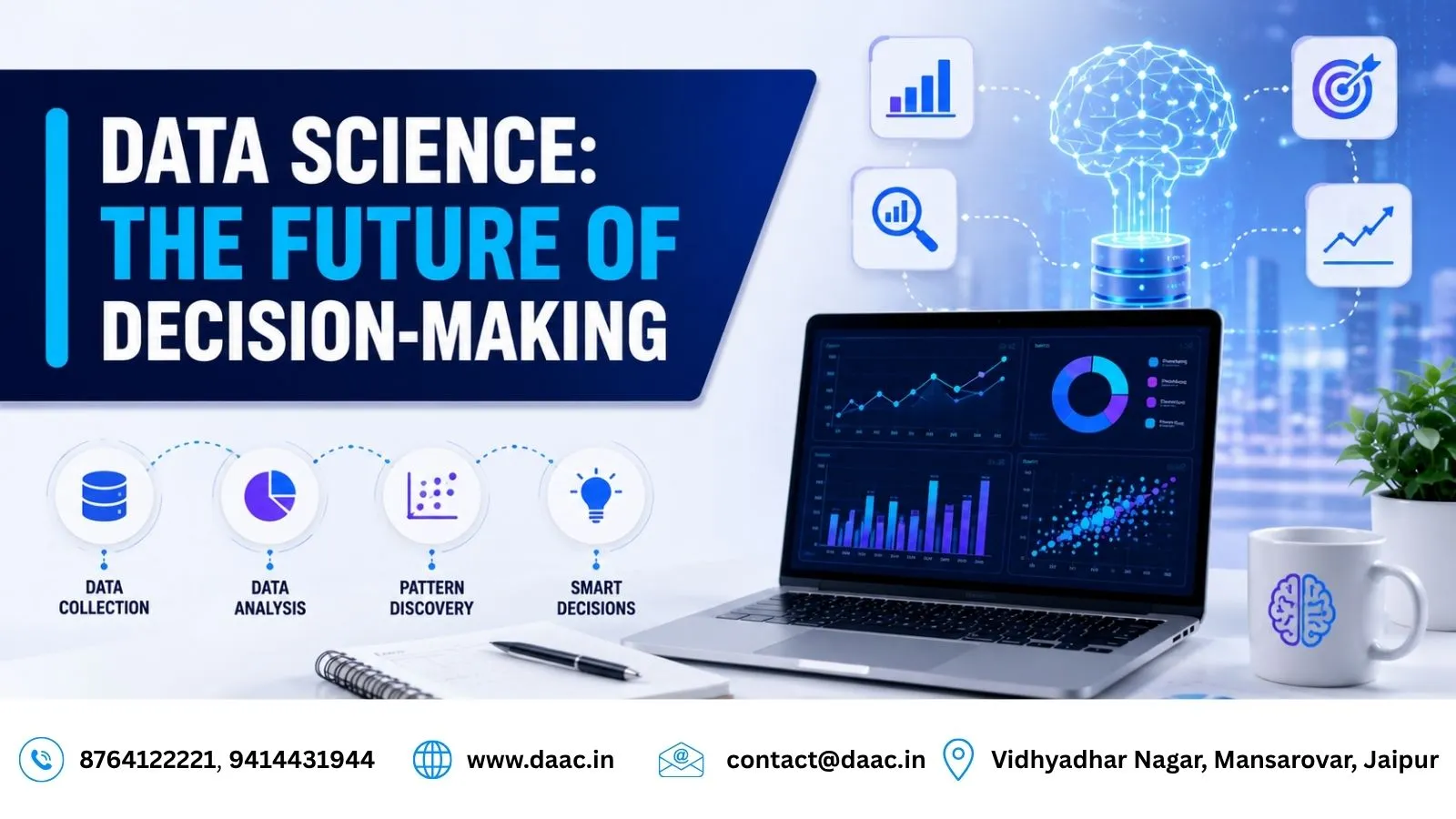
In today’s digital world, organizations generate enormous amounts of information every second. From online shopping behavior to healthcare records and financial transactions, data has become one of the most valuable assets for businesses. This growing dependence on information has made Data Science one of the most influential fields in modern technology. Companies no longer rely solely on intuition when making decisions. Instead, they use data-driven insights to improve efficiency, understand customer behavior, and gain a competitive advantage in rapidly changing markets.
The rise of artificial intelligence, automation, and cloud computing has further increased the importance of data-driven strategies. Businesses across industries are investing heavily in professionals who can transform raw information into meaningful insights. As organizations continue to digitize operations, the demand for skilled data professionals is expected to grow significantly in the coming years.
What is Data Science and Why is It Important?
Data Science is an interdisciplinary field that combines statistics, programming, mathematics, and domain knowledge to analyze and interpret large volumes of information. The primary goal is to identify patterns, trends, and relationships that help organizations make informed decisions. Unlike traditional reporting methods, data science focuses on predictive and prescriptive analysis that supports future planning.
The importance of data science can be seen in nearly every industry today. Retail companies use it to understand customer preferences, healthcare providers analyze patient records for better treatments, and financial institutions use predictive models to detect fraud. This ability to extract valuable insights from complex datasets has made data science a critical business function worldwide.
How Data Science Works: Understanding the Process
The journey from raw information to actionable insights involves several stages. Each stage contributes to building reliable models and generating accurate results that support organizational goals. Understanding these steps helps learners appreciate how data-driven solutions are developed and implemented successfully.
1. Data Collection
Every project begins with gathering relevant information from various sources. These sources may include company databases, websites, applications, social media platforms, sensors, and cloud systems. The quality of collected data directly affects the accuracy of the final analysis.
Organizations often collect both structured and unstructured information to gain a complete understanding of business operations. Effective collection strategies ensure that analysts have sufficient data to identify trends and make meaningful predictions based on real-world scenarios.
2. Data Cleaning and Preparation
Raw data is rarely ready for analysis. It often contains errors, duplicate records, missing values, or inconsistencies. Data cleaning involves correcting these issues to ensure accuracy and reliability during analysis. This stage is considered one of the most important parts of any data project.
Professionals spend a significant amount of time preparing datasets because clean information produces better results. Proper preparation improves model performance and reduces the risk of incorrect conclusions that could impact business decisions.
3. Data Analysis and Interpretation
Once the information is prepared, analysts use statistical methods and Data Analytics techniques to identify patterns and relationships. This stage helps businesses understand what happened, why it happened, and what actions should be taken next.
Advanced analytical methods enable organizations to predict future outcomes and uncover hidden opportunities. Companies can use these insights to improve customer experiences, optimize operations, and increase profitability in competitive markets.
The Role of Machine Learning in Modern Data Science
One of the most powerful components of modern data science is Machine Learning. This technology enables systems to learn from historical information and improve performance without explicit programming. Instead of relying on fixed rules, machine learning models identify patterns and continuously refine their predictions.
Popular applications include recommendation systems used by streaming platforms, fraud detection in banking, and demand forecasting in retail. As technology advances, machine learning is becoming increasingly important for organizations seeking automation and predictive capabilities. Businesses that adopt these solutions often achieve better efficiency and stronger decision-making processes.
Data Visualization: Turning Insights into Action
Complex information becomes valuable only when decision-makers can understand it clearly. Data visualization helps transform analytical findings into charts, dashboards, graphs, and reports that are easy to interpret. Effective visualization allows organizations to identify opportunities and challenges quickly.
Modern business leaders rely on visual reports to monitor performance and track key metrics. Tools such as Power BI, Tableau, and Google Data Studio have become popular because they simplify the communication of complex insights. Visual storytelling ensures that analytical findings lead to practical actions and measurable business outcomes.
Applications of Data Science Across Industries
The impact of Data Science extends far beyond technology companies. Nearly every sector now uses data-driven approaches to improve operations and customer experiences. As digital transformation accelerates, these applications continue to expand into new areas.
Healthcare
Healthcare organizations use data science to analyze patient records, predict disease risks, and develop personalized treatment plans. Hospitals also use predictive analytics to optimize resource allocation and improve patient outcomes.
Finance
Financial institutions use advanced analytics to detect fraud, assess risks, and forecast market trends. Predictive models help banks make smarter lending decisions and improve overall security measures.
Marketing
Modern marketers rely on customer data to create targeted campaigns and personalized experiences. Through Business Intelligence, companies can better understand audience behavior and improve engagement across digital channels.
E-commerce
Online retailers use recommendation systems and purchasing behavior analysis to increase sales and customer satisfaction. Data-driven insights help businesses deliver relevant products to the right customers at the right time.
Career Opportunities in Data Science
The growing demand for analytical expertise has created exciting career opportunities across industries. Organizations are actively hiring professionals who can manage data, build predictive models, and generate strategic insights. Popular job roles include Data Analyst, Data Scientist, Machine Learning Engineer, Business Analyst, and Data Engineer.
Students and professionals looking to enter this field often begin by enrolling in a Data Science Course that covers programming, statistics, machine learning, and visualization tools. Structured training programs provide practical experience and industry-relevant skills that improve employability in competitive markets.
For learners interested in building advanced analytical skills, exploring a Data Analytics Course in Jaipur can provide valuable hands-on exposure to real-world projects and modern industry tools.
Future Trends Shaping Data Science
Several emerging trends are expected to influence the future of data science over the next few years. Artificial intelligence integration, real-time analytics, cloud-based platforms, and automated machine learning solutions are becoming increasingly important. These innovations enable organizations to process information faster and generate insights more efficiently.
Businesses are also focusing on ethical data usage and privacy compliance. As regulations evolve, professionals must understand responsible data practices alongside technical expertise. Continuous learning will remain essential for staying competitive in this rapidly changing field.
Organizations seeking advanced technical skills often encourage employees to pursue specialized programs such as a Generative AI Course in Jaipur, which complements modern analytical and automation technologies.
Why Businesses Depend on Business Intelligence
The ability to convert information into strategic decisions is one of the greatest advantages of modern organizations. Through Business Intelligence, companies gain visibility into operations, customer behavior, and market performance. Decision-makers can access real-time reports and dashboards that support faster and more accurate planning.
When combined with predictive analytics, business intelligence helps organizations identify risks before they become major problems. This proactive approach enables businesses to remain agile and competitive while maximizing operational efficiency and profitability.
Conclusion
Data Science has transformed the way organizations make decisions in the digital era. By combining analytical techniques, advanced technologies, and domain expertise, businesses can uncover valuable insights that drive growth and innovation. From healthcare and finance to marketing and e-commerce, data science is helping industries improve efficiency and deliver better outcomes.
As data volumes continue to increase, the demand for skilled professionals and advanced analytical solutions will grow even further. Learning modern technologies such as Machine Learning and gaining expertise through a quality Data Science Course can open the door to rewarding career opportunities. The future belongs to organizations and individuals who can effectively use data to make smarter decisions and create lasting value.
FAQs
1. What is Data Science in simple terms?
Data Science is the process of collecting, analyzing, and interpreting information to identify patterns and support better decision-making.
2. Is Data Science a good career in 2026?
Yes, data science remains one of the fastest-growing career fields due to increasing demand across healthcare, finance, technology, and marketing industries.
3. What skills are required to learn Data Science?
Key skills include statistics, Python programming, data visualization, machine learning, problem-solving, and database management.
4. How is Machine Learning related to Data Science?
Machine learning is a subset of data science that enables systems to learn from data and make predictions without being explicitly programmed.
5. Can beginners start learning Data Science?
Yes, beginners can start with basic programming and statistics before progressing to advanced topics through structured learning programs and practical projects.