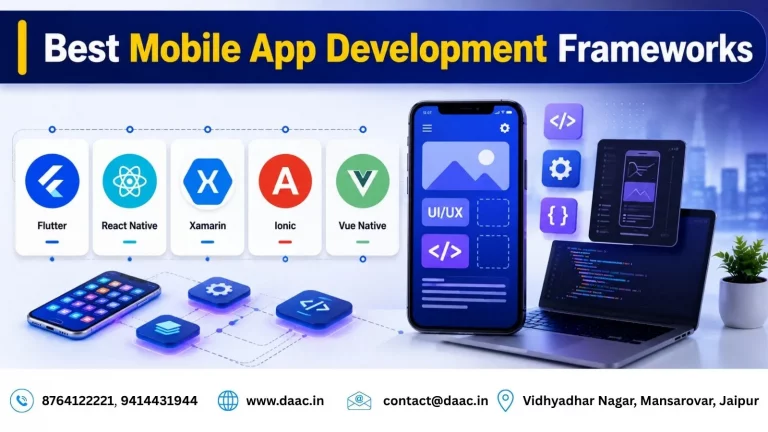

Mobile application development has evolved significantly in recent years. Businesses need applications that reach users across multiple platforms while delivering reliable performance, intuitive navigation, and a consistent user experience. However, developing separate applications for Android and iOS can increase development time, project costs, and maintenance efforts. This is why React Native App Development has become an attractive option for businesses seeking efficient mobile solutions. For learners planning to build a career in this field, a React Native Course in Jaipur can provide a practical starting point for understanding cross-platform application development.
Created by Facebook, now Meta, React Native is an open-source framework that enables developers to build mobile applications using JavaScript and React. It allows teams to share much of their application code between Android and iOS while using native platform components where appropriate. From startups to established enterprises, businesses consider React Native when they want to streamline development without maintaining entirely separate codebases.
Why React Native Is a Popular Choice in 2026
Businesses increasingly need mobile applications that can be developed, tested, and improved efficiently. React Native supports this goal by combining reusable code, a broad developer ecosystem, and access to platform-specific capabilities.
Meeting the Needs of Modern Businesses
Launching an application on both Android and iOS can require substantial development resources. React Native helps teams share business logic, interface components, and other application code across platforms. This can reduce duplicated work and make it easier to deliver consistent features to users.
The actual savings depend on the application’s complexity, design requirements, and integrations. Applications that rely heavily on specialized hardware or platform-specific functionality may still require additional native development.
Adapting to Modern Development Practices
The React Native ecosystem continues to evolve through improvements to its rendering system, native-module integration, development tooling, and debugging workflows. Its New Architecture is designed to improve communication between JavaScript and native code and support more flexible rendering and module integration.
Developers can also use tools such as Expo to simplify common development tasks, depending on the project’s requirements. These capabilities make the React Native Framework a practical option for teams building and maintaining modern mobile applications.
Major Advantages of React Native for Mobile App Development
React Native offers several benefits that can help businesses manage mobile projects more efficiently. The value of each benefit depends on the development team’s experience and the application’s technical requirements.
Cross-Platform Development With Shared Code
One of the main advantages of React Native is the ability to reuse a significant portion of the codebase across Android and iOS. Instead of developing every feature independently for each platform, teams can share components, validation logic, API integration, and business rules.
This approach can reduce duplicated development work and help maintain consistent functionality. Developers can still create platform-specific components when Android and iOS require different layouts or behaviours.
For businesses targeting multiple platforms, Cross-Platform Mobile App Development can be especially useful when the product requires similar core features across devices.
Faster Development and Feedback Cycles
React Native supports reusable components and development tools that help teams build and test features efficiently. Fast Refresh allows developers to see many code changes without restarting the entire application, making interface development and debugging more convenient.
A faster feedback cycle helps developers identify issues earlier and refine the user experience throughout the development process. Reusable libraries and established development workflows can also reduce the effort involved in implementing common functionality.
However, faster development is not automatic. Project planning, code quality, testing, and the team’s familiarity with React Native still play important roles in delivery timelines.
Cost-Effective Development and Maintenance
Maintaining separate Android and iOS codebases can require additional development time and coordination. React Native allows teams to share many features, which may reduce the resources needed to build and maintain an application.
A shared codebase can also make it easier to apply common bug fixes, update business logic, and introduce new features across platforms. Businesses may benefit from a more streamlined maintenance process when their applications have similar requirements on both operating systems.
Nevertheless, project costs depend on factors such as design complexity, backend services, third-party integrations, testing, and the need for native modules. A realistic project estimate should account for these requirements rather than assuming that cross-platform development always costs less.
Reusable Components and Consistent Interfaces
React Native follows a component-based approach that encourages developers to create reusable elements, such as buttons, forms, navigation sections, and profile cards. These components can be used across different screens, helping maintain a consistent interface.
Reusable components also make applications easier to update. When a shared component needs improvement, developers can make the change centrally instead of recreating the same functionality across multiple screens.
A well-organized component structure supports collaboration, improves code readability, and helps development teams manage larger applications more effectively.
Performance, User Experience, and Project Flexibility
Performance and usability are essential to a successful mobile application. React Native provides tools for building responsive interfaces, but the final experience depends on implementation quality, device capabilities, and application architecture.
Native-Like User Experiences
React Native uses native platform components for many interface elements, allowing developers to create mobile experiences that feel familiar to Android and iOS users. It supports responsive layouts, navigation patterns, touch interactions, and animations.
Developers can adapt interfaces to platform-specific conventions while sharing common application logic. This flexibility is valuable for products that need consistent branding without ignoring differences between operating systems.
Improved Architecture and Native Integration
Modern React Native development benefits from architectural improvements that support communication between JavaScript and native functionality. The New Architecture introduces capabilities intended to improve rendering and module integration, although performance gains vary by application.
When a project requires features such as advanced camera controls, Bluetooth communication, specialized animations, or platform-specific SDKs, developers may need native modules or additional platform-specific code. Understanding when to use shared components and when to use native functionality is an important development skill.
A Strong Ecosystem and Developer Community
React Native benefits from a broad ecosystem of libraries, documentation, learning resources, and community contributions. Developers can often find existing solutions for common needs, including navigation, networking, forms, and application state management.
Third-party packages should still be evaluated carefully. Developers need to check compatibility, maintenance activity, security, and support for the project’s React Native version before adding a dependency.
Combining suitable libraries with clean code and regular testing helps teams build applications that remain easier to maintain over time.
Career Opportunities and Skills for React Native Developers
As businesses continue to build mobile products, developers with cross-platform skills can pursue opportunities in mobile application development, software engineering, and product teams. React Native is one possible route into this field, especially for learners who already understand JavaScript and React.
Skills to Learn Alongside React Native
Learning the framework is only one part of becoming a capable mobile developer. A strong foundation should include:
-
JavaScript fundamentals, including modern ES6+ syntax.
-
React concepts such as components, props, state, and hooks.
-
Responsive mobile layouts and navigation.
-
REST API integration and asynchronous programming.
-
Application state management and data handling.
-
Debugging, testing, Git, and version control.
-
Basic understanding of Android and iOS development.
-
App performance, accessibility, and security fundamentals.
Practical projects help connect these concepts. For example, learners can build a task manager, a shopping application, or a service-booking app that retrieves data from an API and handles loading states, errors, and user input.
Choosing the Right Learning Path
Beginners should start with JavaScript and React fundamentals before moving into mobile components, navigation, API integration, and application deployment. Building small projects first makes it easier to understand how individual features work together.
Learners looking for structured guidance can explore the React Native Course in Jaipur to learn more about relevant training options. When comparing courses, look for practical assignments, instructor support, project development, debugging practice, and exposure to current tools.
A portfolio containing completed projects can help demonstrate practical ability to potential employers. Rather than focusing only on certificates, learners should be prepared to explain their code, design decisions, testing methods, and the problems they solved.
Conclusion
React Native offers a practical approach to building Android and iOS applications with shared code, reusable components, and access to native platform functionality. Its development tools and evolving architecture make it a valuable option for many business applications, although project requirements should determine whether it is the right fit. For aspiring developers, learning through hands-on projects and structured training at DAAC can help build the skills needed to pursue opportunities in mobile app development.