Learning to code is one of the most valuable skills in today’s digital economy. From web development and mobile apps to artificial intelligence and automation, programming is powering almost every industry.
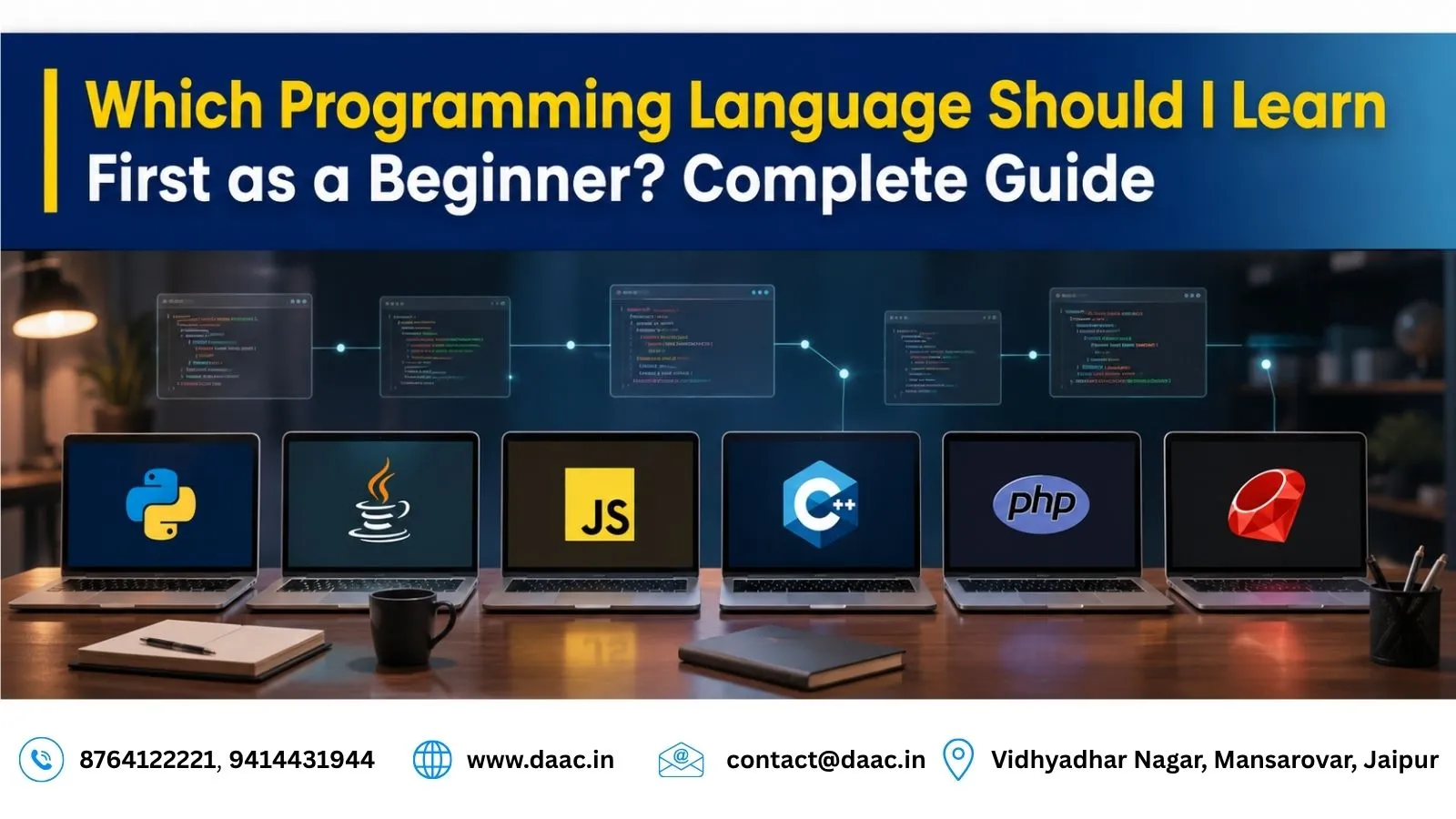
However, most beginners struggle with one important question: which programming language should I learn first as a beginner?
The answer is not the same for everyone. It depends on your career goals, interests, and the type of projects you want to build. In this guide, you will understand the best beginner-friendly programming languages in 2026 and how to choose the right one for your career path.
Understanding Programming Languages Before You Start
Before choosing your first language, it is important to understand what programming actually means. Many beginners start directly with coding without understanding the fundamentals, which creates confusion later.
Programming languages are tools that help humans communicate with computers. They are used to build websites, mobile apps, software systems, and AI applications.
Some popular languages include:
- Python
- JavaScript
- Java
- C++
- C#
- Go
Each language has its own purpose and industry use case.
Why Choosing the Right First Language Matters
Your first programming language shapes your thinking and problem-solving approach. A beginner-friendly language helps you learn faster and stay motivated.
A good starting language helps you:
- Understand coding logic easily
- Build small projects quickly
- Reduce frustration
- Learn programming fundamentals
- Transition to advanced languages
This is why choosing the right language is more important than choosing the most popular one.
Best Programming Languages for Beginners in 2026
When deciding which programming language should I learn first as a beginner, you should focus on simplicity, career demand, and real-world applications.
Python for Easy Learning
Python is one of the most recommended languages for beginners because of its simple syntax and readability.
It is widely used in:
- Artificial Intelligence
- Data Science
- Automation
- Web Development
For example, companies like Google, Netflix, and Instagram use Python in different systems.
Python is often considered the best programming language for beginners due to its low learning curve and strong job market demand.
JavaScript for Web Development
If you want to build websites or web applications, JavaScript is the perfect starting point.
It is used for:
- Interactive websites
- Frontend development
- Backend development (Node.js)
- Mobile app development
Modern frameworks like React and Next.js make JavaScript extremely powerful for career growth.
Java for Strong Programming Fundamentals
Java is widely used in enterprise-level applications and Android development.
It is used in:
- Banking systems
- Enterprise software
- Android apps
- Cloud applications
Java is slightly harder than Python but builds strong programming fundamentals.
How to Choose the Right Programming Language
There is no single answer to which programming language should I learn first as a beginner, but you can decide based on your goals.
Career Goals
- AI & Data Science → Python
- Web Development → JavaScript
- Mobile Apps → Java / Kotlin
- Enterprise Systems → Java
Projects
- Websites → JavaScript
- Automation → Python
- Business software → Java
Learning Difficulty
For beginners:
- Python (easiest)
- JavaScript (moderate)
- Java (structured learning)
Step-by-Step Roadmap to Learn Programming
Learning programming requires a structured approach.
Step 1: Learn Basics
Start with:
- Variables
- Data types
- Loops
- Functions
- Conditions
Step 2: Practice Small Projects
Build:
- Calculator
- To-do app
- Number guessing game
Step 3: Build Real Projects
Create:
- Portfolio website
- Blog system
- Simple applications
👉 Students who want structured learning can explore
Core Python Course in Jaipur for strong programming fundamentals.
Common Mistakes Beginners Should Avoid
Switching Languages Too Often
Stick to one language until you build confidence.
Only Watching Tutorials
Coding is a practical skill. You must write code daily.
Not Building Projects
Projects are the fastest way to learn programming.
Career Opportunities After Learning Programming
Once you learn your first programming language, many career paths open:
- Software Developer
- Web Developer
- Data Analyst
- AI Engineer
- Mobile App Developer
👉 To move into advanced development roles, you can explore
Full Stack Developer Course in Jaipur
Is Python the Best First Programming Language in 2026?
Yes, for most beginners, Python is the best choice in 2026 because:
- Easy syntax
- High demand
- Multiple career options
- Beginner-friendly ecosystem
However, JavaScript is better for web development-focused learners.
Conclusion
If you are confused about which programming language should I learn first as a beginner, the best approach is to start simple and stay consistent.
Python is ideal for most beginners, while JavaScript and Java are excellent depending on your career goals. The key is not the language itself but consistent practice, real projects, and continuous learning.
With the right roadmap, anyone can start a successful programming journey in 2026.
FAQs
1. Which programming language should I learn first as a beginner?
Python is the most recommended because it is simple, powerful, and widely used in the industry.
2. Is coding hard for beginners?
No. With regular practice and the right guidance, coding becomes easy to learn step by step.
3. How long does it take to learn programming?
Basic concepts can be learned in 2–3 months, but job-ready skills take longer with practice.
4. Which language is best for web development?
JavaScript is the best choice for building websites and web applications.
5. Can I get a job after learning programming?
Yes. With proper skills and projects, you can start a career as a developer or intern.